
more on Taiwan’s new Tongyong move

This morning all three of Taiwan’s English-language newspapers ran the AP story on the Ministry of the Interior’s plan to expand the use of Tongyong Pinyin. (Bonus points to the copy editor at the Taipei Times who changed the original article’s sloppy “Taiwan will standardize the English transliterations of its Chinese Mandarin place names by the end of the year” to “The Romanization of Mandarin place names will be standardized by the end of this year.”)

I have made a few calls about this, but to little effect so far. Unfortunately, I haven’t had the time today to track down someone at the Ministry of the Interior who can give some definitive information about this.

Meanwhile, here’s another article. It gives a little more information: no intercapping (good), hyphens instead of apostrophes (bad), some screwed-up word parsing (bad).

But all of this sounds like old news. How this will be any different in implementation is still unclear.

Wàijí rénshì lái Táiwān gōngzuò huò lǚyóu, zǒng bèi Táiwān de dìmíng yì xiě gǎo de “wù shàsha,” jiéjú cháng yǐ mílù shōuchǎng. Nèizhèngbù 30 rì gōng bù “biāozhǔn dìmíng yì xiě zhǔnzé” cǎo’àn, míng dìng dìmíng yì xiě yǐ “yīnyì” wèi yuánzé, bìng cǎi “Tōngyòng Pīnyīn” wèi jīzhǔn, ruò dìmíng yǒu lìshǐ, yǔyán, guójì guànyòng, shùzì děng tèxìng, zé yǐ dìmíng xìngzhì fānyì, rú Rìyuè Tán yì wéi “Sun Moon Lake;” 306 gāodì yì wéi “Highland 306.”

Gāi cǎo’àn shì yījù “guótǔ cèhuì fǎ” dìngdìng, bìng nàrù Jiàoyùbù zhìdìng de “Zhōngwén yìyīn shǐyòng yuánzé” zuòwéi yì xiě biāozhǔn, dìmíng yì xiě fāngshì yóu dìmíng zhǔguǎn jīguān zìxíng juédìng.

Cǎo’àn zhǐchū, wèi bìmiǎn yì xiě zhě duì wényì rènzhī bùtóng, chǎnshēng yì xiě chāyì, tǒngyī xíngzhèng qūyù de biāozhǔn yì xiě fāngshì, shěng “Province,” shì “City,” xiàn “County,” xiāng-zhèn “Township,” qū “District,” cūnli “Village.” Jiēdào míngchēng yě tǒngyī yì xiě, dàdào “Boulevard,” lù “Road,” jiē “Street,” xiàng “lane,” nòng “Alley.” Lìrú Kǎidágélán Dàdào wéi “Kaidagelan Boulevard.”

Cǎo’àn míng dìng, biāozhǔn dìmíng de yì xiě cǎi tōngyòng pīnyīn, dàn dìmíng hányǒu “shǔxìng míngchēng” shí, yǐ shǔxìng míngchēng yìyì fāngshì yì xiě, rú Dōng Fēng zhíyì wéi “East Peak.”

Ruò shǔxìng míngchēng yǔ biāozhǔn dìmíng zhěngtǐ shìwéi yī ge zhuānyǒu míngchēng shí, bù lìng yǐ yìyì fāngshì fēnkāi yì xiě, rú “Jiā-Nán dà zùn [zhèn?]” yì wéi “Jianan dazun;” Yángmíng Shān yì wéi “Yangmingshan;” Zhúzi Hú yì wéi “Jhuzihhu.”

Lìngwài dìmíng yǒu dāngdì lìshǐ, yǔyán, fēngsúxíguàn, zōngjiào xìnyǎng, guójì guànyòng huò qítā tèshū yuányīn, jīng zhǔguǎn jīguān bào zhōngyāng zhǔguǎn jīguān hédìng hòu, bù shòu “shǔxìng míngchēng” xiànzhì, rú Yù Shān zhíyì wéi Jade Mountain; zhōngyāng shānmài yì wéi “Central Mountains.”

Cǎo’àn guīdìng, biāozhǔn dìmíng yì xiě shūxiě fāngshì, dì-yī ge zìmǔ dàxiě, qíyú zìmǔ xiǎoxiě, rú bǎnqiáo yì wéi “Banciao,” ér fēi “Ban Ciao” huò “Ban-ciao.” Dàn dìmíng de dì-yī ge zì yǐhòu de pīnyīn zìmǔ, chūxiàn a, o, e shí, yǔ qián dānzì jiān yǐ duǎnxiàn liánjiē, rú Qīlǐ’àn yì wéi “Cili-an,” Rén’ài Xiāng wéi “Ren-ai Township.”

Cǐwài, cǎo’àn yě tǒngyī zìrán dìlǐ shítǐ shǔxìng míngchēng, rú píngyuán, péndì, dǎoyǔ, qúndǎo, liè yǔ, jiāo, tān, shāzhōu, jiǎjiǎo, shān, shānmài, fēng, hé xī, hú, tán děng shíwǔ zhǒng yì xiě fāngshì. Lìrú, Dōngshā Qúndǎo yì wéi “Dongsha Islands;” Diàoyútái liè yǔ “Diaoyutai Archipelago;” Běiwèi Tān “Beiwei Bank;” “Ālǐ Shān shānmài” yì wéi “Alishan Mountains;” zhǔfēng yì wéi “Main Peak;” Shānhútán zhíyì wéi “Shanhu Pond.”

source: Yīngyì yǒu “zhǔn” — lǎowài zhǎo lù bùzài wù shàsha (英譯有「準」 老外找路不再霧煞煞), China Times, October 31, 2007
Taiwan to expand use of Tongyong Pinyin?

The Associated Press is reporting what appears to be an expansion of the Taiwan government’s monumentally misguided promotion of its Tongyong Pinyin romanization system.

No one is answering the phones at the Ministry of the Interior now, and I haven’t been able to find out more information on the Web site yet. But I’ll be following this closely.

The story follows, with a few of my notes in brackets.

Taiwan will standardize the English transliterations of its Chinese Mandarin place names by the end of the year, an official said Wednesday, after years of confusion stemming from multiple spellings.

An official from the Ministry of Interior said the island would use the locally developed “Tongyong,” system in its transliterations, rejecting use of mainland China’s [Hanyu] Pinyin system, and the once common Wade-Giles system, introduced by two Englishmen in the late 19th century.

Over the past decade [Hanyu] Pinyin has gained wide acceptance among foreign students of Chinese, even as Wade-Giles and other foreign systems have diminished in importance.

Taiwan’s Tongyong system is virtually unknown outside the island.

But the Interior Ministry official insisted that Tongyong was still a good choice for a standard transliteration system.

“In the past, diverse spellings have caused confusion, so we have decided to remedy the situation,” he said, speaking on condition of anonymity because he was not authorized to talk to the press.

Multiple transliterations of place names have often caused confusion for non-Chinese-literate visitors to Taiwan.

For example, a busy shopping street in Taipei is variously rendered as Chunghsiao [in bastardized Wade-Giles — but no official signs on this street in Taipei use this system], Zhongxiao [in Hanyu Pinyin] and Jhongsiao [in Tongyong Pinyin — but no official signs on this street in Taipei use this system].

According to Ministry of Interior’s Web site, exceptions to the Tongyong system will still be allowed for some well known tourist attractions, including Jade Mountain in central Taiwan and Taipei’s Yangmingshan [Yangmingshan is the same in Tongyong Pinyin and Hanyu Pinyin, though it is properly written Yangming Shan].

source: Taiwan to standarize English [sic] spellings of place names, AP, via the International Herald Tribune, October 31, 2007

Hong Kong moves to increase teaching in Mandarin, decrease teaching in Cantonese

The Hong Kong government’s Standing Committee on Language Education and Research (“Scolar” — heh) yesterday launched a HK$200 million (US$25.8 million) campaign to help schools use Mandarin as the medium for instruction.

Half of the money will be used to hire extra teachers, with the other half used to bring in mainland teaching experts.

To qualify for this funding, schools must demonstrate competence in teaching “Chinese” in Mandarin and be ready to switch 40 percent of “Chinese language teaching” from Cantonese to Mandarin within three years. The scheme is expected to start at the beginning of the next academic year and last for more than three years.

Each year about 30 primary and 10 secondary schools will be added to the program.

Scolar Chairman Michael Tien Puk-sun said that his committee “has agreed that Putonghua [i.e., Mandarin] should be used as a medium of instruction for Chinese language subjects in the long term.”

This does not bode well for the future of Cantonese.

sources:

New story in Pinyin: ‘Dashui Guohuo’ (‘After the Flood’)

I’m very pleased to announce that Pinyin Info has a new story in Hanyu Pinyin: “Dàshuǐ Guòhòu,” by Zhang Liqing. It’s available here in two versions: Pinyin alone and Pinyin with English translation (as “After the Flood”), so one doesn’t even have to know Mandarin or Pinyin to read this.

The story recalls a girlhood friend in China, not long after the end of the Second World War.

Zhang is an associate editor of the ABC Chinese-English Comprehensive Dictionary and has translated a number of important works into English, including Zhou Youguang’s The Historical Evolution of Chinese Languages and Scripts and Lü Shuxiang’s Comparing Chinese Characters and a Chinese Spelling Script — an evening conversation on the reform of Chinese characters.

Reviews of books on oracle bones, language and script, violence in China, etc.: SPP

Sino-Platonic Papers has rereleased the third volume in its series of book reviews: Reviews III (8.3 MB PDF).

This volume was first published in October 1991.

The main topics of the books in this volume are

  • Violence in China
  • Scientific Stagnation in Traditional China.
  • Oracle Shell and Bone Inscriptions (OSBIs)
  • Proto-Language And Culture
  • Language and Script
  • Reference Tools for Sinitic Languages
  • Literature and the Life of Peking
  • Religion and Philosophy
  • Words
  • The New World
  • “Barbarian” Business
  • South Asia
  • Miscellaneous

For those who hesitate to download such a large file without knowing which books were reviewed, you may consult the table of contents (small HTML file).

‘Slips of the Tongue and Pen in Chinese’

David Moser wrote his highly popular work Why Chinese Is So Damn Hard (found right here on Pinyin Info) in the early 1990s. Around the same time he contributed another more academic but still highly readable essay to Sino-Platonic Papers, this one on the topic of “Slips of the Tongue and Pen in Chinese.”

This work has just been reissued for free (2.9 MB PDF).

Taike — trademarking a partially reclaimed pejorative

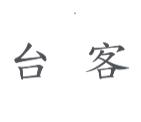
台客 -- the trademark image of the Chinese characters for 'taike', which shows simply the characters in an ordinary font in black text against a white backgroundThe term taike (táikè, 台客 — with “tai” as in “Taiwan” and “ke” as in “guest”) has historically been used predominantly by mainlanders in Taiwan as a pejorative for ethnic Taiwanese they view as unsophisticated and crude.

In recent years some Taiwanese have attempted to reclaim the word for themselves as “an expression of strong national consciousness and Taiwanese cultural elements,” as the Taipei Times puts it. Whether they’ve been particularly successful in this could be debated. For example, more than a few of the giggling, empty-headed entertainment figures on Taiwan television will often jokingly accuse someone on their show of being “hǎo tái,” where tai is a short form for taike and meant as synonymous with dījí (低級, vulgar). It makes me want to slap those media celebrities upside their damn-fool heads. But watching TV here often brings out such feelings in me. Anyway, I digress.

Neuron Innovations (Zhōngzǐ Chuàngxīn / 中子創新), organizers of the TK Rock Concert, has been granted a trademark here in Taiwan for 台客 (taike). It’s a bit as if a company in the States running a gay-rights-themed rock festival named “Fag Fest” had been given the trademark on not just “Fag Fest” but the word “fag” itself.

The illustration in this post is the submitted trademark. As is obvious, there’s nothing whatsoever special about the design; it’s just the plain characters.

Some politicians and academic figures have called for the trademark to be repealed, including Legislator Lin Shu-fen of the ruling Democratic Progressive Party.

Lin said that taike should be regarded as a kind of “public good” or “cultural good” and no one should be allowed to monopolize the usage of the term.

“Making taike a registered trademark is detrimental to popular culture,” Lin said.

She said that members of the public might face an infringement lawsuit if they used the term in symposiums, music competitions, or film festivals or in the names of their published books or magazines, among other things.

Hung Shu-ming (洪淑敏 [Hóng Shūmǐn), the head of the trademark division at the Intellectual Property Office (IPO), did not think it improper that the bureau had granted Neuron Innovations the trademark.

“The application for taike registration was approved because Neuron Innovations has a leading position in hosting taike Rock concerts in recent years,” Hung said.

Lin responded by saying that “first come, first served” was not a good reason for Neuron Innovations to get the trademark, as LTK (濁水溪公社 [Zhuóshuǐ Xī Gōngshè), a local band which released an album titled Revenge of the Taike ten years ago, would have owned the trademark.

Lee Ming-tsung (李明聰 [Lǐ Míngcōng), an associate professor of sociology at National Taiwan University, urged the IPO to repeal the taike trademark as it is integral to the popular culture.

sources and further reading: