Low rate of registration of aborigines’ ‘original names’ prompts gov’t to ease process

As of January 2007, only 6,613 of Taiwan’s 470,000 Aborigines had officially registered to use their original names (i.e., those in the languages of their tribes, rather than the Sinicized forms that were forced upon Taiwan’s aboriginal population until relatively recently). This low rate, combined with the realization that the procedure was inconvenient for those who had moved away from their home towns, prompted the government to simplify the registration procedure by allowing people to register their names at any household registration office, not just the one for their officially listed household. This has been effect since April 1.

Names may be registered in a variety of forms: with Chinese characters, romanization, or a combination of both.

Yuánzhùmín shēnqǐng huífù chuántǒng míngzi de shǒuxù, jírì qǐ kěyǐ gèng fāngbiàn, cóng jīnnián 4 yuè 1 rì qǐ, bùzài yìngxìng guīdìng zhǐnéng huídào hùjí de bànlǐ gēngmíng shǒuxù, chūwài qiúxué jiùyè de yuánzhùmín zài rènhé yī ge hùzhèng shìwùsuǒ dōu kěyǐ bànlǐ gēngmíng.

Gēnjù Yuánmínhuì [Yuánzhùmín Zú Wěiyuánhuì] de tǒngjì: zhì 96 [i.e., 2007] nián 1 yuè zhǐ, yǐjing huífù chuántǒng míngzi de yuánzhùmín jǐnyǒu 6,613 rén, yǔ yuánzhùmín zǒngrénkǒu shù 47 wàn duō rén xiāngjiào, bùdào bǎi fēnzhī yīdiǎn wǔ, bǐlì fēicháng dī. Hěn yǒu kěnéng shì wèile jiùyè, jiùxué huò qítā yuányīn, líxiāngbèijǐng dào dūhuìqū dǎ pīn de yuánzhùmín yùláiyù duō, ér jiù guīdìng shēnqǐng huífù chuántǒng míngzi, yīdìng yào huídào hùjí suǒzàidì de hùzhèng shìwùsuǒ bànlǐ, ràng bùshǎo yuánzhùmín dǎ tuìtánggǔ. Xīn guīdìng xiūzhèng hòu, yuánzhùmín shēnqǐng gēngmíng zài gèng de dōu kěyǐ bànlǐ.

Gēnjù xiūzhèng xìngmíng tiáolì guīdìng, mùqián yuánzhùmín de chuántǒng míngzi yě kěyǐ yǒu sān zhǒng dēngjì fāngshì:

  1. chuántǒng míngzi yǐ Hànzì dēngjì, lìrú Xíngzhèngyuàn Yuánmínhuì zhǔrèn wěiyuán de míngzi: 瓦歷斯‧貝林 [Wǎlìsī Bèilín]
  2. chuántǒng míngzi yǐ Hànzì dēngjì, bìngliè chuántǒng míngzi zhī Luómǎ pīnyīn, lìrú Xíngzhèngyuàn Yuánmínhuì zhèngwù fùzhǔrèn wěiyuán de míngzi: 夷將‧拔路兒 Icyang Parod [Webmaster’s note: 夷將‧拔路兒 = Yíjiāng Bálùr in Hanyu Pinyin]
  3. Hànrén xìngmíng bìngliè chuántǒng míngzi zhī Luómǎ pīnyīn, lìrú Xíngzhèngyuàn Yuánmínhuì chángwù fùzhǔrèn wěiyuán de míngzi: 鄭天財 [Zhèng Tiāncái] Sra Kacaw

source: Yuánzhùmín shēnqǐng huífù chuántǒng míngzi jírì qǐ gè dì kěyǐ shēnbàn (原住民申請回復傳統名字即日起各地可申辦), Chinatimes, April 5, 2007

Taiwan aborigines: education and media

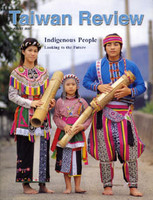
cover of Taiwan Review, featuring a man, woman, and child in traditional aboriginal (Amis) dressThe most recent issue of Taiwan Review has a number of articles about Taiwan’s aborigines. I found two of them particularly interesting: Giving Indigenous People a Voice, which discusses Taiwan Indigenous TV, a television station established in July 2005 for Taiwan’s aboriginal population, and Whither Aboriginal Education?, which consists of excerpts from a panel discussion.

From “Giving Indigenous People a Voice”:

[T]he station is struggling with how to broadcast to people from 13 tribes, each of which speak a different language and have widely different customs.

“It’s very difficult to be fair,” says station director Masao, himself from the Atayal tribe. “Out of 13 tribes, which tribe’s language do you choose to broadcast in? So we have no choice but to use Mandarin” (the language of the majority Han Chinese population). “Some Atayal viewers complain there’s too little Atayal news. Of course it would be best if every tribe had its own channel, but that’s impossible.”

Another problem the station faces is finding skilled aboriginal staff, especially reporters and technicians, and those who can speak their own tribal language, even if not fluently….

Kolas, who grew up in the city with no aboriginal friends, recalls realizing the importance of being able to speak her own language when she first switched from being a mainstream reporter to being a reporter covering aboriginal issues for TITV.

“I realized that, just because I was an aborigine, it didn’t mean I could get interviews with aborigines. Without speaking their language, it was very hard for me to win their trust and interview them,” she says. She is now studying the Amis language.

Less than 5 percent of aboriginal children can speak their own language, Masao estimates, but like many things concerning aborigines, no solid statistics are available. To encourage the learning of one’s own language, the station has now made it an employment requirement….

The desuetude of aboriginal languages is such a problem that the TV station is trying to devote more airtime to tribal language broadcasting. Throughout the day, tribal folk tales are told in tribal languages, although the programs are generally short, resembling commercial breaks. Once a week, there are news programs in a select number of tribal tongues. The main programs, however, including news and cooking shows, are mostly broadcast in Mandarin, unlike another Taiwanese minority channel, Hakka TV, which broadcasts almost entirely in the Hakka language.

From “Whither Aboriginal Education?”:

Sun Ta-chuan: The truth is that many of the tribes have been integrated into modern society and traditional skills such as building a slate house or building a canoe no longer exist. Children of indigenous families that have moved to the cities no longer speak their mother tongues and nor do many of those who still live in the tribal areas. The thing is that we cannot force aboriginal children to shoulder the responsibility of keeping their cultures alive. The question is, should all aboriginal children receive education about the indigenous peoples from preschool to college, or are a couple of hours a week enough? I think the way to go is a “limited two-track” system, where students are free to change track between a complete aboriginal education and regular education.

Teachers are another problem. When the College of Indigenous Studies was set up, we were hoping that it could be equipped with aboriginal faculty members but in reality most of them are not. The standard for recruiting faculty members was the same as any other university [i.e., Ph.D.s are required for most faculty positions]. But where can you find someone with a doctorate to teach an indigenous language? We complained, but to no avail. In fact, we did not know what to teach the students, because there were no textbooks about aboriginal cultures and we had to compile our own teaching materials. Currently in tribal primary and high schools, people who have completed regular normal education and receive some hours of extra courses can teach indigenous culture. That is way too easy to qualify a teacher.

The problem is that we have been making a lot of effort in education for indigenous people, but there has been little done in the way of education about them. If we are determined to work on the latter, we need to invest a lot more. The government has actually invested a lot in local education, but it is mostly about Taiwanese and Hakka cultures. From my point of view, aboriginal languages and cultures are in much greater danger than these two, but are not receiving the same level of investment. There are millions who speak Taiwanese and Hakka, but each and every one of Taiwan’s indigenous languages is in immediate danger of disappearing. Take my people, the Pinuyumayans, there are only 10,000 of us and fewer than 2,000 speak our mother tongue.

Take the preservation of languages. The government has spent considerable time and money on this. Normally, you need to have a romanization system for the languages to be able to compile the teaching materials and then you establish the tribal language certification system. But the government started to issue certificates before the romanization system came out in 2006. The same goes for the teaching materials. The fundamental reason for this waste of money and time is the lack of a policy goal, and consequently that of a blueprint and efficient process for its execution. Facing these problems, I think we had better slow down and rethink carefully our goals and priorities.

Wang Ming-huey: The key problem, I think, is that the education provided for aborigines diverges from the work of cultural transmission. Though the Indigenous Peoples Basic Act and the Education Act for Indigenous Peoples are made to promote indigenous ethnic cultures, neither the goal nor the nature of the education to be given the indigenous peoples is clearly stated therein. We hope to change the past experience of being assimilated into the rulers’ cultures–first the Japanese and then the Kuomintang, but we find no way.

Establishing a university for ethnic communities is indicative of what the new law attempts to achieve. But the curriculum taught at the College of Indigenous Studies covers such subjects as anthropology, sociology, ethnology, or political science, and Mandarin is still the language used to teach, which is no different from teaching at regular colleges. Intrinsically, we are still implementing the assimilation policy. The indigenous people have to master Mandarin, in order to learn about their tribes, whereas the knowledge still alive in the tribe is ignored.

source: Taiwan Review, Vol. 57 No. 8, August 2007

additional resources:

university Web site on Taiwanese

National Taichung University (Guólì Táizhōng Jiàoyù Dàxué / 國立台中教育大學) has a new Web site on Taiwanese. Unfortunately, parts of it — especially the sound files — appear to require the use of Microsoft’s Internet Explorer Web browser and ActiveX. But it’s still a useful resource.

further reading: Mǐnnányǔ Luómǎzì pīnyīn fāng’àn jí fāyīn xuéxí wǎng jiàn zhì wánchéng (閩南語羅馬字拼音方案及發音學習網建置完成), CNA, June 15, 2007

Critique of ordering of dictionaries for Mandarin Chinese

Sino-Platonic Papers has rereleased for free its very first issue, from February 1986: The Need for an Alphabetically Arranged General Usage Dictionary of Mandarin Chinese: A Review Article of Some Recent Dictionaries and Current Lexicographical Projects (1.5 MB PDF), by Professor Victor H. Mair of the University of Pennsylvania’s Department of East Asian Languages and Civilizations.

This is an important essay that helped lead to the production of the ABC Chinese-English Comprehensive Dictionary, which is my favorite Mandarin-English dictionary.

Here is how it begins:

As a working Sinologist, each time I look up a word in my Webster’s or Kenkyusha‘s I experience a sharp pang of deprivation Having slaved over Chinese dictionaries arranged in every imaginable order (by K’ang-hsi radical, left-top radical, bottom-right radical, left-right split, total stroke count, shape of successive strokes, four-corner, three-corner, two-corner, kuei-hsieh, ts’ang-chieh, telegraphic code, rhyme tables, “phonetic” keys, and so on ad nauseam), I have become deeply envious of specialists in those languages, such as Japanese, Indonesian, Hindi, Persian, Russian, Turkish, Korean, Vietnamese, and so forth, which possess alphabetically arranged dictionaries. Even Zulu, Swahili, Akkadian (Assyrian), and now Sumerian have alphabetically ordered dictionaries for the convenience of scholars in these areas of research.

It is a source of continual regret and embarrassment that, in general, my colleagues in Chinese studies consult their dictionaries far less frequently than do those in other fields of area studies. But this is really not due to any glaring fault of their own and, in fact, they deserve more sympathy than censure. The difficulties are so enormous that very few students of Chinese are willing to undertake integral translations of texts, preferring instead to summarize, paraphrase, excerpt and render into their own language those passages which are relatively transparent Only individuals with exceptional determination, fortitude, and stamina are capable of returning again and again to the search for highly elusive characters in a welter of unfriendly lexicons. This may be one reason why Western Sinology lags so far behind Indology (where is our Böthlingk and Roth or Monier-Williams?), Greek studies (where is our Liddell and Scott?), Latin studies (Oxford Latin Dictionary), Arabic studies (Lane’s, disappointing in its arrangement by “roots” and its incompleteness but grand in its conception and scope), and other classical disciplines. Incredibly, many Chinese scholars with advanced degrees do not even know how to locate items in supposedly standard reference works or do so only with the greatest reluctance and deliberation. For those who do make the effort, the number of hours wasted in looking up words in Chinese dictionaries and other reference tools is absolutely staggering. What is most depressing about this profligacy, however, is that it is completely unnecessary. I propose, in this article, to show why.

First, a few definitions are required, What do I mean by an “alphabetically arranged dictionary”? I refer to a dictionary in which all words (tz’u) are interfiled strictly according to pronunciation. This may be referred to as a “single sort/tier/layer alphabetical” order or series. I most emphatically do not mean a dictionary arranged according to the sounds of initial single graphs (tzu), i.e. only the beginning syllables of whole words. With the latter type of arrangement, more than one sort is required to locate a given term. The head character must first be found and then a separate sort is required for the next character, and so on. Modern Chinese languages and dialects are as polysyllabic as the vast majority of other languages spoken in the world today (De Francis, 1984). In my estimation, there is no reason to go on treating them as variants of classical Chinese, which is an entirely different type of language. Having dabbled in all of them, I believe that the difference between classical Chinese and modern Chinese languages is at least as great as that between Latin and Italian, between classical Greek and modern Greek or between Sanskrit and Hindi. Yet no one confuses Italian with Latin, modern Greek with classical Greek, or Sanskrit with Hindi. As a matter of fact there are even several varieties of pre-modern Chinese just as with Greek (Homeric, Horatian, Demotic, Koine), Sanskrit (Vedic, Prakritic, Buddhist Hybrid), and Latin (Ciceronian, Low, Ecclesiastical, Medieval, New, etc.). If we can agree that there are fundamental structural differences between modern Chinese languages and classical Chinese, perhaps we can see the need for devising appropriately dissimilar dictionaries for their study.

One of the most salient distinctions between classical Chinese and Mandarin is the high degree of polysyllabicity of the latter vis-a-vis the former. There was indeed a certain percentage of truly polysyllabic words in classical Chinese, but these were largely loan- words from foreign languages, onomatopoeic borrowings from the spoken language, and dialectical expressions of restricted currency. Conversely, if one were to compile a list of the 60,000 most commonly used words and expressions in Mandarin, one would discover that more than 92% of these are polysyllabic. Given this configuration, it seems odd, if not perverse, that Chinese lexicographers should continue to insist on ordering their general purpose dictionaries according to the sounds or shapes of the first syllables of words alone.

Even in classical Chinese, the vast majority of lexical items that need to be looked up consist of more than one character. The number of entries in multiple character phrase books (e.g., P’ien-tzu lei-pien [approximately 110,000 entries in 240 chüan], P’ei-wen yün-fu [roughly 560,000 items in 212 chüan]) far exceeds those in the largest single character dictionaries (e.g., Chung-hua ta tzu-tien [48,000 graphs in four volumes], K’ang-hsi tzu-tien [49,030 graphs]). While syntactically and grammatically many of these multisyllabic entries may not be considered as discrete (i.e. bound) units, they still readily lend themselves to the principle of single-sort alphabetical searches. Furthermore, a large proportion of graphs in the exhaustive single character dictionaries were only used once in history or are variants and miswritten forms. Many of them are unpronounceable and the meanings of others are impossible to determine. In short, most of the graphs in such dictionaries are obscure and arcane. Well over two-thirds of the graphs in these comprehensive single character dictionaries would never be encountered in the entire lifetime of even the most assiduous Sinologist (unless, of course, he himself were a lexicographer). This is not to say that large single character dictionaries are unnecessary as a matter of record. It is, rather, only to point out that what bulk they do have is tremendously deceptive in terms of frequency of usage.

Strongly recommended.

Tonally Orthographic Pinyin

Tonally Orthographic Pinyin (TOP) is a modification of Hanyu Pinyin that uses capitalization practices to distinguish between the various tones of Mandarin.

This can mess with the capitalization found at the beginnings of sentences and proper nouns, so I have mixed feelings about it. But many find TOP useful as a learning tool and in writing text messages.

Here’s how TOP’s creator, Terry Thatcher Waltz, describes the system:

FIRST TONES ARE WRITTEN IN ALL CAPS. YOUR VOICE IS HIGH.

seconD toneS arE writteN witH thE lasT letteR capitalizeD. that’S becausE youR voicE haS tO risE.

third tones are written all lower case. that’s because the voice is low. (let’s keep discussions on the true nature of third and half-third tones somewhere else — this system is just to help us poor foreigners internalize tones!)

Fourth Tone Has The First Letter Of Each Word Capitalized, Because Your Voice Starts High And Then Falls Downward.

Thus, the phrase “wǒ měitiān liànxí Hànyǔ” would be written “wo meiTIAN LianxI Hanyu” in TOP.

See the first link below for details.

further reading:

Japanese literacy–an SPP reissue

Here’s another re-release from the archives of Sino-Platonic Papers: Computers and Japanese Literacy: Nihonzin no Yomikaki Nôryoku to Konpyûta, by J. Marshall Unger of the Ohio State University’s Department of East Asian Languages and Literatures. The link above is to the PDF version (1.2 MB), which reproduces the original exactly.

This is a parallel text in Japanese (in romanization) and English, so if any of you want to practice reading romaji, here’s your chance.

The English text alone is available in HTML: Computers and Japanese Literacy.

The essay touches on many of themes Unger explores in depth in his books, all of which have excerpts available here on Pinyin Info: The Fifth Generation Fallacy, Literacy and Script Reform in Occupation Japan, and Ideogram: Chinese Characters and the Myth of Disembodied Meaning.

Here is the opening, in both English and Japanese (in romanization).

Watakusi wa saikin, gendai no konpyûta siyô to Nihongo ni tuite kenkyu site orimasu. Gengogakusya mo konpyûta no nôryoku ya mondaiten ni tuite iken o happyo suru sekinin ga aru to omou kara desu. I am currently engaged in research on contemporary computer usage and the Japanese language. Linguists too, I believe, have a responsibility to present their views on the potentials and problems of computers.
Sate, Amerika no zen- Kôsei Kyôiku tyôkan, John Gardner-si no kotoba de hazimetai to omoimasu. Sore wa “aizyô nasi no hihan to hihan nasi no aizyô (Eigo de iu to, “unloving criticism and uncritical love”) to iu kotoba desu. Gardner-si wa, Amerikazin no aikokusyugi ni tuite Amerika o sukosi de mo hihan site wa ikenai to syutyô suru hito wa kangaetigai da, aizyô nasi ni syakai ya bunka no ketten o hihan bakari suru koto wa motiron warui keredo, hihan sore zitai o kiratte kokusuisyugi o susumeru koto mo syôrai no tame ni yoku nai, to iimasita. Kono koto wa bokoku igai no syakai to bunka ni tai suru baai de mo onazi de wa nai desyô ka? Gengogakusya ya rekisigakusya mo “aizyô nasi no hihan to hihan nasi no aizyô” to iu ryôkyokutan o sakeru yô ni sita hô ga ii to omou no desu. Watakusi wa Nihon no gengo to bunka o senmon ni site, Nihon ni tai site aizyô o motte orimasu kara koso, Nihongo no hyôkihô ya Nihonzin no yomikaki nôryoku ni tuite no teisetu o mondai ni site iru wake desu. Iwayuru zyôhôka syakai no zidai ni hairi, ippan no hitobito ga pasokon ya wâpuro o kozin-yô ni tukau yô ni naru ni turete, nettowâku tûsin, kyôiku-yô sohutowea, sôzôteki na puroguramingu nado ga yôkyû sarete kite iru desyô. Mosi sono konpon ni aru yomikaki nôryoku no henka to genzyô o gokai sureba, gôriteki na konpyûta siyôhô o kaihatu dekinai darô to omou kara desu. Let me begin by quoting the former U.S. Secretary of Health, Education, and Welfare, John Gardner. I am thinking of his phrase “unloving criticism and uncritical love.” By this, he meant that it was wrong for proponents of American patriotism to oppose even the slightest criticism of the United States: although it is bad to dwell unsympathetically on finding fault with social and cultural shortcomings, it is equally bad for the future of society to advance nationalism and eschew all criticism. I think that this is also true when considering foreign societies and cultures. Linguists and historians would do well to avoid the twin extremes of “unloving criticism and uncritical love.” As someone professionally involved with the language and culture of Japan, I have an affection for the country, but for that very reason, I wish to call into question the accepted theory of Japanese script and literacy. As we enter the age of the so-called informational society, and as more and more ordinary people begin to use computers on an individual basis, demands on network communications, educational software, creative programming, and so on, will steadily increase. Unless we understand the present situation and history of literacy, which underlies all these applications, we cannot hope to develop a rational basis for computer usage.
Sate, hyôi mozi to iu kotoba wa Nihongo ni tuite no hon ni yoku dete imasu kara kokugogaku no yôgo da to itte mo ii hodo desu ga, hyôi mozi to iu mono wa zissai ni sonzai site iru desyô ka? Kyakkanteki ni kangaete miru to, dono gengo mo konponteki ni wa hanasu mono desu. Mozi wa syakaiteki, rekisiteki na men ga arimasu ga, mozi wa kotoba no imi no moto de wa arimasen. Tatoeba, itizi mo yomenai mômoku no hito de mo, hoka no syôgai ga nai kagiri, bokokugo ga kanzen ni hanaseru yô ni narimasu. Sitagatte, hanasi-kotoba to wa mattaku kankei ga nai mozi nado to iu mono wa muimi na gainen desu. Gengo no imi wa gengo no kôzô kara hassei si, mozi wa sono han’ei de sika nai wake desu. Kore wa toku ni kore kara no konpyûta o kangaeru toki ni wasurete wa ikemasen…. The term “ideographic characters” appears so often in books on the Japanese language that one might say it has become a stock phrase of Japanese linguistics. I wonder, however, whether such things as “ideographs” actually exist. When examined objectively, all languages are fundamentally speech. Characters are not the source of the meanings of words, although they do have their social and historical aspects. For example, blind people who cannot read a single character can nonetheless speak their native tongues perfectly, unless they suffer from some other handicap. The very idea of characters totally divorced from speech is therefore meaningless. For the meaning of language emerges from the structure of language, of which writing is merely a reflection. It is particularly important that we not forget this when we consider the computers of the future….

This was first published in January 1988 as issue no. 6 of Sino-Platonic Papers.

Taiwan gov’t releases booklet on Hoklo romanization

Taiwan’s Ministry of Procrastination Education has finally released a handbook on the use of romanization for Taiwanese: “Táiwān Mǐnnányǔ Luómǎzì pīnyīn fāng’àn shǐyòng shǒucè” (《臺灣閩南語羅馬字拼音方案使用手冊》).

Most of the pages in this are devoted to a list of the syllables of Taiwanese. Without counting tones Taiwanese has nearly twice as many unique syllables as Mandarin (797 vs. about 410, respectively).

Here’s the list of Taiwanese syllables, as given in Taiwan’s current official romanization system for Hoklo:

a, ah, ai, ainn, ak, am, an, ang, ann, ap, at, au, ba, bah, bai, bak, ban, bang, bat, bau, be, beh, bi, bian, biat, biau, bih, bik, bin, bing, bio, bit, biu, bo, bok, bong, boo, bu, bua, buah, buan, buat, bue, bueh, bui, bun, but, e, eh, enn, ga, gai, gak, gam, gan, gang, gau, ge, gi, gia, giah, giam, gian, giang, giap, giat, giau, gik, gim, gin, ging, gio, gioh, giok, giong, giu, go, gok, gong, goo, gu, gua, guan, guat, gue, gueh, gui, ha, hah, hai, hainn, hak, ham, han, hang, hann, hannh, hap, hat, hau, he, heh, henn, hennh, hi, hia, hiah, hiam, hian, hiang, hiann, hiannh, hiap, hiat, hiau, hiauh, hik, him, hin, hing, hinn, hio, hioh, hiok, hiong, hip, hit, hiu, hiunn, hiunnh, hm, hmh, hng, hngh, ho, hoh, hok, hong, honn, honnh, hoo, hu, hua, huah, huai, huainn, huan, huann, huat, hue, hueh, hui, hun, hut, i, ia, iah, iam, ian, iang, iann, iap, iat, iau, iaunn, ik, im, in, ing, inn, io, ioh, iok, iong, ip, it, iu, iunn, ji, jia, jiam, jian, jiang, jiap, jiat, jiau, jim, jin, jio, jiok, jiong, jip, jit, jiu, ju, juah, jue, jun, ka, kah, kai, kainn, kak, kam, kan, kang, kann, kap, kat, kau, kauh, ke, keh, kenn, kha, khah, khai, khainn, khak, kham, khan, khang, khann, khap, khat, khau, khe, kheh, khenn, khennh, khi, khia, khiah, khiak, khiam, khian, khiang, khiap, khiat, khiau, khiauh, khih, khik, khim, khin, khing, khinn, khio, khioh, khiok, khiong, khip, khit, khiu, khiunn, khng, kho, khok, khong, khoo, khu, khua, khuah, khuai, khuan, khuann, khuat, khue, khueh, khuh, khui, khun, khut, ki, kia, kiah, kiam, kian, kiann, kiap, kiat, kiau, kik, kim, kin, king, kinn, kio, kioh, kiok, kiong, kip, kit, kiu, kiunn, kng, ko, koh, kok, kong, konn, koo, ku, kua, kuah, kuai, kuainn, kuan, kuann, kuat, kue, kueh, kui, kun, kut, la, lah, lai, lak, lam, lan, lang, lap, lat, lau, lauh, le, leh, li, liah, liam, lian, liang, liap, liat, liau, lih, lik, lim, lin, ling, lio, lioh, liok, liong, lip, liu, lo, loh, lok, long, loo, lu, lua, luah, luan, luat, lue, lui, lun, lut, m, ma, mai, mau, mauh, me, meh, mi, mia, miau, mih, mng, moo, mooh, mua, mui, na, nah, nai, nau, nauh, ne, neh, ng, nga, ngai, ngau, nge, ngeh, ngia, ngiau, ngiauh, ngoo, ni, nia, niau, nih, niu, nng, noo, nua, o, oh, ok, om, ong, onn, oo, pa, pah, pai, pak, pan, pang, pat, pau, pe, peh, penn, pha, phah, phai, phainn, phak, phan, phang, phann, phau, phauh, phe, phenn, phi, phiah, phiak, phian, phiang, phiann, phiat, phiau, phih, phik, phin, phing, phinn, phio, phit, phngh, pho, phoh, phok, phong, phoo, phu, phua, phuah, phuan, phuann, phuat, phue, phueh, phuh, phui, phun, phut, pi, piah, piak, pian, piang, piann, piat, piau, pih, pik, pin, ping, pinn, pio, pit, piu, png, po, poh, pok, pong, poo, pu, pua, puah, puan, puann, puat, pue, pueh, puh, pui, pun, put, sa, sah, sai, sak, sam, san, sang, sann, sannh, sap, sat, sau, se, seh, senn, si, sia, siah, siak, siam, sian, siang, siann, siap, siat, siau, sih, sik, sim, sin, sing, sinn, sio, sioh, siok, siong, sip, sit, siu, siunn, sng, sngh, so, soh, sok, som, song, soo, su, sua, suah, suai, suainn, suan, suann, suat, sue, sueh, suh, sui, sun, sut, ta, tah, tai, tainn, tak, tam, tan, tang, tann, tap, tat, tau, tauh, te, teh, tenn, tha, thah, thai, thak, tham, than, thang, thann, thap, that, thau, the, theh, thenn, thi, thiah, thiam, thian, thiann, thiap, thiat, thiau, thih, thik, thim, thin, thing, thinn, thio, thiok, thiong, thiu, thng, tho, thoh, thok, thong, thoo, thu, thua, thuah, thuan, thuann, thuat, thuh, thui, thun, thut, ti, tia, tiah, tiak, tiam, tian, tiann, tiap, tiat, tiau, tih, tik, tim, tin, ting, tinn, tinnh, tio, tioh, tiok, tiong, tit, tiu, tiuh, tiunn, tng, to, toh, tok, tom, tong, too, tsa, tsah, tsai, tsainn, tsak, tsam, tsan, tsang, tsann, tsap, tsat, tsau, tse, tseh, tsenn, tsha, tshah, tshai, tshak, tsham, tshan, tshang, tshann, tshap, tshat, tshau, tshauh, tshe, tsheh, tshenn, tshi, tshia, tshiah, tshiak, tshiam, tshian, tshiang, tshiann, tshiap, tshiat, tshiau, tshih, tshik, tshim, tshin, tshing, tshinn, tshio, tshioh, tshiok, tshiong, tship, tshit, tshiu, tshiunn, tshng, tshngh, tsho, tshoh, tshok, tshong, tshoo, tshu, tshua, tshuah, tshuan, tshuang, tshuann, tshue, tshuh, tshui, tshun, tshut, tsi, tsia, tsiah, tsiam, tsian, tsiang, tsiann, tsiap, tsiat, tsiau, tsih, tsik, tsim, tsin, tsing, tsinn, tsio, tsioh, tsiok, tsiong, tsip, tsit, tsiu, tsiunn, tsng, tso, tsoh, tsok, tsong, tsoo, tsu, tsua, tsuah, tsuainn, tsuan, tsuann, tsuat, tsue, tsuh, tsui, tsun, tsut, tu, tua, tuan, tuann, tuat, tue, tuh, tui, tun, tut, u, ua, uah, uai, uainn, uan, uang, uann, uat, ue, ueh, uh, ui, un, ut

Chabuduo jiu keyi?

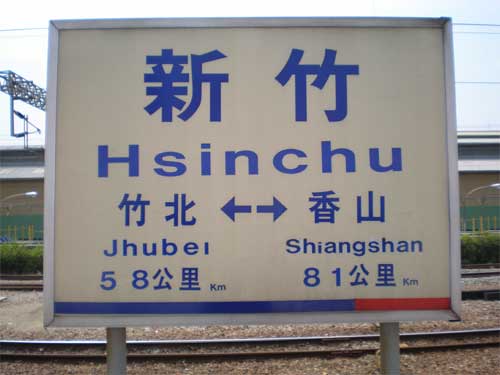
When it comes to signage and much else in Taiwan, the phrase chàbuduō jiù kěyǐ (差不多就可以) might qualify as the country’s unofficial motto. “Close enough for government work” is probably the best idiomatic translation.

The railway-station sign in this photo in many ways exemplifies this.

Hsinchu Jhubei Shiangshan

Rather than list all of the errors and oddities of this sign, I thought I’d let readers have a go at this one. How many errors and problematic points can you find?