Beijing’s reaction to Taiwan’s language-education moves

China’s unofficial propaganda machine has come up with a predictable response to Taiwan’s recent approval of an official romanization for Hoklo/Taiwanese, calling it an attempt at wenhua Tai-Du (“cultural Taiwanese independence”). And Beijing doesn’t much care for earlier developments, either:

Lìngwài jù bàodào, zǎo zài 2002 nián Táiwān dāngjú “Jiàoyùbù” jiù zuòchū juéyì, Táiwān xuésheng cóng xiǎoxué sānniánjí kāishǐ tíqián shíshī xiāngtǔ yǔyán Mǐnnányǔ, Kèjiāyǔ de “yīnbiāo fúhào” xìtǒng jiāoxué, yǐ tú jìnyībù qiēduàn Táiwān yǔ zǔguó dàlù de wénhuà niǔdài. Rújīn yòu zài Táiwān gè zhōng-xiǎoxué tuīxíng “Táiwān Mǐnnányǔ Luómǎzì pīnyīn fāng’àn”, qǐtú yǐcǐ ruòhuà yǔ Pǔtōnghuà jiējìn de “Guóyǔ” zài Táiwān de dìwèi. Zhèizhǒng kèyì zài wénhuà shàng zhìzào Táiwān yǔ zǔguó dàlù de chāyì yǔ qūfēn, shì Táiwān dāngjú chìluǒluǒ de “wénhuà Tái-Dú” tǐxiàn.

(另据报道,早在2002年台湾当局“教育部”就做出决议,台湾学生从小学三年级开始提前实施乡土语言闽南语、客家语的“音标符号”系统教学,以图进一步切断台湾与祖国大陆的文化纽带。如今又在台湾各中小学推“台湾闽南语罗马字拼音方案”,企图以此弱化与普通话接近的“国语”在台湾的地位。这种刻意在文化上制造台湾与祖国大陆的差异与区分,是台当局赤裸裸的“文化台独”体现。)

Blah, blah, blah.

source: “Wénhuà Tái-Dú” — Mǐnnányǔ pīnyīn xìtǒng chūlú ([两岸纪行]“文化台独” 闽南语拼音系统出炉), October 17, 2006, ChinaTaiwan.org

Essay in Hanyu Pinyin

Although I have a few texts here on Pinyin Info written in Pinyin, most of them aren’t long and are usually conversions from texts written in Chinese characters. So it is with very great pleasure that I announce the Internet release of an extensive and important essay by Zhang Liqing (張立青,张立青) that was written in Pinyin originally: Hànzì Bù Tèbié Biǎoyì.

Here is the opening:

Dàduōshù huì Hànzì de rén rènwéi Hànzì shì biǎoyì wénzì. Jiù shì shuō Hànzì gēn biéde wénzì bù yīyàng, bùbì yīkào fāyīn huòzhě biéde yǔyán tiáojiàn; yī ge rén zhǐyào xuéhuì le hěn duō Hànzì, kànjian Hànzì xiě de dōngxi jiù zhīdao shì shénme yìsi.

Zhè dàduōshù rén yòu kàndào liǎng jiàn shìqing. Dì-yī, Hànzì zài Zhōngguó liánxù yòng le sānqiān duō nián, bìngqiě dào xiànzài hái zài yòng. Dì-èr, Hànzì zài Dōng-Yà jǐ ge guójiā liúchuán le hěn cháng yī duàn shíjiān. Yúshì, tāmen yǒu tuīxiǎng chū liǎng ge jiélùn. Yī ge shuō Hànzì chāoyuè shíjiān; lìngwài yī ge shuō Hànzì chāoyuè kōngjiān. Guībìng qǐlai jiù shì Hànzì biǎoyì, kěyǐ chāoyuè shí-kōng. Zuìhòu gèng jìnyībù, bǎ Hànyǔ yě lājìnlái, shuō Hànzì zuì shìhé Hànyǔ.

Shàngmiàn de kànfǎ hé jiélùn “gēn shēn dì gù”, dànshì bùxìng dōu hěn piànmiàn, bù fúhé zhēnzhèng qíngkuàng. Wèishénme ne? Hěn jiǎndān….

Nothing would make me happier than for Mandarin teachers the world over to distribute this work to their students, for it’s much more than an exercise in Pinyin; it’s an essay with important points to make about the nature of Chinese characters. (And, yes, O teachers of the world, the copyright terms do allow you to reprint this.)

This essay appeared originally in 1991, in the Sino-Platonic Papers release of Schriftfestschrift: Essays on Writing and Language in Honor of John DeFrancis on His Eightieth Birthday, so some of you may have seen it already. But the full Schriftfestschrift is a whopping 15 MB, while this essay is a more manageable 759 KB PDF.

This special release of this article is in honor of the seventieth birthday this month of Zhang, some of whose work appears here at Pinyin Info. So, after reading Hanzi bu tebie biaoyi, I recommend that you turn to her translations of Lü Shuxiang (first seen here on this site!) and Zhou Youguang:

Those readings are also available in the original Mandarin:

In addition to being a writer, educator, and translator, Zhang is an associate editor of the excellent ABC Chinese-English Comprehensive Dictionary, which is by far my favorite Mandarin-English dictionary.

Happy birthday, Liqing!

‘Oracle Bones’ a finalist for National Book Award

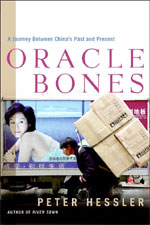
cover of the book 'Oracle Bones'
Peter Hessler’s Oracle Bones: A Journey Between China’s Past and Present has just been named one of the five finalists for the National Book Award in the nonfiction category. In one section of the book Hessler talks with Zhou Youguang and others involved with China’s Pinyin movement.

The other nonfiction finalists are:

  • Taylor Branch, At Canaan’s Edge: America in the King Years, 1965-68 (Simon & Schuster)
  • Rajiv Chandrasekaran, Imperial Life in the Emerald City: Inside Iraq’s Green Zone (Alfred A. Knopf)
  • Timothy Egan, The Worst Hard Time: The Untold Story of Those Who Survived the Great American Dust Bowl (Houghton Mifflin)
  • Lawrence Wright, The Looming Tower: Al-Qaeda and the Road to 9/11 (Alfred A. Knopf)

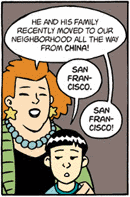
panel from American Born Chinese. The boy's teacher says 'He and his family recently moved to our neighborhood all the way from China.'  He says 'San Francisco.' She corrects herself: 'San Francisco.'
Also of likely interest to many readers of Pinyin News is a finalist in the category of Young People’s Literature, American Born Chinese, by Gene Yang. (The National Book Award’s site gives an incorrect title: America Born Chinese.) This is a graphic novel about a Chinese-American boy who moves from San Francisco’s Chinatown to suburbia, where he is just one of two Asian children in the school.

further reading:

PRC gov’t project has primary name in English, not Mandarin

This one had me confused at first. When I saw the photo I was expecting this to be another story about a typo. Here, after all, is a sign with 泰达 on both sides, which is “Taida,” not “Teda,” in Pinyin. And I’ve grown so used to seeing Pinyin described as “English” that at first at didn’t realize what was meant. But there’s something else going on here, something much more interesting:
street sign with TEDA AVENUE on one side and TAIDA AVENUE on the other; but the Hanzi are the same on both sides

泰达大街两侧的路牌上,“泰达”的英文标识出现了“TEDA”和“TAIDA”两种写法,前者是“泰达”的英文拼法,后者则是“泰达”二字的汉语拼音。从开发区地名办了解到,泰达大街正式的英文写法为“TEDAAVENUE”,而“TAIDA”的写法是不正确的。

But this still isn’t very clear. I did some digging and found that the street name refers to the nearby Tianjin Economic-technological Development Area (TEDA), the Mandarin name for which is Tiānjīn Jīngjì Jìshù Kāifāqū (天津经济技术开发区).

In other words, this street really does have a name originating in English: TEDA. The Chinese characters for the street name, 泰达 (Tàidá), are secondary. They have nothing to do with the Mandarin name of the park; rather, they are an awkward transliteration of TEDA, the acronym of the English name.

This practice extends beyond the name of the street into references to the name of the industrial park itself. “泰达” is all over the park’s official Web site, which, significantly, is at www.TEDA.gov.cn. Thus, English trumped Mandarin in naming a PRC-government-sponsored industrial park in a Mandarin-speaking region of China, despite PRC regulations against just this sort of situation.

So the original story in Hanzi becomes a little clearer if put into Pinyin:

TEDA Dàjiē liǎngcè de lùpái shàng, “Tàidá” de Yīngwén biāozhì chūxiàn le “TEDA” hé “Taida” liǎng zhǒng xiěfǎ, qiánzhě shì “泰达” de Yīngwén pīnfǎ, hòuzhě zéshì “Tàidá” èr zì de Hànyǔ Pīnyīn. Cóng kāifāqū dìmíng bàn liǎojiě dào, TEDA Dàjiē zhèngshì de Yīngwén xiěfǎ wéi “TEDA Avenue”, ér “TAIDA” de xiěfǎ shì bu zhèngquè de.

This, by the way, is also an example of how capitalizing everything on street signs can sometimes lead to confusion.

resources:

Korean romanization — again

It’s not just Taiwan that can’t seem to get its romanization situation resolved well. “Calls for a revision of the current Romanization system for the Korean alphabet, Hangul, are gaining more ground as confusion continues on the roads, signboards and government documents after the introduction of the current form in July 2000,” reports the Korea Times.

Some 75 percent of South Koreans think the government-enacted Romanization system does not reflect the original pronunciation of Hangul properly, a survey conducted by the Yoido Institute, a think tank of the opposition Grand National Party (GNP) showed yesterday.

Of the 2,150 adults polled last week, 66.1 percent wanted the current system to be revised despite the expected financial cost, according to the survey conducted on the occasion of the 560th Hangul Day which falls on Oct. 9.

I make no claims of knowledge of which romanization system would be best for Korea, so be sure to read my comments with that in mind. But I do know to be wary of polls conducted by political parties.

Hangul was first Romanized using the McCune-Reischauer (M-R) system in the early 20th century, when a number of foreign missionaries came to the Choson Kingdom. But the country’s Romanization system underwent flip-flopping policies in the following decades.

“Confusions we experience today have been caused largely due to the arbitrary attitudes of armchair linguists and some misguided government officials,’’ said Kim Bok-moon, professor emeritus of Chungbuk National University.

Scraping the traditional M-R system, which had prevailed in the past decades, the government adopted a new system on July 7, 2000, shifting “Pusan,’’ “Kobukson (turtle ship) and “kimchi’’ into “Busan,’’ “Geobukseon’’ and “gimchi.’’

The English-language media, including the state-funded Yonhap News Agency, had resisted the change for a period of time. But, as time went by, all the news media gave in to the new system except The Korea Times, which has maintained the M-R system concluding that it is the most similar to actual pronunciation.

Let alone the tremendous cost of the revision, the main problem of the current system is that it does not ensure the exact pronunciation of the original sound of various Korean words.

No romanization system — or any other script, for that matter — ensures the exact pronunciation of the words of a language for people who do not know how that system works. It seems unlikely that the South Korean government would have promulgated an inherently unworkable system, such as the bastardized version of Wade-Giles is for Mandarin Chinese. (Proper Wade-Giles, of course, could work perfectly well for Mandarin, though I certainly don’t recommend it.)

And the author shouldn’t have written “the exact pronunciation of the original sound of various Korean words” but simply “the exact pronunciation of Korean words.”

Kim, who serves as president of the Research Institute for Korean Romanization (KOROMA), has made sole efforts to end the confusion, submitting a petition to then President Kim Dae-jung and presenting a Constitutional petition.

In a seminar at the National Assembly yesterday, he presented the disastrous result of an experiment that he conducted along with KBS TV about the new system in Itaewon, downtown Seoul, and at the Kimpo International Airport.

When he asked foreign people to read “Yeoksam-dong (???)’’ and “Geobukseon (???),’’ the majority of them pronounced them “ioksaemdong (????)’’ and “jiobuksion (?????),’’ far different from the actual sound.

Oh, no. Not another “let’s ask a random and probably clueless foreigner how to pronounce something” poll. These mean nothing. There are plenty of people in the United States who would mangle even the pronunciations of items on a menu in a Mexican restaurant; but that doesn’t mean Spanish orthography needs revision.

Because a committee under Taiwan’s Ministry of Education approved a romanization method for Taiwanese last week, some grandstanding member of the legislature is almost certainly going to force some executive-branch official who doesn’t know the system to read out loud something that was written in it, thus “proving” the system doesn’t work. It might already have happened.

According to Kim, 16 out of the newly Romanized 21 vowels of Hangul are out of sync with actual sounds when they are read by English-speaking people, who have no knowledge about the premise that “eo’’ would be pronounced as “?.’’ He has devised his own system, which he claims ensures the best pronunciations.

“Disasters that many critics expected have already begun. We can easily find serious confusion here and there,’’ Kim told The Korea Times. “We have to correct the mistake without delay before it is too late, and adopt a proper system.’’

Romanization systems seldom work well when forced into the mold of an anglicization. I wonder if romanized Korean is commonly but mistakenly referred to in Korea as “English.”

And, of course, there’s always an appeal to nationalism:

One example of what Kim cited as “losses of national interests’’ was “Koguryo’’ and “Dokdo,’’ which became objects of historical and even territorial rows with China and Japan during the past couple of years.

At a time when China spelled the ancient Korean kingdom as “Koguryo,’’ South Korea’s English-language dailies, except for The Korea Times, wrote it as “Goguryeo.’’ It was later unified into Koguryo as even the UNESCO’s World Heritage called it Koguryo.

A set of South Korean tiny islets in the East Sea, Dokdo had also been divided into “Tokto’’ and “Dokdo.’’ The Korea Times agreed to unify it into Dokdo at the recommendation of the government as an exceptional case. But the foreign news media and Web sites are still left confused between them.

The article closes:

Critics say the Romanization system should be revised in a way that best reflects the characteristics of the Korean language and the reunification of the two Koreas should also be taken into consideration.

North Korea has a system similar to the M-R system, which writes its cities and places in English as “Pyongyang,’’ “Kaesong’’ and “Mt. Kumgang’’ _ not “Pyeongyang,’’ “Gaeseong’’ and “Mt. Gumgang.’’

North Korea once proposed the unification of the different Romanization systems used by South and North Korea in a meeting of linguists from the two Koreas in Berlin, Germany, in 2002.

++++++

source: Hangul Romanization Revision Proposed, Korea Times, September 26, 2006

some comments here: More romanization debate, The Marmot’s Hole, September 29, 2006

read about hangul here: Hangul Day, Language Log, October 9, 2005

MOE approves Taiwanese romanization; Tongyongists protest

Years of valuable time has been lost in the squabbling over romanization systems for Taiwanese. And that squabbling will no doubt continue, as the links below make clear. But an important step was taken on Thursday. Finally, finally, Taiwan’s Ministry of Education has approved a romanization system for Taiwanese: Tái-luó-bǎn Pīnyīn (台羅版拼音), to give its Mandarin name.

I’m already on the record as having called Tongyong Pinyin, in its various incarnations, a national embarrassment for Taiwan, so I won’t bother to disguise the fact that I got a real kick out of the fact that the Tongyong Pinyin scheme for the Taiwanese language was roundly rejected. I know that more than a few readers of Pinyin News will be cheering this news. For many, this has as much or more to do with the methods used to push through the much-despised Tongyong Pinyin system for Mandarin than any defects, real or imagined, in the Tongyong Pinyin system for Taiwanese.

Predictably, Yu Bo-quan (余伯泉, I’ve given up bothering to figure out which of the various spellings for his name he’s using now), the main person behind the Tongyong romanization systems, is unhappy. Reportedly, after it was clear things were not going his way he stormed out of the meeting. After he left the new system was approved unanimously.

Yu’s remarks make clear the political nature of his approach.

Tái-luó-bǎn pīnyīn xìtǒng zuó chuǎngguān chénggōng hòu, Yú Bó-quán qìfèn de shuō, Tái-luó xìtǒng de qǐyuán shì Táiwān Mǐnnányǔ yīnbiāo xìtǒng (TLPA), shì Guómíndǎng shídài de chǎnwù, ér 2002 Tōngyòng Pīnyīn shì Mínjìndǎng zhízhèng nèi tōngguò de, zhìyí wèihé Jiàoyùbù wúfǎ hànwèi zhízhèngdǎng de Mǐnnányǔ pīnyīn xìtǒng zhǔzhāng, Jiàoyùbù duànrán tōngguò Tái-luó-bǎn, Táiwānyǔ Tōngyòng Liánméng hòuxù jiāng zhǔnbèi kàngzhēng. (台羅版拼音系統昨闖關成功後,余伯泉氣憤地說,台羅系統的起源是台灣閩南語音標系統(TLPA),是國民黨時代的產物,而二○○二通用拼音是民進黨執政內通過的,質疑為何教育部無法捍衛執政黨的閩南語拼音系統主張,教育部斷然通過台羅版,台灣語通用聯盟後續將準備抗爭。)

That doesn’t sound all that far from calling those on the committee dupes of the KMT, which isn’t likely to win him any friends with those in power. But it may well be that by this point he has so alienated others he thinks he has nothing to lose.

Apparently Tongyong for Taiwanese will retain something of a foothold in southern Taiwan. (See source no. 8 below.)

Later, I’ll try to put up more about just what system was approved and under what circumstances it will (and will not) be used — unless the ever-knowledgeable a-giâu beats me to it.

Because there’s a lot of confusion about Tongyong, a few notes are in order:

  • Tongyong is not one romanization system for all the languages of Taiwan but rather a group of related systems, some of which could be said to work better (or worse) than others.
  • When Tongyong (for Mandarin) was officially approved in Taiwan in 2002, the Tongyong system for Hakka also received approval but not the Tongyong Pinyin system for Taiwanese.
  • As the vote should make clear, plenty of strong supporters of romanization (and other scripts) for Taiwanese have never much cared for Tongyong.

sources:

  1. Tái-luó-bǎn pīnyīn míngnián shànglù; Jiàoyùbù duànrán dìng’àn; Tōngyòng liánméng jiāng kàngzhēng (台羅版拼音明年上路 教育部斷然定案 通用聯盟將抗爭), Píngguǒ Rìbào (Apple Daily), September 29, 2006
  2. Guóxiǎo lǎoshī: xiāngtǔ yǔyán zuìhǎo zìrán xuéxí (國小老師:鄉土語言最好自然學習), Liánhé Xīnwén Wǎng, September 29, 2006
  3. Zuóyè zuìxīn: Mǐnnányǔ xiāngtǔ jiàoxué quèdìng cǎi Táiwān Mǐnnányǔ Luómǎzì pīnyīn (昨夜最新:閩南語鄉土教學確定採台灣閩南語羅馬字拼音), CNA, September 29, 2006
  4. Táiyǔ Tōngyòng liánméng kàngyì Jiàoyùbù cǎi Mǐnnányǔ Luómǎ pīnyīn (台語通用聯盟抗議教育部採閩南語羅馬拼音), CNA, September 29, 2006
  5. Mǐnnányǔ xiāngtǔ jiàoxué quèdìng cǎi Táiwān Mǐnnányǔ Luómǎzì pīnyīn (閩南語鄉土教學確定採台灣閩南語羅馬字拼音), CNA, September 29, 2006
  6. Mǐnnányǔ pīnyīnfǎ quèlì: Luómǎ pīnyīn shèng chū (閩南語拼音法確立:羅馬拼音勝出), Zhōngguǎng Xīnwén Wǎng, September 29, 2006
  7. Pāibǎn dìng’àn! Jiàoyùbù tōngguò Mǐnnányǔ jiàoxué; cǎiyòng Tái-luó pīnyīn (拍板定案!教育部通過閩南語教學 採用台羅拼音), Dōngsēn Xīnwénbào, September 29, 2006
  8. Nánbù sì xiàn-shì dǐzhì; Tái-luó pīnyīn jīn chuǎngguān (南部四縣市抵制 台羅拼音今闖關), Zhōngshí Diànzǐ Bào, September 29, 2006

Taipei street names

I’ve finally put online here on this site my list of Taipei street names in Chinese characters and Hanyu Pinyin. The list includes versions both with and without tone marks, as well as in pure Hanyu Pinyin and the mix of Pinyin and English that is generally found here in Taiwan.

I’d like to say some more about this, but I just don’t have the time now.

Tongyongist tells Hanyu Pinyin supporters to ‘shut up’

Those interested in the Tongyong Pinyin vs Hanyu Pinyin debate might want to check out When in Rome, shut up and fit in, a provocative, pro-Tongyong piece.

it is almost certainly the case that the tongyong pinyin system was selected for the political reason of avoiding using the PRC’s favored method, and to further the cause of instilling a Taiwanese identity. This surely is reason enough, however.

Thanks to Taffy for the alert.

source: When in Rome, shut up and fit in, Taiwan Journal, Vol. XXIII No. 38, September 29, 2006