names of love hotels in macho kanji and other scripts

Donald Ritchie’s recent review of Japanese Love Hotels: A Cultural History, by Sarah Chaplin, has the following interesting section:

The contemporary love hotel is now much more kawaii (cute) than kinky.

Among the the reasons offered for this is that there has been something of a power shift in love-hotel choice. It used to be the male half that decided. Back then the places had hopeful macho monikers — Empire, Rex, King. Then the female half began to choose. Love hotels started calling themselves “fashion hotels” or “boutique hotels,” and began to have lavish lobbies with theme-shops, colors like beige and lavender, and decor like Laura Ashley.

This change can be documented in the Meguro Emperor (still in Meguro), which began in 1973 as a he-man fort before it slowly metamorphosed into a romantic Disneyland castle. The interior has been several times revised to segue from male- to female-friendly. Even the name has changed. It is now Gallery Hotel.

In most love hotels “macho” kanji has been replaced by “feminine” hiragana, trendy katakana or, more often, romaji, that romanized script that carries no male/female associations at all.

source: It’s ladies first now in Japanese love hotels, Japan Times, August 26, 2007

bilingualism among immigrant families in Southern California

Rubén G. Rumbaut of the University of California, Irvine, has written an interesting study titled The Evolution of Language Competencies, Preferences and Use Among Immigrants and their Children in the United States Today (PDF). It was prepared for the U.S. House Subcommittee on Immigration, Citizenship, Refugees, Border Security, and International Law for a hearing in May on immigration reform and U.S. immigrant integration.

Rumbaut’s findings back up the reputation of the United States as a graveyard for languages. The study has much of interest; but for this post I’ll focus just on Asian languages, which Rumbaut said “can be expected to die out at or near the second generation.”

Of special interest to readers of this site are the figures for foreign language fluency among longitudinal samples of young adult children of immigrants, as surveyed in 1992 (age 14), 1995, and 2002 (age 24).

The groups in the longitudinal study are Mexican, Cuban, Nicaraguan, Colombian, Dominican, Haitian, Filipino, Vietnamese, Laotian & Cambodian, and Chinese. Between 1992 and 2002, the percentages of those who said they could speak their foreign language “very well” increased — often substantially — for every group but two: Vietnamese (dropping from 33.8 percent to 29.7 percent) and Chinese (falling much more sharply, from 29.4 percent to 17.6 percent).

The figures for reading and writing also follow a downward trend among Chinese — and only among Chinese. Moreover, Chinese had the lowest rates among the tracked groups for those who can read very well or write very well. In 2002 a mere 2 percent of the Chinese group reported they could write Chinese very well.

Taiwan aborigines: education and media

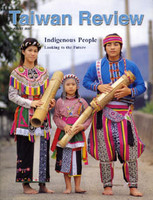
cover of Taiwan Review, featuring a man, woman, and child in traditional aboriginal (Amis) dressThe most recent issue of Taiwan Review has a number of articles about Taiwan’s aborigines. I found two of them particularly interesting: Giving Indigenous People a Voice, which discusses Taiwan Indigenous TV, a television station established in July 2005 for Taiwan’s aboriginal population, and Whither Aboriginal Education?, which consists of excerpts from a panel discussion.

From “Giving Indigenous People a Voice”:

[T]he station is struggling with how to broadcast to people from 13 tribes, each of which speak a different language and have widely different customs.

“It’s very difficult to be fair,” says station director Masao, himself from the Atayal tribe. “Out of 13 tribes, which tribe’s language do you choose to broadcast in? So we have no choice but to use Mandarin” (the language of the majority Han Chinese population). “Some Atayal viewers complain there’s too little Atayal news. Of course it would be best if every tribe had its own channel, but that’s impossible.”

Another problem the station faces is finding skilled aboriginal staff, especially reporters and technicians, and those who can speak their own tribal language, even if not fluently….

Kolas, who grew up in the city with no aboriginal friends, recalls realizing the importance of being able to speak her own language when she first switched from being a mainstream reporter to being a reporter covering aboriginal issues for TITV.

“I realized that, just because I was an aborigine, it didn’t mean I could get interviews with aborigines. Without speaking their language, it was very hard for me to win their trust and interview them,” she says. She is now studying the Amis language.

Less than 5 percent of aboriginal children can speak their own language, Masao estimates, but like many things concerning aborigines, no solid statistics are available. To encourage the learning of one’s own language, the station has now made it an employment requirement….

The desuetude of aboriginal languages is such a problem that the TV station is trying to devote more airtime to tribal language broadcasting. Throughout the day, tribal folk tales are told in tribal languages, although the programs are generally short, resembling commercial breaks. Once a week, there are news programs in a select number of tribal tongues. The main programs, however, including news and cooking shows, are mostly broadcast in Mandarin, unlike another Taiwanese minority channel, Hakka TV, which broadcasts almost entirely in the Hakka language.

From “Whither Aboriginal Education?”:

Sun Ta-chuan: The truth is that many of the tribes have been integrated into modern society and traditional skills such as building a slate house or building a canoe no longer exist. Children of indigenous families that have moved to the cities no longer speak their mother tongues and nor do many of those who still live in the tribal areas. The thing is that we cannot force aboriginal children to shoulder the responsibility of keeping their cultures alive. The question is, should all aboriginal children receive education about the indigenous peoples from preschool to college, or are a couple of hours a week enough? I think the way to go is a “limited two-track” system, where students are free to change track between a complete aboriginal education and regular education.

Teachers are another problem. When the College of Indigenous Studies was set up, we were hoping that it could be equipped with aboriginal faculty members but in reality most of them are not. The standard for recruiting faculty members was the same as any other university [i.e., Ph.D.s are required for most faculty positions]. But where can you find someone with a doctorate to teach an indigenous language? We complained, but to no avail. In fact, we did not know what to teach the students, because there were no textbooks about aboriginal cultures and we had to compile our own teaching materials. Currently in tribal primary and high schools, people who have completed regular normal education and receive some hours of extra courses can teach indigenous culture. That is way too easy to qualify a teacher.

The problem is that we have been making a lot of effort in education for indigenous people, but there has been little done in the way of education about them. If we are determined to work on the latter, we need to invest a lot more. The government has actually invested a lot in local education, but it is mostly about Taiwanese and Hakka cultures. From my point of view, aboriginal languages and cultures are in much greater danger than these two, but are not receiving the same level of investment. There are millions who speak Taiwanese and Hakka, but each and every one of Taiwan’s indigenous languages is in immediate danger of disappearing. Take my people, the Pinuyumayans, there are only 10,000 of us and fewer than 2,000 speak our mother tongue.

Take the preservation of languages. The government has spent considerable time and money on this. Normally, you need to have a romanization system for the languages to be able to compile the teaching materials and then you establish the tribal language certification system. But the government started to issue certificates before the romanization system came out in 2006. The same goes for the teaching materials. The fundamental reason for this waste of money and time is the lack of a policy goal, and consequently that of a blueprint and efficient process for its execution. Facing these problems, I think we had better slow down and rethink carefully our goals and priorities.

Wang Ming-huey: The key problem, I think, is that the education provided for aborigines diverges from the work of cultural transmission. Though the Indigenous Peoples Basic Act and the Education Act for Indigenous Peoples are made to promote indigenous ethnic cultures, neither the goal nor the nature of the education to be given the indigenous peoples is clearly stated therein. We hope to change the past experience of being assimilated into the rulers’ cultures–first the Japanese and then the Kuomintang, but we find no way.

Establishing a university for ethnic communities is indicative of what the new law attempts to achieve. But the curriculum taught at the College of Indigenous Studies covers such subjects as anthropology, sociology, ethnology, or political science, and Mandarin is still the language used to teach, which is no different from teaching at regular colleges. Intrinsically, we are still implementing the assimilation policy. The indigenous people have to master Mandarin, in order to learn about their tribes, whereas the knowledge still alive in the tribe is ignored.

source: Taiwan Review, Vol. 57 No. 8, August 2007

additional resources:

Wenlin releases upgrade to 3.4

The makers of Wenlin, a wonderful program billed as “software for learning Chinese,” have released an upgrade to version 3.4. This is free for users of version 3.0 or above.

Among the new features is better support for searching using regular expressions.

I recommend this program. Those of you who are unfamiliar with it may wish to download the free, nonexpiring demo (for version 3.3, as of the time of this writing).

See also Wenlin: ‘software for learning Chinese’, Pinyin News, May 4, 2006

Japanese and attitudes toward kanji

Ken of What Japan Thinks has helpfully translated into English the results of a recent poll of 1,010 Japanese adults on their attitudes about kanji ability.

A total of 95 percent of those polled said they believe the kanji ability of elementary and middle school children is “undesirably low.” Of those giving this response, 56 percent associated the problem with a drop in school education levels.

A slight majority (52 percent) of all those polled reported a lack of confidence in their own kanji ability.

Here are the questions. For the responses, see the translation or the poll results in Japanese (『漢字力』などに関する調査, Goo Research, June 27, 2007):

  • Do you feel that elementary and middle school children’s kanji ability is sufficient?
    • It’s undesirably low
      • Why do you think that?
    • It’s not a problem
      • Why do you think that?
  • Do you have confidence in your own kanji ability?
    • Yes
    • No
      • Why don’t you have confidence in your own kanji ability?
  • What do you do when you cannot produce a kanji character?

    university Web site on Taiwanese

    National Taichung University (Guólì Táizhōng Jiàoyù Dàxué / 國立台中教育大學) has a new Web site on Taiwanese. Unfortunately, parts of it — especially the sound files — appear to require the use of Microsoft’s Internet Explorer Web browser and ActiveX. But it’s still a useful resource.

    further reading: Mǐnnányǔ Luómǎzì pīnyīn fāng’àn jí fāyīn xuéxí wǎng jiàn zhì wánchéng (閩南語羅馬字拼音方案及發音學習網建置完成), CNA, June 15, 2007

    scripts related to Chinese characters — an article

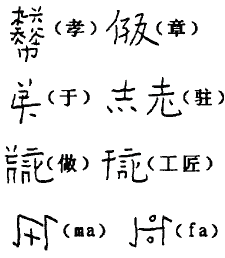
    sample of some of the scripts discussed in the paper; click to view the articleThe most recent rerelease from Sino-Platonic Papers is The Family of Chinese Character-Type Scripts, by Zhou Youguang, one of the main people behind the creation of Hanyu Pinyin. So it’s no surprise that his name has come up before in Pinyin News.

    This article, from September 1991, categorizes and briefly discusses more than a dozen scripts derived from Chinese characters, most of which were used inside China by non-Han people.

    The link above is to an HTML version. The original format of the article is preserved in the PDF file (650 KB).

    the party line: some education levels in China for 2010

    Here are some recent pronouncements from the PRC’s Ministry of Education.

    I don’t advise taking any of this at face value. I’ve put it on my site for reference purposes only.

    The national level of education will be enhanced in the next three years. High school graduates will be a resource for new employees, according to the Ministry of Education. In 2010, employees with education beyond the junior college level will account for 10 percent of new employees. This is the aim of the framework for the Program for Chinese Education in the 11th “Five-Year Plan”

    The framework outlines the complete plan to universalize nine-year compulsory education in China by 2010. The attendance rate at primary school will remain above 99 percent; the enrollment rate for junior middle school will reach over 98 percent. The illiteracy rate of the youth and middle-aged will drop to 2 percent. The enrollment rate for senior middle school will be around 80 percent. Secondary vocational education will be on the same scale with the general senior secondary schools. Students receiving a higher education will reach 30 million, with an enrollment rate of 25 percent. Adult education and continuing education will become more developed. Over 100 million urban and rural working people, annually, will be trained.

    It is reported that China’s level of education is still relatively low. The average length of employee education is over three years below the average length of developed countries.

    source: The national level of education to increase in next three years, People’s Daily, June 13, 2007