new Taipei MRT stations and wordy names

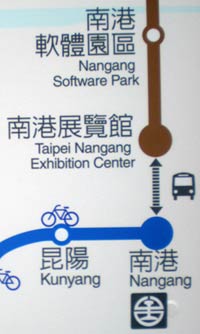
detail of a map of the Taipei MRT system, showing 'Nangang Software Park' and 'Taipei Nangang Exhibition Center' on the brown line, connected by bus to 'Nangang' on the blue lineTaipei will soon open a dozen new stations on its mass-transit system, the MRT. Most of the stations will be in the relatively newly developed district of Neihu, with a couple in the Nangang district. It’s the latter two stations I want to focus on:

  • Nangang Software Park
  • Taipei Nangang Exhibition Center

Basically, these names suck.

The most obvious problem is that they both are unnecessarily long, which is not a negligible consideration for not only signage but also the MRT’s announcement system, which is in four languages: Mandarin, Hoklo, Hakka, and English. (It takes a while to get through all of those.)

Also, “Nangang Software Park” (Nángǎng Ruǎntǐ Yuánqū 南港軟體園區)? There is no other software park around the MRT system. Just “Software Park” would work better as a name for the station. Accurate, but also short, simple, and distinctive — just what such a name should be.

BTW, this software park is the source of the name for Taipei’s still-not-corrected Park Street signs.

Worse still is “Taipei Nangang Exhibition Center”. First, calling it even “Nangang Exhibition Center” would be bad enough for the same reason that “Nangang Software Park” is unnecessarily wordy: there’s no “exhibition center” anywhere else on the system.

But “Taipei Nangang”? Ugh. That may work in Mandarin, but it’s lousy English. It follows the same unnaturally inverted pattern and redundancy that gave us “Taiwan Taoyuan International Airport,” or, as I like to call it, Chinglish International Airport. (But I do like it better than “Revere the Dictator Chiang Kai-shek International Airport.”)

Here’s a photo of the exhibition building itself (not the MRT station — though those are the MRT tracks behind the barrier in the foreground).

taipei_nangang_exhibition_center

So “Taipei Nangang Exhibition Center” probably is the official name of the complex. But that really doesn’t matter because (1) the MRT station certainly does not have to have the exact same name and (2) the name is just plain stupid.

Above, I mentioned that names for MRT stations should be “accurate, but also short, simple, and distinctive.” Sticking “Taipei Nangang” in front of “Exhibition Center” makes the name clumsy and less distinctive, especially since the two MRT stations closest to “Taipei Nangang Exhibition Center” are called “Nangang” and “Nangang Software Park”.

Nangang, Nangang, Nangang — yeah, we get it: They’re in Nangang.

Perhaps the MRT would like to change other names to be similarly useful. For example, instead of “Chiang Kai-shek Memorial Hall” we could have “Taipei Zhongzheng Chiang Kai-shek Memorial Hall;” and in place of, say, “Xindian City Hall” we could have “Taipei County Xindian Xindian City Hall.” (More about the Xindian City Hall station in another post.)

But perhaps those names aren’t nearly informative enough. According to the MRT’s way of thinking, people might still be confused about the location. How about, say, “Planet Earth Northern Hemisphere Asia East Asia Taiwan Taipei Zhongzheng Chiang Kai-shek Memorial Hall” and “Planet Earth Northern Hemisphere Asia East Asia Taiwan Taipei County Xindian Xindian City Hall,” etc.?

I’m happy to report that even the MRT seems to have some reservations about ridiculously long names — at least when those names are in Mandarin. Note the photo of part of the route map (top right of this post). The Mandarin name for “Taipei Nangang Exhibition Center” is Nángǎng Zhǎnlǎnguǎn (南港展覽館), not Táiběi Nángǎng Zhǎnlǎnguǎn (台北南港展覽館). (I didn’t crop any characters from the left of the station name.) So why is “Taipei” in the English version but not in the Mandarin one? Does the city government believe that foreigners are so stupid that they fail to comprehend that the Taipei MRT system is indeed in the Taipei metropolitan area? If so, then maybe they should be giving consideration to my idea of putting at least “Planet Earth Northern Hemisphere Asia East Asia Taiwan Taipei” in front of all the names in the city of Taipei. This could come in in several versions:

  • “Planet Earth Northern Hemisphere Asia East Asia Taiwan, Republic of China, Taipei” — for pan-blue traditionalists
  • “Planet Earth Northern Hemisphere Asia East Asia Taiwan, which is really a country and not a part of China, Taipei” — for the pan-green crowd, and
  • “Planet Earth Northern Hemisphere Asia East Asia China Chinese Taipei Taipei” — for the unificationists and those who like to “q?n Zh?ngguó

Then administrations could have fun changing from one system to another, depending on who was in power.

There’s more to say about this topic (e.g., how the names of stations such as Taipei Zoo, Taipei City Hall, and Xindian City Hall Office do or don’t fit into this pattern). But I’ve already written enough for one post.

And in case anyone is wondering: Yes, I have brought my concerns to the attention of the officials of the MRT. They don’t care. Does anyone have contacts in the media or with politicians?
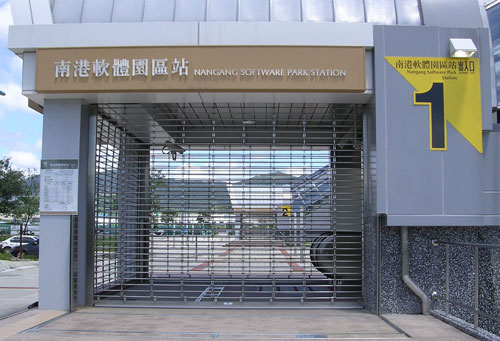
photo of an entrance to the 'Nangang Software Park Station'

Obama, Bush, vitamin drinks, and puns

Here’s something from an ad I saw on the Taipei subway (MRT). It features cartoons of George W. Bush and Barack Obama shilling for some vitamin drink.

Cartoon figures of Bush and Obama, with Bush disdainfully tossing aside drink cartons labeled 'C' and Obama holding up a bottle of juice labeled 'C'. The text is as described below.

Bush (though he looks a bit more to me like the love child of W and maybe Prince Charles) is saying:

不C 不C
喝果汁不能只有維他命C

C, bù C.
Hē guǒzhī bùnéng zhǐyǒu wéitāmìng C.

A rough English translation, filling in a few gaps:

Not just vitamin C, not just vitamin C.
When you drink fruit juice, you should not settle for just vitamin C.

Note: The C is italicized in the Pinyin version to emphasize that this is pronounced like a foreign (i.e., English) letter C rather than how C is pronounced in the Pinyin alphabet. The reason for this is that “bù C” is a pun on “Bush”, whose name in Taiwan is generally pronounced in Mandarin as Bùxī, unlike in China, where it is usually pronounced Bùshí.

Obama’s lines are more interesting:

歐八馬歐八馬 (台語)
買果汁不要黑白買

Read in Mandarin this is:

Ōubāmǎ [Obama], Ōubāmǎ (Táiyǔ).
Mǎi guǒzhī bù yào hēibái mǎi.

And roughly in English this is

Obama, Obama (Taiwanese)
When you buy fruit juice, don’t buy just whatever

But the text tells people to read 歐八馬 (Ōubāmǎ/Obama) as Taiwanese (Táiyǔ), which means that it’s pronounced Au3-peh4-be2, which is a pun with what is written, in red for emphasis, 黑白買.

黑白買 in Mandarin is hēibái mǎi, which means to buy things indiscriminantly. In Hoklo (Taiwanese), however, this expression is O.1-peh4-boe2, thus a pun on Au3-peh4-be2 (Obama).

Also, hēibái by itself is simply “black [and] white” (as in Obama and Bush).

And Obama’s name, like Bush’s, has different Mandarin forms in Taiwan and China. But that doesn’t have much to do with the ad.

As always, I welcome those who (unlike me) know Taiwanese romanization well to correct anything that needs fixing.

weiird typos

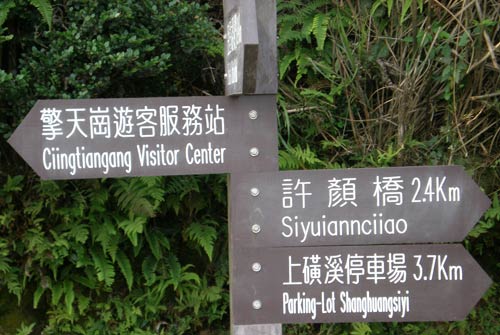
The Qíngtiāngāng part of Yangming Shan National Park (Yángmíng Shān Guójiā Gōngyuán / 陽明山國家公園), to the north of Taipei, is distinguished by grasslands high in the mountains — the sort of open, natural place that, though not spectacular, might still make someone used to living in crowded northern Taiwan want to do the Julie-Andrews-hills-are-alive twirl. But, as usual, I’m only going to show you some signs. Here goes.

wooden directional signs reading '擎天崗遊客服務站 Ciingtiangang Visitor Center / 許顏橋 Siyuiannciiao / 上磺溪停車場 Parking-Lot Shanghuangsiyi'

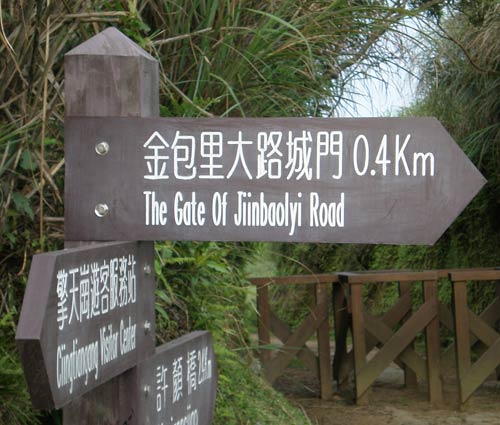
wooden directional sign reading '金包里大路城門 The Gate Of Jiinbaolyi Road'

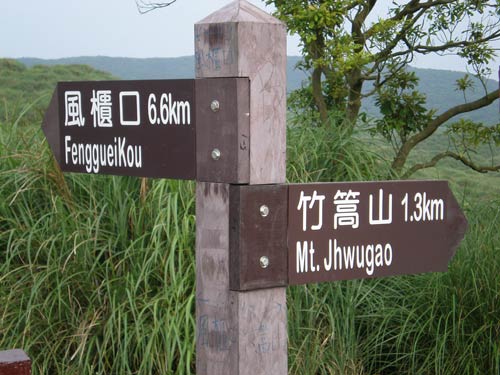
wooden directional signs reading '風櫃口 FenggueiKou' and '竹篙山 Mt.Jhwugao'

Ciingtiangang, Siyuiannciiao, Jiinbaolyi. Normally the presence of doubled vowels indicates the use of Gwoyeu Romatzyh (e.g., rice-flour noodles as miifeen rather than Hanyu Pinyin’s mǐfěn). But these signs are most definitely not in Gwoyeu Romatzyh. They’re just really screwed-up Tongyong Pinyin.

Sign Tongyong Pinyin Hanyu Pinyin Gwoyeu Romatzyh
Ciingtiangang Cingtiangang Qíngtiāngāng Chyngtiangang
Siyuiannciiao Syuyan ciao Xǔyán qiáo Sheuyan chyau
Shanghuangsiyi Shanghuangsi tingchechang Shànghuángxī tíngchēchǎng Shanqhwangshi
The Gate Of Jiinbaolyi Road Jinbaoli dalu chengmen Jīnbāolǐ dàlù chéngmén Jinbaulii dahluh cherngmen
FenggueiKou Fongguei Kou Fēngguì kǒu Fengguey koou
Mt.Jhwugao Jhugao Shan Zhúgāo Shān Jwugau Shan

Two of Tongyong Pinyin’s most distinctive features are the use of jh– for what in Hanyu Pinyin is zh– and the use of fong rather than the feng found in Hanyu Pinyin, MPS2, Wade-Giles, Yale, and Gwoyeu Romatzyh. But whoever produced these signs couldn’t get even those right, as shown by Jhwugao and FenggueiKou.

A few misc. notes:

  • FenggueiKou: Die, InTerCaPiTaLiZaTion, die! Or in this case perhaps I should write IntercapitalizaTion.
  • It’s supposed to be “km”, not “Km”.
  • Even the signs that got “km” correct left out the necessary space before it.
  • The Gate Of Jiinbaolyi Road: An initial “The” is almost never needed on such signs; indeed, its presence is counterproductive. And the capitalized “Of” is amateurish.
  • Parking-Lot Shanghuangsiyi: Oh, that’s just too depressing.
  • Ciingtiangang Visitor Center: Leaving out that extra i would help the missing s fit in, as would abbreviating “center” or simply leaving out Qingtiangang altogether. It’s not like there are any other visitors’ centers around there to confuse people. But since the English-speaking world is filled with places marked “visitor center”, it’s probably not worth having mentioned.
  • Siyuiannciiao: I’m puzzled that ciao/qiao wasn’t translated as bridge (and written with a space before it). Is there not actually a bridge there?
  • Mt.Jhwugao: Again, are spaces really all that difficult?
  • I could probably talk about the orthography of a few of the names (e.g., Jinbao Li vs. Jinbaoli, Shanghuang Xi vs. Shanghuangxi, Fenggui Kou vs. Fengguikou); but that’s something well beyond the common awfulness of these signs. And it might also require some research, such as finding the answer to “Is there really a stream [] at Shanghuangxi/Shanghuang Xi?”)

The government’s list of Pinyin and English terms related to Yangming Shan National Park, Yángmíng Shān Guójiā Gōngyuán xiāngguān míngcí, doesn’t give any of those incorrect forms. (Anyway, the list, which is in Tongyong Pinyin, is now outdated because of the switch — at least on paper — to Hanyu Pinyin.) And I can’t think of any good reason for the doubled i’s, the interposed y’s, or the other errors. Apparently, these signs are just plain-ol’ awful.

So I don’t have anything particularly interesting to note about the linguistics of this. But I do have a point other than that some typos are weiird weird enough that I can’t help but mention them. Rather, it’s worth noting that just because over the past few years many signs — but not nearly as many people believe — went up in tòng yòng, er, Tōngyòng Pinyin, this doesn’t mean the signs were done properly and wouldn’t require replacement even if Taiwan weren’t switching to Hanyu Pinyin.

Tainan County signage

I recently spent a few days in Tainan County and, as is my habit, paid special attention to the signage.

Although the signage in the city of Tainan is primarily — or perhaps now exclusively — in Tongyong Pinyin (which is now supposed to be changed to Hanyu Pinyin), the situation in the remainder of Tainan County is not so clear-cut. Basically, from what I saw most Tainan County towns do not have street signs in Tongyong. Indeed, many of them don’t have street signs in any romanization system whatsoever.

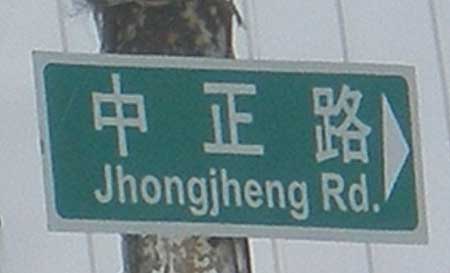
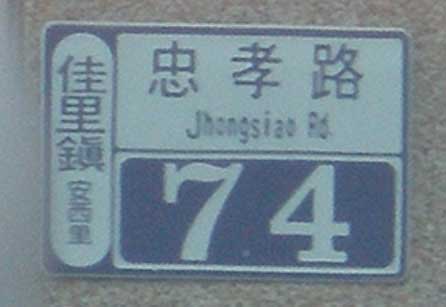
In some small towns there are some local signs in Tongyong. For example, the following three:

jhongjheng

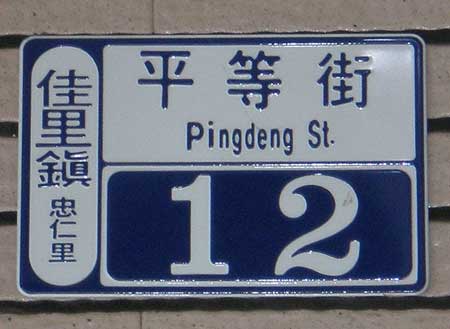
That one’s OK, as Tongyong goes. But as for the next two address plates, is it really too much to ask that the people who make signs learn what a baseline is and what it’s for, that sizes of letters should not be altered on a whim, and that amateurish font faces are not to be used?

Jhongsiao Rd.

Pingdeng St.

(Note the “Pingdeng” spelling above. It’s relevant to the next example.)

OK, so those were in Tongyong Pinyin. But two signs about one block from where the previous shot was taken reveal more of the picture of local signage in Tainan County.

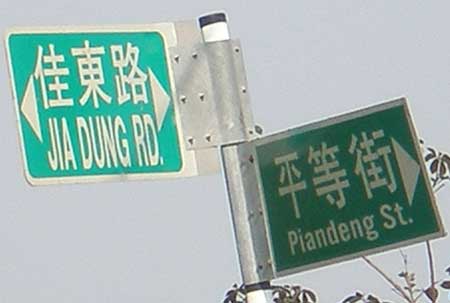
Tongyong most certainly is not the only romanization found in Tainan County.
described below

Together on one pole we have “JIA DUNG RD. / 佳東路” and “Piandeng St. / 平等街”. “Jiadung” is MPS2 for what in Hanyu Pinyin would be Jiādōng (Jiadong), while “Piandeng” is a typo (presumably from Tongong, as this is a newer sign that doesn’t match the style used on other MPS2-era signs in the area) for what in Hanyu Pinyin would be Píngděng (Pingdeng). It would be spelled Pingdeng in Tongyong Pinyin as well, as can be seen above.

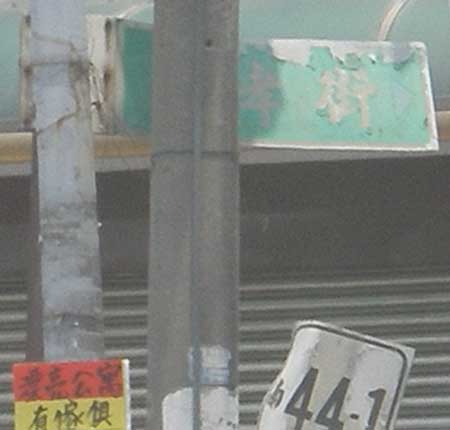
And some signs have no romanization whatsoever and should have been put out of their misery a long time ago.
peeling_sign

But all sorts of old things can occasionally be found on the streets of Tainan County.
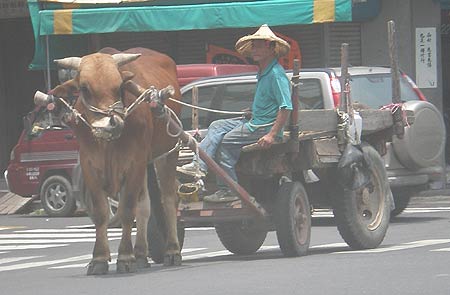
photo of man riding in a cart pulled down a Tainan County city street by a cow

signs in Atayal

During my recent trip to Wulai (Ulay in Atayal) I was pleased to see at least a few signs in the Atayal language.

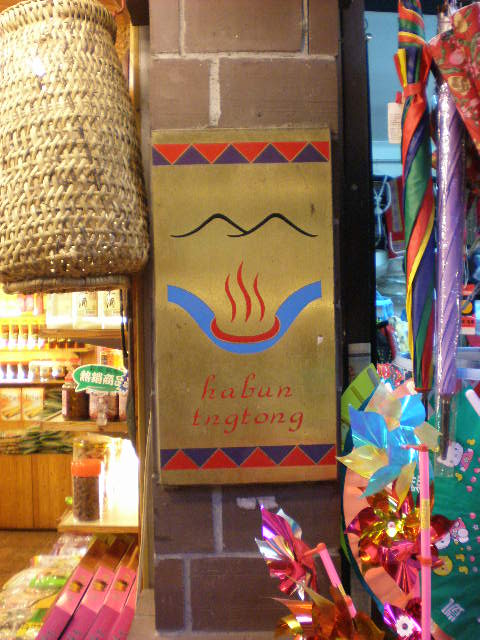
This one — no Chinese characters! no English! — appears on the fronts of several stores on the Old Street that have water from hot springs piped into tubs there. I asked a couple of shop owners about this. They clearly had only vague notions about the signs being for hot springs; they couldn’t read the signs themselves.

habun_tngtong

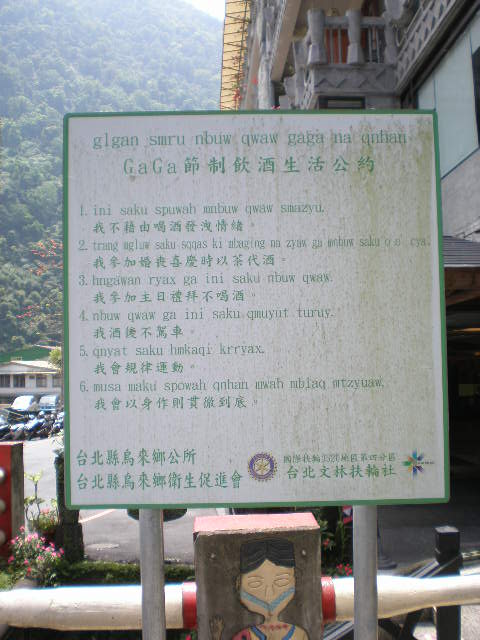
This sign takes the form of personal pledges for a healthy lifestyle. Most have to do with [not] drinking.
The top line reads 'glgan smru nbuw qwaw gaga na qnhan'. It's followed by 6 numbered points in romanized Atayal and then Mandarin in Chinese characters. Finally, it's identified as being from the local government as well as the Rotary Association and other groups.

Gaga is the Atayal word for traditions/customs/rules (especially those handed down from their ancestors).

Wulai — or something like that

All of the romanization systems commonly seen in Taiwan — bastardized Wade-Giles, MPS2, Tongyong Pinyin, and Hanyu Pinyin — use the same spelling (tones aside) for the unnecessarily ugly but scenically situated Taipei County town of Wulai (Mandarin: Wūlái / 烏來). And the formerly official but little-seen Gwoyeu Romatzyh isn’t so different: Ulai. So getting this one spelled correctly shouldn’t be a big deal.

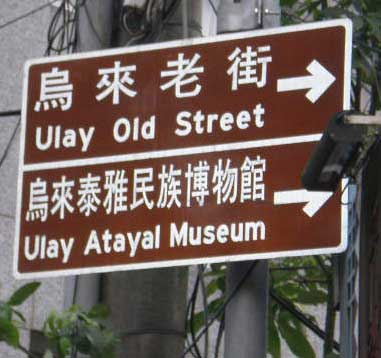
But on a recent trip there I saw the spelling of “Ulay” on relatively recent official signage.

two brown (culture) signs with 'Ulay Old Street' and 'Ulay Atayal Museum', along with their respective Chinese characters

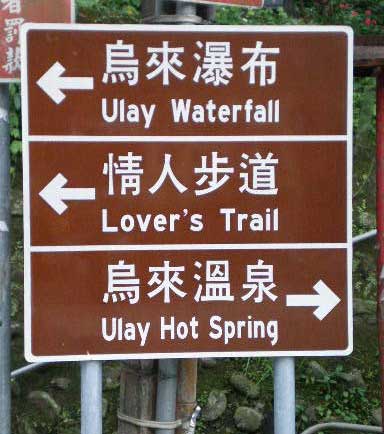
three brown (culture) signs with 'Ulay Waterfall', 'Lover's Trail', and 'Ulay Hot Spring', along with their respective Chinese characters

Actually, none of those particular signs really needed any spelling of Wulai. For example, if you’re in Wulai and a sign points toward “Old Street”, you don’t really need to wonder if perhaps it’s pointing toward the Old Street in Sanxia or some other town instead. But officialdom here relies on its lists of official names and seldom exercises anything in the way of imagination or even just common sense. (That reminds me: I really must finish that half-completed post on wordy signage.)

So, about the “Ulay” spelling: Could it be the correct spelling in the system used to write the language of the Atayal people indigenous to the area? A search of some Taiwan government Web sites leads to me to believe that, yes, it could be. But I asked several people in Wulai who said they were literate in Atayal script, and they said that “Wulai” was the correct spelling for the town’s name in the Atayal language.

Still, these were not linguists or teachers, and this is Taiwan, where chabuduo-ism and outright ignorance of romanization are strong. So when I returned home I went to Wulai’s official website, which only made matters worse. There I found all of the following forms: Wulai, WuLai, Wulia, Wulay, and Ulay.

wulai_wulay_wulia
Ulay

  • Wulia — in big letters, no less. Remarkably, the township uses the URL of www.wulia.gov.tw for its site, though, fortunately, www.wulai.gov.tw also works. I doubt this is anything other than a typo that has somehow not been corrected but has instead gained force.
  • Wulai — This spelling is the one used for at least most of the text.
  • Wulay
  • WuLai — Die, intercaps, die!
  • Ulay — found in the Mandarin portion of the site.

Elsewhere I also found the form Ulai; but in these cases that spelling almost certainly has nothing to do with Gwoyeu Romatzyh.

Here are the numbers for some Google searches:

spelling .gov.tw domains all .tw domains any domains, but pages must include “Taipei County” or
“台北縣”
Wulai 2,760 10,900 5,540
Wulia 381 838 307
Ulay 50 649 592
Ulai 33 237 249
Wulay 9 25 16

So, whatever the correct spelling is, that is the government should be using, not this mishmash. And it should let people know how to pronounce it correctly in the original language, not just Mandarin. Perhaps it’s too late for this name, though, as “Wulai” is so well known.

Regardless of the spelling, though, the name is another example of Chinese characters being used to represent a name that did not originate with a Sinitic language. Thus, the name doesn’t really have anything to do with crows (烏) coming (來). Instead, it refers to the hot springs in the area.

Taizhong street signs are ‘wushasha’

This isn’t much of a story, really. But since it talks, however vaguely, about the messy romanization situation in Taizhong and since I haven’t put up anything lately in Pinyin itself, I decided to go ahead and post it.

Just don’t expect any useful news herein, unless you’d be surprised to hear that Taizhong’s street signs are a mess.

Táizhōng Shì lùpái suǒ shǐyòng de Yīngwén pīnyīn qiānqíbǎiguài, pīnyīnfǎ jìyǒu Tōngyòng, Hànyǔ, zhùyīn fúhào dì-èrshì, Wēituǒmǎ pīnyīn, děng, jiù yǒu mínzhòng xiàng běnbào bào liào, zhǐchēng zhèxiē lùpái ràngrén kàn de “wùshàsha,” wàiguó guānguāngkè gèng zhǐnéng gān dèngyǎn.

Yǐ Táizhōng Shì nánqū Wǔ-quán Nánlù [i.e, “the Five Branches of Government South Road”] de xīn-jiù lùpái láishuō, jiù yǒu lùpái shì cǎiyòng Wēituǒmǎ pīnyīn, yīncǐ “權” zì shǐyòng chuan, ér gānggāng wángōng de xīnshì lùpái “權” zì zéshì shǐyòng cyuan, shìwéi Tōngyòng Pīnyīn, rán’ér xiànzài Táizhōng Shìzhèngfǔ zǎoyǐ quánmiàn gǎiyòng Hànyǔ Pīnyīn, “權” zì yīnggāi shì quan cái zhèngquè.

Lìngwài, zài nánqū xīng dàlù de lùpái, jiù yǒu lùpái “興” zì de pīnyīn wéi hsing, shì shǐyòng Wēituǒmǎ pīnyīn, rìqián gāi lùduàn yě gēnghuàn xīnshì lùpái shàng, shìyǐ Hànyǔ Pīnyīn jiāng “興” zì pīnyīn wéi xing, dàn liǎng ge lùpái dōu xuánguà zài lùkǒu, ràngrén kàn de “wùshàsha.”

Zhēnduì Táizhōng Shì lùpái suǒ shǐyòng Yīngwén pīnyīn gèzì bùtóng de qíngkuàng, Táizhōng Shìzhèngfǔ Jiāotōngchù jiāotōng guīhuà kē biǎoshì, zài gègè niándài suǒ xīngjiàn de lùpái shǐyòng bùtóng de pīnyīn fāngshì, cái huì zàochéng xiànjīn hùnluàn de qíngkuàng, mùqián Táizhōng Shì yǐjing quánmiàn cǎiyòng Hànyǔ Pīnyīn, wèile jiějué cǐ yī wèntí, yóu Táizhōng Shìzhèngfǔ dūshì fāzhǎn chǔyǐ “chéng-xiāng xīnfēngmào” de jīngfèi, jìnxíng tǒngyī lùpái pīnyīn de gōngzuò. Zài Wǔ-quán Nánlù de xīn lùpái fāngmiàn, yuánběn yīnggāi shǐyòng Hànyǔ Pīnyīn, dàn chéngbāoshāng què fāshēng cuòwù, mùqián yǐjing yāoqiú gǎijìn; zhìyú zài xīng dàlù fāngmiàn, yě huì yāoqiú chéngbāo yèzhě jiāyǐ gǎizhèng.

source: Lù míng pīnyīn luànzāozāo — kàn dé rén wùshàsha (路名拼音亂糟糟 看得人霧煞煞), Zìyóu Shíbào (Liberty Times), March 21, 2009

Writing Taiwanese: 1999 study

This seems as good an announcement as any to end my hiatus from posting. Sino-Platonic Papers has just rereleased a popular issue of likely interest to many readers of Pinyin News: Writing Taiwanese: The Development of Modern Written Taiwanese (2.2 MB PDF), by Alvin Lin.

The table of contents gives a pretty good picture of what’s inside:

Preface
Introduction
The Status Quo: Characters and Taiwanese writing

  1. The Roots of Writing in Taiwanese: Wenyan, baihua and academic Taiwanese
  2. The Missing 15 Percent: Developing a written vernacular
  3. One Attempt at Finding the Missing 15 Percent: Yang Qingchu’s Mandarin-Taiwanese Dictionary

Writing Romanized Taiwanese

  1. The Roots of Romanized Taiwanese: Church Romanization
  2. Church Romanization Today: The Taigu listserver
  3. An Indigenous System: Liim Keahioong and Modern Literal Taiwanese

Linguistic and Social Considerations

  1. Some Linguistic Classifications
  2. Dealing with Homonyms: Morphophonemic spelling
  3. Tones in Taiwanese: Surface vs. Lexical tones
  4. Representing Dialects: Picking a standard written form or representing all dialects
  5. Summary of Linguistic Concerns: Deciding the degree of coding
  6. Writing, Reading, Printing, Computing, Indexing and other Practical Concerns
  7. Social Concerns: Tradition and Political Meaning
  8. Conclusion: Future Orthography Policy on Taiwan

Bibliography
Appendices:

  • Email Survey
  • Pronunciation guide to church romanization

List of Tables and Illustrations:

  • Table 1: Suggested Characters for Taiwanese Morphemes from Three Sources
  • Figure 1: Yang Qingchu’s Taiwanese-Mandarin Dictionary
  • Figure 2: Church romanization
  • Figure 3: Modern Literal Taiwanese
  • Figure 4: Sample e-mail from Taigu listserver

This was first published in 1999 as issue number 89 of Sino-Platonic Papers.