dictionary compilation’s four D’s and ‘spiritual ecstasy’

The Shanghai Daily has a profile of Lu Gusun (Lù Gǔsūn, 陆谷孙, 陸谷孫), editor-in-chief of the plainly titled English-Chinese Dictionary (Yīng-Hàn dà cídiǎn, 《英漢大詞典》). The second edition of this dictionary, which was released earlier this month, contains more than 20,000 new entries, an increase of some 10 percent.

Lu has spent most of his academic life at Fudan University, at which in 1965 he earned a master’s in foreign languages and literature. He stayed on as a teacher specializing in Shakespeare. But then came the Cultural Revolution. “Those were the days when the world could not tolerate a peaceful desk for study,” Lu said simply.

Criticized as bourgeois, he had to recite the poems of Alexander Pushkin after a day’s hard labor.

I wonder if the reporting here is accurate, as being forced to recite Pushkin would have been a very strange punishment from a number of standpoints — even in those very strange times.

Lu was forced out of teaching and assigned to compile dictionaries.

In 1970, Lu participated in compiling the New English-Chinese Dictionary, which is still available and has sold more than 10 million copies over the years.

One of the reasons for its vitality was the fact that Lu “smuggled” in many up-to-date words and expressions. Otherwise it would have been staid and quickly dated….

In 1975, Lu and a team of scholars started work on the English-Chinese Dictionary and he was appointed editor-in-chief in 1986.

It took them 16 years to finish the award-winning dictionary, and the team of compilers shrank to 17 people from 108 at the peak.

“To compile a dictionary, you have to bear the loneliness and resist various temptations,” says Lu. “Many partners gave it up for more lucrative posts, some went abroad, some started their own businesses and some died out of devotion to the creation of the dictionary.” A compiler in his 40s passed away just three months before the dictionary was published.

As for Lu, he used coffee, cigarettes, mustard and even alcohol to sustain his fighting spirit. He promised not to go abroad, publish books or take any part-time teaching jobs until the dictionary was complete….

“It is a solemn battle,” says Lu. “Only those who have experienced this can understand the solemnity…. The process of dictionary compilation is always plagued by the four Ds — namely, delays, deficits, delinquencies and deficiencies. But there is spiritual ecstasy that you can hardly experience elsewhere.”

Although Lu has formally retired from Fudan University, he continues to deliver popular lectures in English twice a week to freshmen, and he advises graduate students.

“I hope colleges can be a wonderland, not a wasteland for young people. They should have their minds sharpened and their lives enriched here,” he says.

“Some colleges now make training leaders their main target. But this goal can deprive students of many pure pleasures and undermine their enthusiasm for academic achievements,” the professor adds.

source: Prof inspires ‘spiritual ecstasy’, Shanghai Daily, May 15, 2007
Chabuduo jiu keyi?

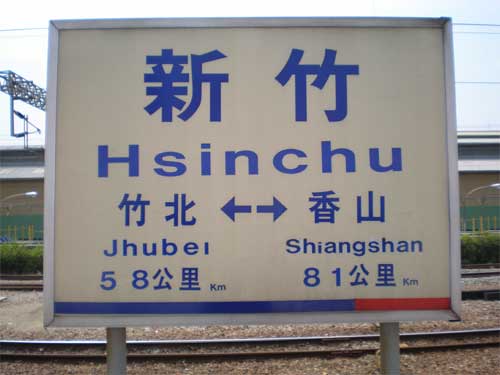
When it comes to signage and much else in Taiwan, the phrase chàbuduō jiù kěyǐ (差不多就可以) might qualify as the country’s unofficial motto. “Close enough for government work” is probably the best idiomatic translation.

The railway-station sign in this photo in many ways exemplifies this.

Hsinchu Jhubei Shiangshan

Rather than list all of the errors and oddities of this sign, I thought I’d let readers have a go at this one. How many errors and problematic points can you find?

reviews of books related to China and linguistics (2)

Sino-Platonic Papers has just released online its second compilation of book reviews. Here are the books discussed. (Note: The links below do not lead to the reviews but to other material. Use the link above.)

Invited Reviews

  • William A. Boltz, “The Typological Analysis of the Chinese Script.” A review article of John DeFrancis, Visible Speech, the Diverse Oneness of Writing Systems.
  • Paul Varley and Kumakura Isao, eds., Tea in Japan: Essays on the History of Chanoyu. Reviewed by William R. LaFleur .
  • Vladimir N. Basilov, ed., Nomads of Eurasia. Reviewed by David A. Utz.

Reviews by the Editor

  • “Philosophy and Language.” A review article of Françcois Jullien, Procès ou Création: Une introduction a la pensée des lettrés chinois.

Language and Linguistics

  • W. South Coblin, A Handbook of Eastern Han Sound Glosses.
  • Weldon South Coblin. A Sinologist’s Handlist of Sino-Tibetan Lexical Comparisons.
  • ZHOU Zhenhe and YOU Rujie. Fangyan yu Zhongguo Wenhua [Topolects and Chinese Culture].
  • CHOU Fa-kao. Papers in Chinese Linguistics and Epigraphy.
  • ZENG Zifan. Guangzhouhua Putonghua Duibi Qutan [Interesting Parallels between Cantonese and Mandarin].
  • Luciana Bressan. La Determinazione delle Norme Ortografiche del Pinyin.
  • JIANG Shaoyu and XU Changhua, tr. Zhongguoyu Lishi Wenfa [A Historical Grammar of Modern Chinese] by OTA Tatsuo.
  • McMahon, et al. Expository Writing in Chinese.
  • P. C. T’ung and D. E. Pollard. Colloquial Chinese.
  • Li Sijing, Hanyu “er” Yin Shih Yanjiu [Studies on the History of the “er” Sound in Sinitic].
  • Maurice Coyaud, Les langues dans le monde chinois.
  • Patricia Herbert and Anthony Milner, eds., South-East Asia: Languages and Literatures; A Select Guide.
  • Andrew Large, The Artificial Language Movement.
  • Wilhelm von Humboldt, On Language: The Diversity of Hunan Language-Structure and Its Influence on the Mental Development of Mankind.
  • Vitaly Shevoroshkin, ed., Reconstructing Languages and Cultures.
  • Jan Wind, et al., eds., Studies in Language Origins.

Short Notices

  • A. Kondratov, Sounds and Signs.
  • Jeremy Campbell, Grammatical Man: Information, Entropy, Language, and Life.
  • Pitfalls of the Tetragraphic Script.

Lexicography and Lexicology

  • MIN Jiaji, et al., comp., Hanyu Xinci Cidian [A Dictionary of New Sinitic Terms]
  • LYU Caizhen, et al., comp., Xiandai Hanyu Nanci Cidian [A Dictionary of Difficult Terms in Modern Sinitic].
  • Tom McArthur, Worlds of Reference: Lexicography, learning and language from the clay tablet to the computer.

A Bouquet of Pekingese Lexicons

  • JIN Shoushen, comp., Beijinghua Yuhui [Pekingese Vocabulary].
  • SONG Xiaocai and MA Xinhua, comp., Beijinghua Ciyu Lishi [Pekingese Expressions with Examples and Explanations] .
  • SONG Xiaocai and MA Xinhua, comp., Beijinghua Yuci Huishi [Pekingese Words and Phrases with Explanations] .
  • FU Min and GAO Aijun, comp., Beijinghua Ciyu (Dialectical Words and Phrases in Beijing).

A Bibliographical Trilogy

  • Paul Fu-mien Yang, comp., Chinese Linguistics: A Selected and Classified Bibliography.
  • Paul Fu-mien Yang, comp., Chinese Dialectology: A Selected and Classified Bibliography.
  • Paul Fu-mien Yang, comp., Chinese Lexicology and Lexicography: A Selected and Classified Bibliography.

Orality and Literacy

  • Jack Goody. The interface between the written and the oral.
  • Jack Goody. The logic of writing and the organization of society.
  • Deborah Tannen, ed., Spoken and Written Language: Exploring Orality and Literacy.

Society and Culture

  • Scott Simmie and Bob Nixon, Tiananmen Square.
  • Thomas H. C. Lee, Government Education and Examinations in Sung China.
  • ZHANG Zhishan, tr. and ed., Zhongguo zhi Xing [Record of a Journey to China].
  • LIN Wushu, Monijiao ji Qi Dongjian [Manichaeism and Its Eastward Expansion].
  • E. N. Anderson, The Food of China.
  • K. C. Chang, ed., Food in Chinese Culture: Anthropological and Historical Perspectives.
  • Jacques Gemet, China and the Christian Impact: A Conflict of Cultures.
  • D. E. Mungello, Curious Land: Jesuit Accommodation and the Origins of Sinology.

Short Notice

  • Roben Jastrow, The Enchanted Loom: Mind in the Universe.

In Memoriam
Chang-chen HSU
August 6, 1957 – June 27, 1989

  • Hsu Chang-chen, ed., and tr., Yin-tu hsien-tai hsiao-shuo hsüan [A Selection of Contemporary Indian Fiction].
  • Hsu Chang-chen, T’o-fu tzu-huiyen-chiu (Mastering TOEFL Vocabulary).
  • Hsu Chang-chen, Tsui-chung-yao-te i pai ke Ying-wen tzu-shou tzu-ken (100 English Prefixes and Word Roots).
  • Hsu Chang-chen, Fa-wen tzu-hui chieh-koufen-hsi — tzu-shou yü tzu-ken (Les préfixes et les racines de la langue française).
  • Hsu Chang-chen, comp. and tr., Hsi-yü yü Fo-chiao wen-shih lun-chi (Collection of Articles on Studies of Central Asia, India, and Buddhism).

This is SPP no. 14, from December 1989. The entire text is now online as a 7.3 MB PDF.

See my earlier post for the contents of the first SPP volume of reviews and a link to the full volume.

reviews of books related to China and linguistics

Sino-Platonic Papers has just released online its first compilation of book reviews. Here is a list of the books discussed. (Note: The links below do not lead to the reviews but to other material.)

Invited Reviews

  • J. Marshall Unger, The Fifth Generation Fallacy. Reviewed by Wm. C. Hannas
  • Rejoinder by J. Marshall Unger
  • Hashimoto Mantaro, Suzuki Takao, and Yamada Hisao. A Decision for the Chinese NationsToward the Future of Kanji (Kanji minzoku no ketsudanKanji no mirai ni mukete). Reviewed by Wm. C. Hannas
  • S. Robert Ramsey. The Languages of China. Reviewed by Wm. C. Hannas
  • James H. Cole, Shaohsing. Reviewed by Mark A. Allee
  • Henry Hung-Yeh Tiee, A Reference Grammar of Chinese Sentences. Reviewed by Jerome L. Packard

Reviews by the Editor

  • David Pollack, The Fracture of Meaning
  • Jerry Norman, Chinese
  • N. H. Leon, Character Indexes of Modern Chinese
  • Shiu-ying Hu, comp., An Enumeration of Chinese Materia Medico
  • Donald M. Ayers, English Words from Latin and Greek Elements
  • Chen Gang, comp., A Dictionary of Peking Colloquialisms (Beijing Fangyan Cidian)
  • Dominic Cheung, ed. and tr., The Isle Full of Noises
  • Jonathan Chaves, ed. and tr., The Columbia Book of Later Chinese Poetry
  • Philip R. Bilancia, Dictionary of Chinese Law and Government
  • Charles O. Hucker, A Dictionary of Official Titles in Imperial China
  • Robert K. Logan, The Alphabet Effect
  • Liu Zhengtan, Gao Mingkai, et al., comp., A Dictionary of Loan Words and Hybrid Words in Chinese (Hanyu Wailai Cidian)
  • The Mandarin Daily Dictionary of Loan Words (Guoyu Ribao Wailaiyu Cidian)
  • Shao Xiantu, Zhou Dingguo, et al., comp., A Dictionary of the Origins of Foreign Place Names (Waiguo Diming Yuyuan Cidian)
  • Tsung-tung Chang, Metaphysik, Erkenntnis und Praktische Philosophie um Chuang-Tzu
  • Irene Bloom, trans, ed., and intro., Knowledge Painfully Acquired: The K’un-chih chi of Lo Ch’in-shun
  • Research Institute for Language Pedagogy of the Peking College of Languages, comp., Frequency Dictionary of Words in Modern Chinese (Xiandai Hanyu Pinlyu Cidian)
  • Liu Yuan, chief compiler, Word List of Modern Mandarin (Xianhi Hanyu Cibiao)
  • The Editing Group of A New English-Chinese Dictionary, comp., A New English-Chinese Dictionary
  • BBC External Business and Development Group, Everyday Mandarin

This is SPP no. 8, from February 1988. The entire text is now online as a 4.2 MB PDF.

And they called for macaronic — groups seek new national anthem for Taiwan

The Taiwan Peace Foundation and the Taiwan Society, which are both non-governmental organizations, are holding a competition for a new national anthem for Taiwan. In the first stage, they are looking just for lyrics. They recommend the use of multiple languages of Taiwan in this and thus also recommend that the submission contain some romanization (“yǐ běnguó yǔyán wéizhǔ, fùzhù pīnyīn wéi jiā, kě jiāohù shǐyòng bùtóng yǔyán”). Given Taiwan’s linguistic situation, I think this is a reasonable approach. Of course, whether it has any chance of becoming officially enacted in the near future is another matter.

Táiwān Hépíng Jījīnhuì hé Táiwān Shè tuīdòng “xīn guógē yùndòng”, jīntiān gōng bù “xīn guógē” zhēng xuǎn bànfǎ, xīwàng jièyóu gōngkāi zhēngqiú hé shèhuì cānyù, xuǎnchū fúhé Táiwān mínzhòng qīpàn, néng gǎndòng mínzhòng de xīn guógē.

Táiwān Hépíng Jījīnhuì biǎoshì, “xīn guógē” yùndòng dì-yī jiēduàn jiāng jìnxíng gēcí zhēng xuǎn, Liùyuè shí’èr rì jiézhǐ shōujiàn, zìshù yǐ wǔshí dào yībǎi zì wéiyí, yǐ běnguó yǔyán wéizhǔ, fùzhù pīnyīn wéi jiā, kě jiāohù shǐyòng bùtóng yǔyán. Jiāng píngxuǎn yōushèng yīzhì wǔ míng, jiǎngjīn xīn tái bì shíwàn yuán, jiāzuò ruògān míng, jiǎngjīn yīwàn yuán.

Dì-èr jiēduàn wéi gēqǔ zhēng xuǎn, bìxū cóng dì-yī jiēduàn yōushèng gēcí zhōng, xuǎnzé yīzhì liǎng shǒu pǔqǔ, chángdù liǎng zhì sān fēnzhōng wéiyí, wǔ fēnzhōng wéixiàn, Bāyuè sānshíyī rì jiézhǐ shōujiàn. Dì-yī míng jiǎngjīn èrshí wàn yuán, dì-èr míng jiǎngjīn shíwàn yuán, dì-sān míng jiǎngjīn wǔwàn yuán, jiāzuò ruògān míng, jiǎngjīn gè yīwàn yuán.

Táiwān Hépíng Jījīnhuì dìzhǐ wéi Táiběi Shì Sōngjiāng Lù yībǎi liùshíbā hào sì lóu, wǎngzhǐ www.twpeace.org.tw.

source: Táiwān Hépíng Jījīnhuì hé Táiwān Shè zhēngqiú xīn guógē (台灣和平基金會和台灣社徵求新國歌), CNA, April 20, 2007

further reading: ROC National Anthem, Wikipedia

‘dialect’ and ‘Chinese’ from a linguistic point of view

Another back issue of Sino-Platonic Papers has been released, this one of particular relevance to the themes of this site: What Is a Chinese “Dialect/Topolect”? Reflections on Some Key Sino-English Linguistic Terms (1991), by Professor Victor H. Mair of the University of Pennsylvania’s Department of East Asian Languages and Civilizations.

Here is the abstract:

Words like fangyan, putonghua, Hanyu, Guoyu, and Zhongwen have been the source of considerable perplexity and dissension among students of Chinese language(s) in recent years. The controversies they engender are compounded enormously when attempts are made to render these terms into English and other Western languages. Unfortunate arguments have erupted, for example, over whether Taiwanese is a Chinese language or a Chinese dialect. In an attempt to bring some degree of clarity and harmony to the demonstrably international fields of Sino-Tibetan and Chinese linguistics, this article examines these and related terms from both historical and semantic perspectives. By being careful to understand precisely what these words have meant to whom and during which period of time, needlessly explosive situations may be defused and, an added benefit, perhaps the beginnings of a new classification scheme for Chinese language(s) may be achieved. As an initial step in the right direction, the author proposes the adoption of “topolect” as an exact, neutral translation of fangyan.

The entire text is now online as a 2.2 MB PDF: What Is a Chinese “Dialect/Topolect”? Reflections on Some Key Sino-English Linguistic Terms.

Strongly recommended.

Lonely Planet switches back to Hanyu Pinyin for Mandarin phrasebook

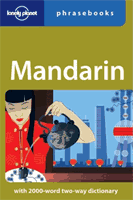
cover of the 6th edition of the Lonely Planet Mandarin phrasebookFor the latest (sixth) edition of its Mandarin phrasebook, Lonely Planet has abandoned its disastrous experiment with its own irregular and downright awful romanization system for Mandarin and switched back to full and exclusive use of Hanyu Pinyin.
No one should even think about buying the fifth edition, which is the one with the weird romanization. Another caveat: The covers for the Pinyin-less fifth edition and the Pinyin-using sixth edition have the exact same illustration; the only difference is in the background color. The fifth edition has a red background, while the sixth (shown here) has a greenish background.

Here’s a more or less random example of the romanization in the fifth edition. The book gives “jèr shìr shér·mer jùn” for what should be written “Zhè shì shénme zhàn?” (“What station is this?”) in Hanyu Pinyin. So in addition to having weird romanization, the fifth edition fails to put a capital letter at the beginning of a sentence and fails to include punctuation at the end. I see this sort of thing a lot and am puzzled by the practice. Capital letters at the beginning of a sentence and punctuation at the end — that’s not too much to ask, is it?

Moreover, sometimes the romanization does not match the Chinese characters! In the example above, for instance, the sentence in Chinese characters should read “这是什么站?” But instead it is written “这是哪个站?”, which would be “Zhè shì nǎge zhàn?” in Hanyu Pinyin. In this case, the two sentences mean basically the same thing. But on the very next page (p. 58) for the question “Do I need to change?” it gives “sēw·yào líng·chyén ma” (Pinyin: Xūyào língqián ma?).

This is a real howler. Somehow those responsible for writing the book managed to mix up two of the meanings of “change” in English. So the phrasebook will have unwary travelers asking not “Do I need to change trains to reach my destination?” but “Do I need coins?” A Chinese person hearing this would probably just answer “no” and ponder how very strange foreigners are to think they might specifically need coins on a train. So woe to the trusting Lonely Planet customer who needs to change trains! Admittedly, foreigners ending up in the wrong part of China as a result of such sloppiness may not have happened too often, since the given romanization is so weird that foreigners could probably not make themselves understood with it and had to point to the Chinese characters. At least the characters manage to give the correct question, Xūyào dǎochē ma? (需要倒车吗?), instead of Xūyào língqián ma? (需要零钱吗?). But that’s hardly enough to make up for such errors.

There are many more errors in the fifth edition. I certainly hope they have been corrected in the sixth; but I didn’t have time the other day in the bookstore to check for sure. If any readers of Pinyin News have a copy of the sixth edition, please let me know; I’d like to check if the Lonely Planet’s hovercraft is still full of eels.

Now that at least the weird romanization has been banished in favor of Hanyu Pinyin (would that Taiwan take that lesson to heart!), it would be good if Lonely Planet could get some other things right, like correcting the misinformation about Mandarin not being a real language but a “dialect.” Some of the word parsing is also incorrect. And the Mandarin-English dictionary should be available in alphabetical order, too, not just stroke order.

new book on language policy in Taiwan during the Japanese era

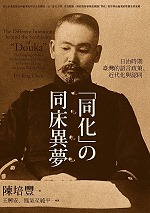
photo of the cover of the book discussed in this postWhile browsing at Eslite the other day I happened across a new book that sounds interesting: Tónghuà de tóngchuángyìmèng: Rìběn zhì shíqī Táiwān de yǔyán zhèngcè, jìndài huà yǔ rèntóng (同化的同床異夢: 日治時期臺灣的語言政策、近代化與認同), by Chen Pei-feng (Chén Péi-fēng / 陳培豐).

Although the book is written in Mandarin and has essentially no English, it has a strange but intriguing English title: The Different Intentions Behind the Semblance of “Douka”: The Language Policy, Modernization, and Identity in Taiwan during the Japan-Ruling Period. This doesn’t quite match the Mandarin.

I’d be interested in hearing from anyone who has read this.