Recently, Victor Mair posted an image from Taichung of an apostrophe r representing “Mr.” (Alphabetic “Mr.” and “Mrs. / Ms.” in Chinese)
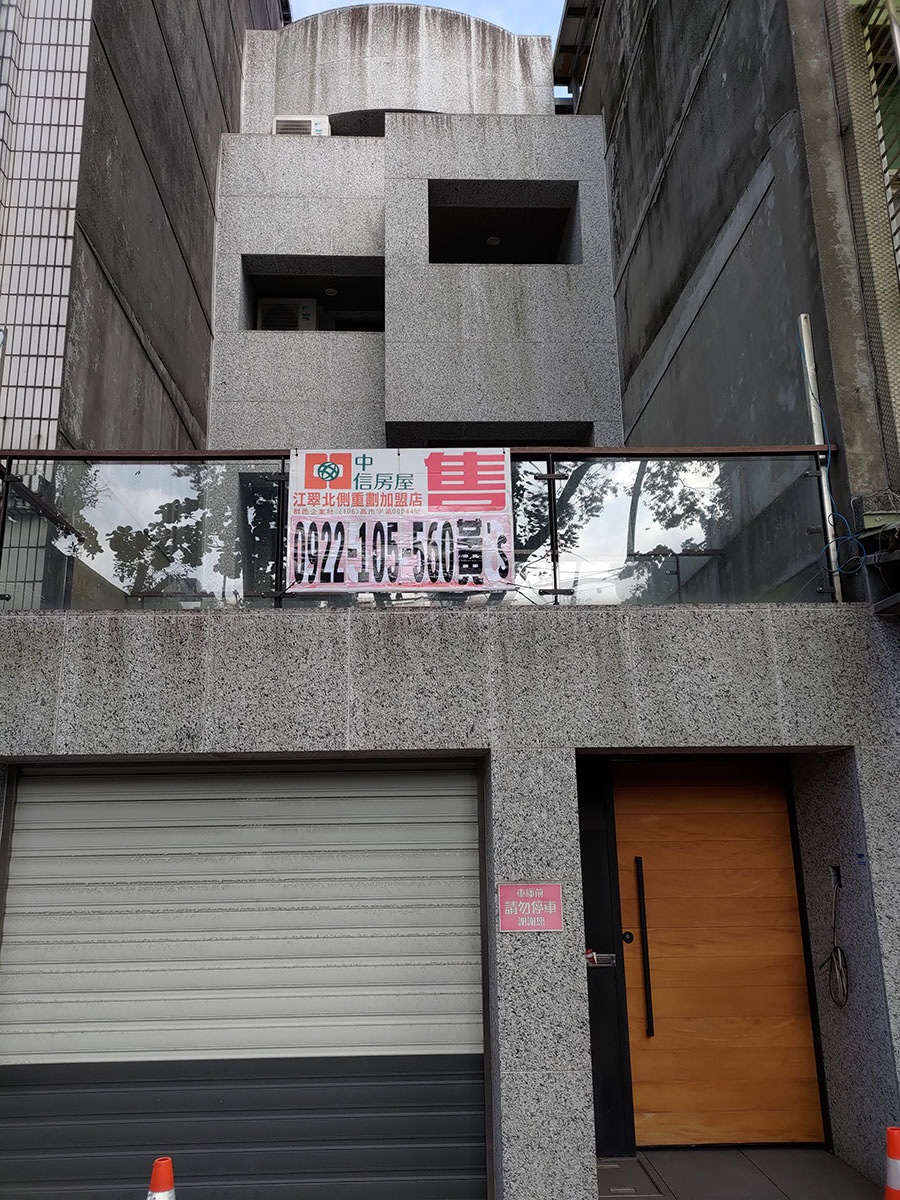
Here’s a companion image for a Ms. Huang.

Recently, Victor Mair posted an image from Taichung of an apostrophe r representing “Mr.” (Alphabetic “Mr.” and “Mrs. / Ms.” in Chinese)
Here’s a companion image for a Ms. Huang.
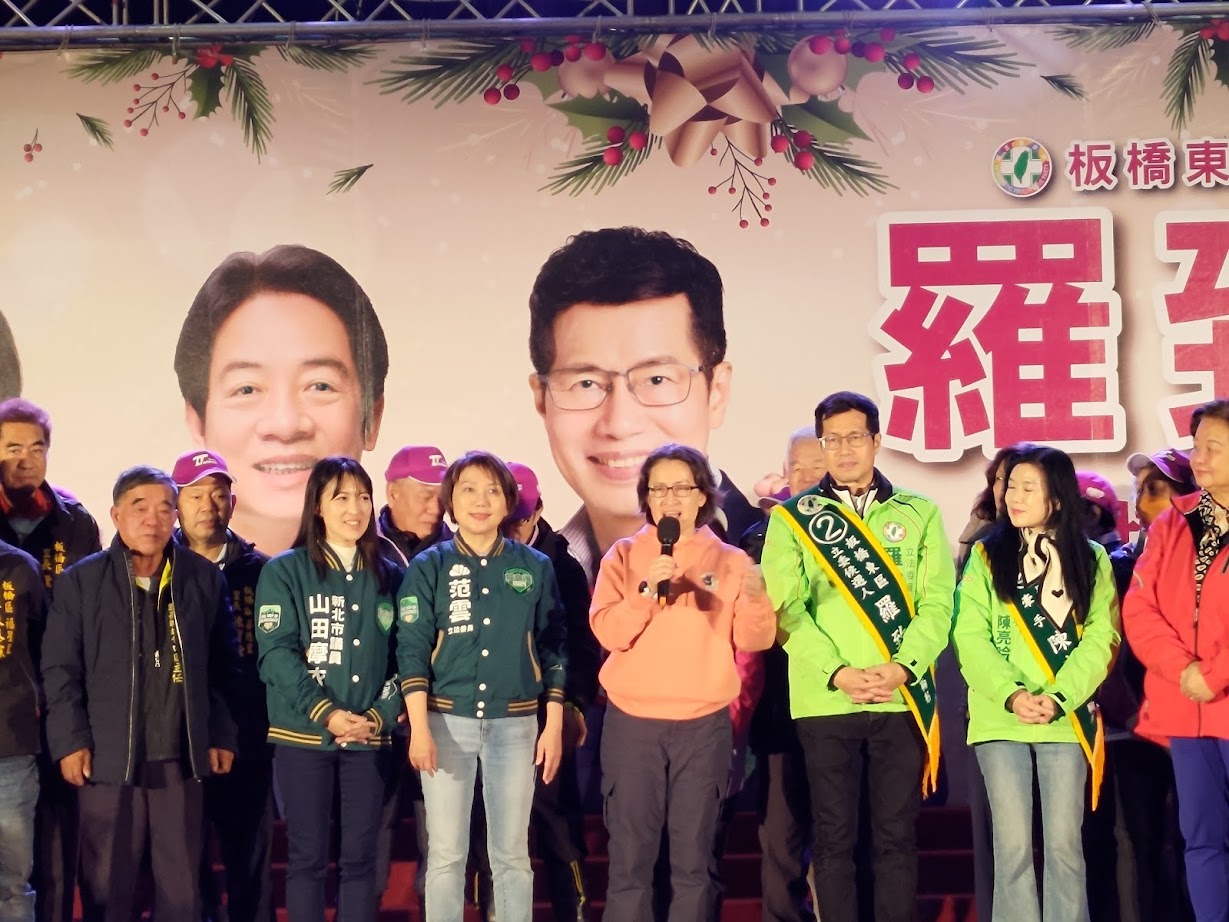
Earlier this evening I went to a rally for Hsiao Bi-khim, the Democratic Progressive Party’s candidate for vice president of Taiwan.
Most of the speakers at the rally, including Hsiao, spoke in Taiwanese, or in fluent code switching between Taiwanese and Mandarin. Hsiao, who spoke mainly in Taiwanese with some Mandarin mixed in, is more of a policy wonk than a tub-thumper. Although she struck me as better at campaign rallies than Tsai Ing-wen was earlier in her career, her remarks did include coverage of some things, important though they are, that aren’t typically used to boost crowd enthusiasm, such as working toward a tax treaty with the United States. But I was happy to hear her mention the importance of learning not just English but also keeping Taiwanese (Hoklo) and the languages of Taiwan’s indigenous peoples alive.
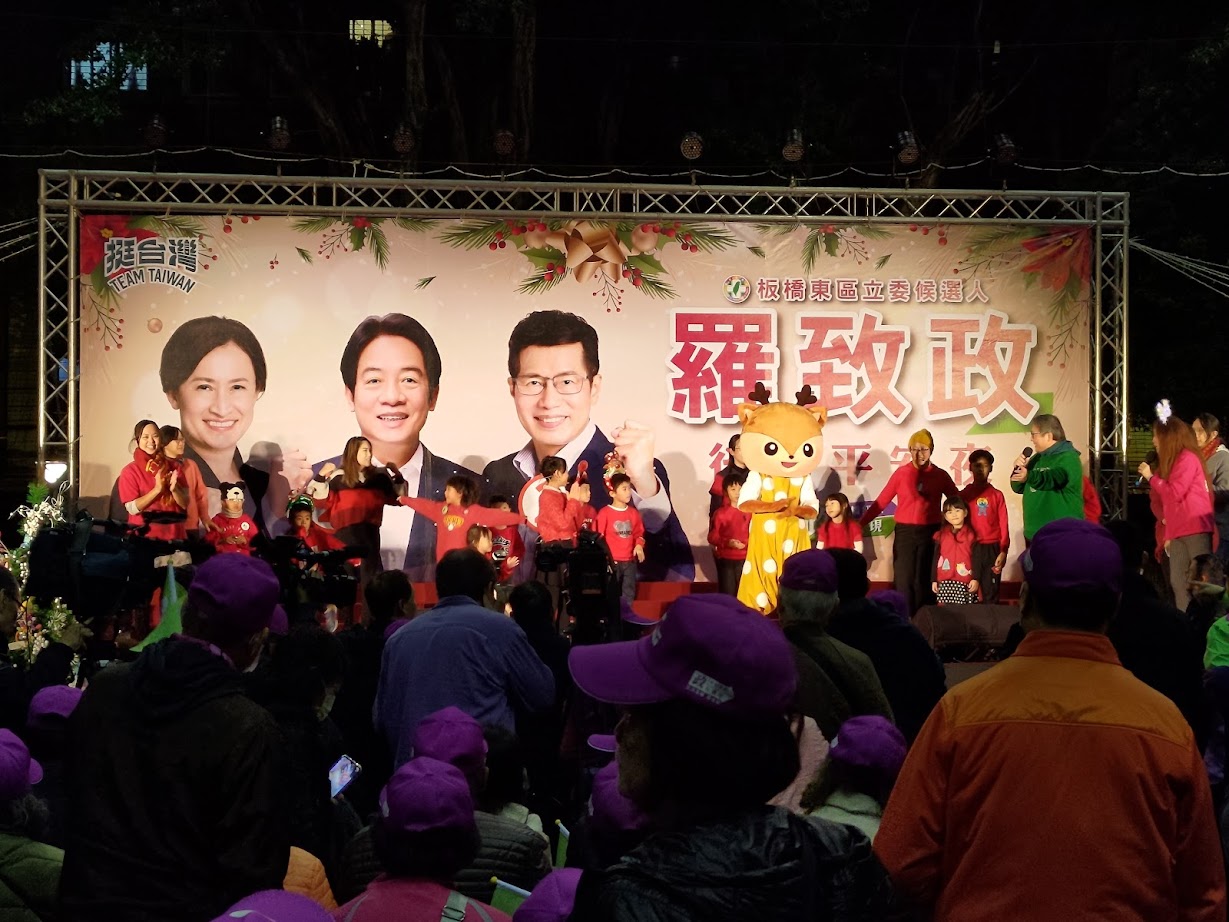
Part of the rally was in support of this, with a children’s group organized to help promote the speaking of Taiwanese among young people performing a skit in Taiwanese and then a rousing version of “Jingle Bells” in that language.
Hsiao is also a native speaker of English. I heard her speak (in English) about ten years ago and was impressed with her intelligence and thoughtfulness.
It’s times like this I especially miss John DeFrancis. How he would have loved this! It’s partially an example of what he dubbed “Singlish” — not Singapore English but Sino-English, the tortured attempt to use Chinese characters to write English. He details this in “The Singlish Affair,” a shaggy dog story that serves as the introduction to his essential work: The Chinese Language: Fact and Fantasy. (And I really do mean essential. If you don’t have this book yet, buy it and read it.)
Here are some lyrics from a popular song, “Count on Me,” by Bruno Mars, with a Mandarin translation. The interesting part is that a Taiwanese third-grader has penciled in some phonetic guides for him or herself, using a combination of zhuyin fuhao (aka bopo mofo) (sometimes with tone marks!), English (as a gloss for English! and English pronunciation of some letters and numbers), and Chinese characters (albeit not always correctly written Chinese characters — not that I could do any better myself). Again, this is a Taiwanese third-grader and so is someone unlikely to know Hanyu Pinyin.
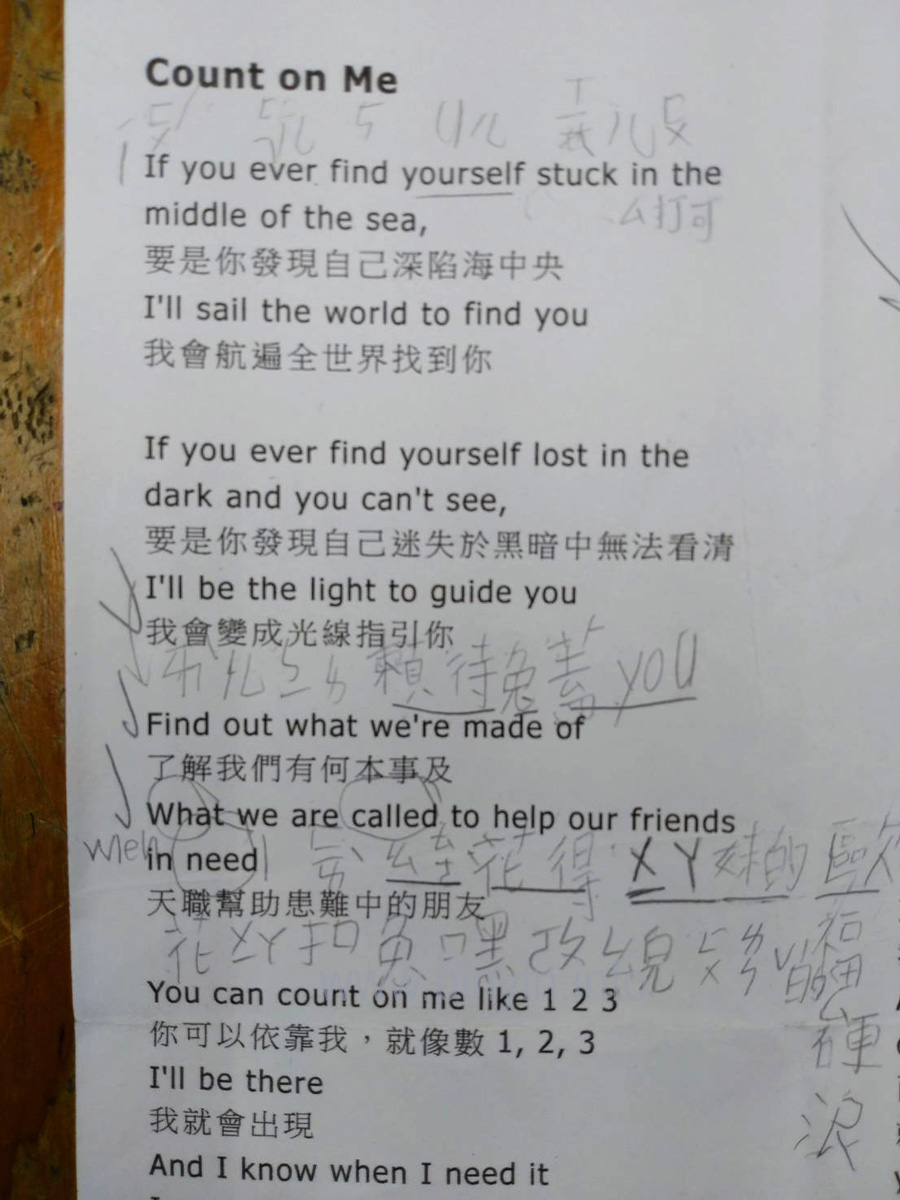
“If you ever find yourself stuck”
If |
ㄧˊㄈㄨˊ |
yífú |
| you | ||
| ever | ㄟㄈㄦ | ei-f’er |
find |
5 |
five |
| yourself | Uㄦㄒㄧㄦㄈㄨ | U’er xi’erfu |
stuck |
ㄙ打可 |
s-dake |
“I’ll be the light to guide you.”
I’ll |
ㄞㄦ |
ài’er |
be |
ㄅㄧ |
bi |
| the | ㄌ | l[e] |
light |
賴特* |
laite |
| to | 兔 | tu |
guide |
蓋 |
gai |
you |
you |
you |
“Find out what we’re made of”
Find |
ㄈㄞˋ |
fài |
out |
ㄠㄊㄜ |
ao-t’e |
what |
花得 |
huade |
we’re |
ㄨㄧㄚ |
wi’a |
made |
妹的 |
meide |
of |
歐福 |
oufu |
“When we are called to help our friends in need”
花 |
hua |
|
we |
ㄨㄧ |
wi |
are |
ㄚ |
a |
called |
扣 |
kou |
to |
兔 |
tu |
help |
嘿ㄜㄆ |
hei’e-p[e] |
our |
ㄠㄦ |
ao’er |
friends |
ㄈㄨㄌㄣˇ的ㄙ |
fulen-de-s |
in |
硬 |
ying |
need |
[?] |
[?] |
An observant reader sent in this relatively rare example in Taiwan of the use of Hanyu Pinyin with tone marks on signage
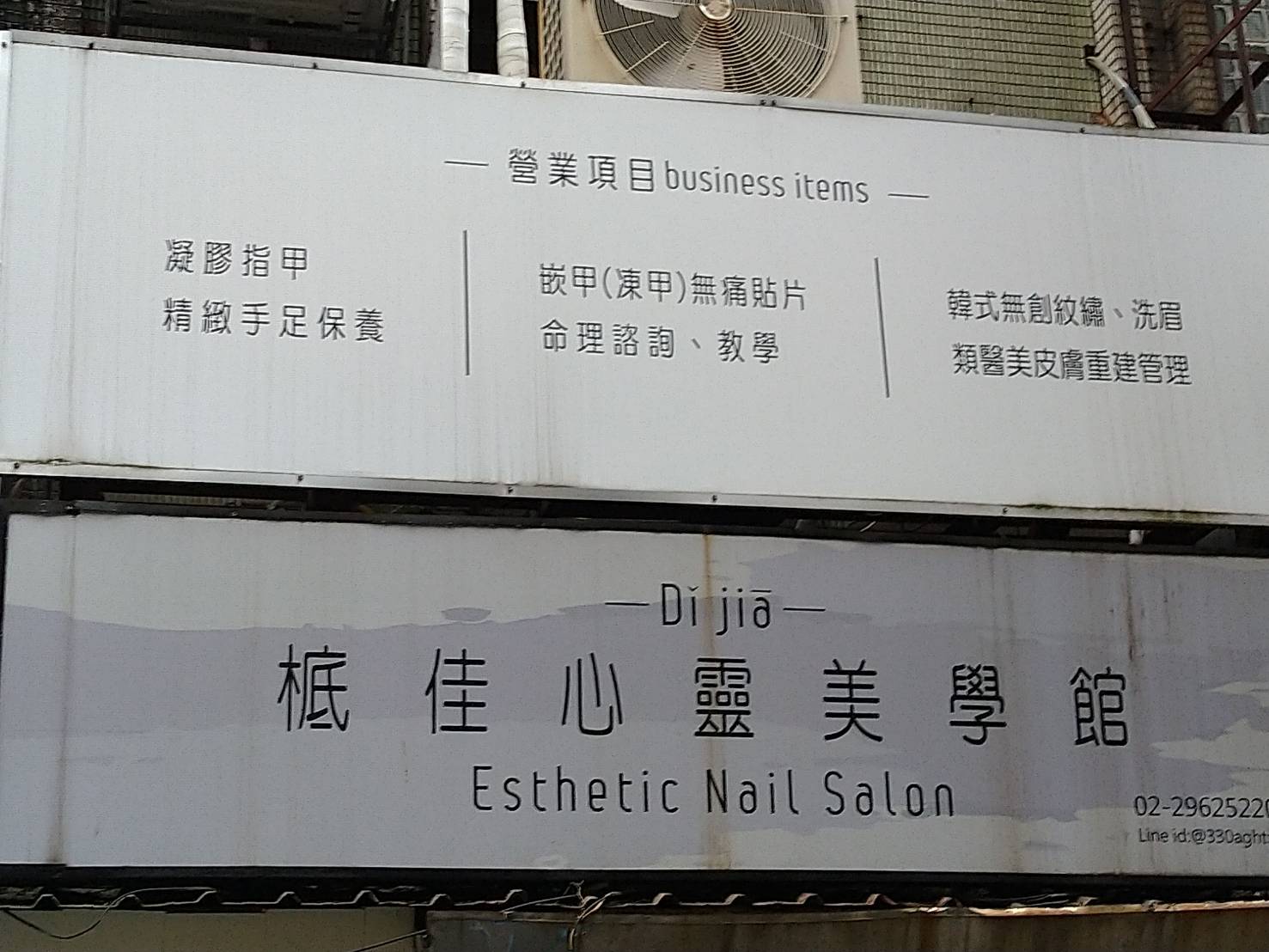
The Pinyin and especially the tone marks are a little thin, so I’ll give a closeup view:

The sign, here in aesthetic Banqiao, of course, reads:
Dǐ jiā
㭽佳心靈美學館
Esthetic Nail Salon
(Dǐ jiā xīnlíng měixué guǎn)
The Pinyin is not just “esthetic,” because most people probably don’t know the character ‘㭽’. Although they could probably take an educated guess that 㭽 is pronounced dǐ because of the 氐, that’s not the same thing as knowing for sure. So the Pinyin comes in handy even for most literate Taiwanese — if they can see it.
What’s especially surprising is that the people at the store went with Pinyin instead of zhuyin fuhao: ㄉㄧ ㄐㄧㄚ.
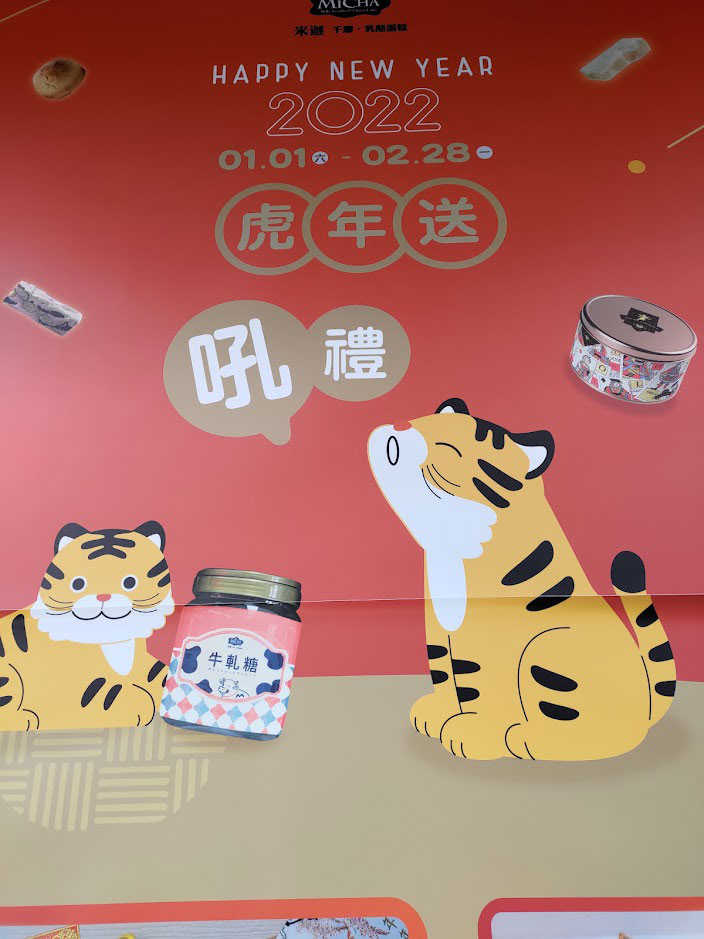
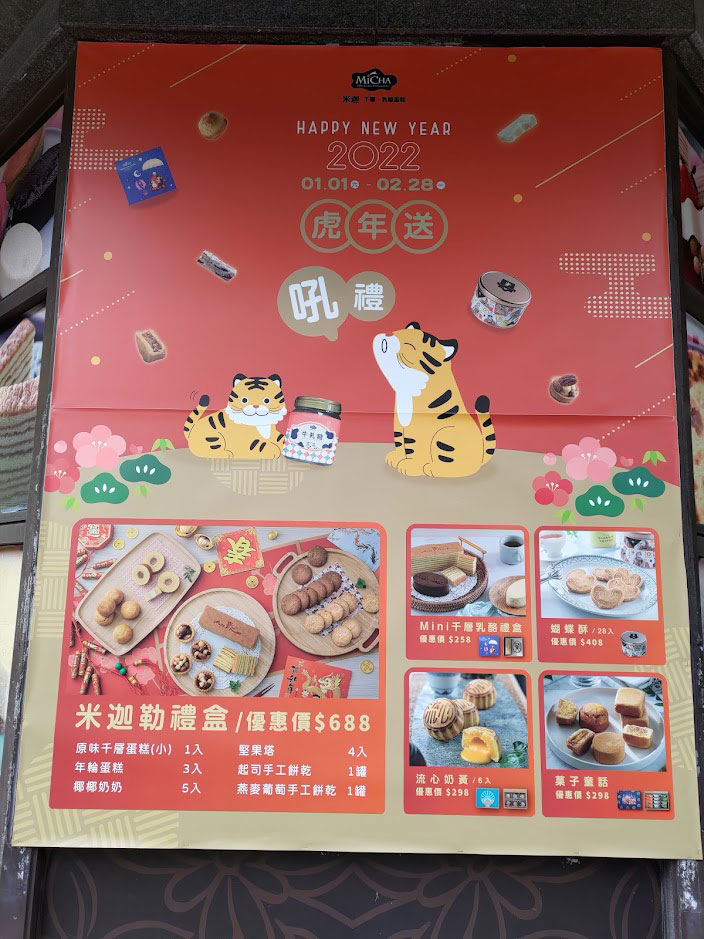
This is a cute ad for a bakery in Banqiao, Taiwan. The text in Chinese characters reads “虎年送吼禮” (Hǔnián sòng hǒu lǐ).
What’s odd about this is the character 吼, which is the character used to write the Mandarin word “hǒu” (howl, roar). So the text in English reads something like “[In the] Year of the Tiger, give roar gifts.”
This only makes proper sense when one knows that here “hǒu” is standing in for the Taiwanese word for “good” (in Mandarin: hǎo/好).
I ran into a reader of Pinyin.info the other day, which has had me feeling guilty for not posting anything in recent months. So here’s something I wrote nearly a year ago but never posted. The sign is now long gone, but the linguistic points remain the same.
Near the Banqiao train station is this sign, which advertises small apartments. (At just 13 or 14 ping, counting the shares of all of the “public” spaces, they are basically tiny.) It has a lot of points of note for so little text:
發樓ME (with the English “Follow me” there for clarity as well)
13坪.14坪
收租人生94爽
告別租隊友 live your life


Today I’d like to talk about a sign at a stand that sells guabao, a quintessential Taiwanese snack.
I took my own photo, but it didn’t make the guabao look particularly appetizing, so I’m using a public-domain image instead so you can see what one looks like if you don’t already know. But when I buy one I have them leave off the cilantro/xiāngcài. I hate that stuff.
Here’s the sign.
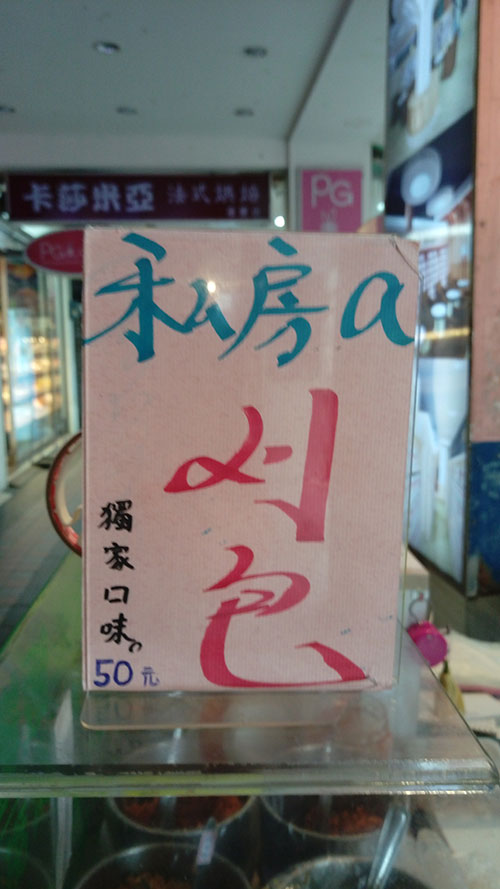
獨家口味
50元
(NT$50 is about US$1.50.)
The sign uses some Taiwanese, specifically “a刈包.” If the whole thing were in romanized Taiwanese, it would be
To̍k-ka kháu-bī
50 îⁿ
But parts of that are unidiomatic, as Taiwanese expert Michael Cannings informs me. (Alas, my Taiwanese sucks.) So this is a sign in both Taiwanese and Mandarin, which isn’t particularly surprising given that guabao is a Taiwanese food but most people in northern Taiwan use Mandarin most of the time. (I’m using the spelling “guabao” rather than “koah-pau” in most of this post because this is a Pinyin site.)
Something about this sign did surprise me a lot. Can you guess?
What seems to me most distinctive about this sign is that the Roman letter appears in lowercase rather than as “A”.
A single letter being used to represent a Sinitic morpheme in a text otherwise in Chinese characters is almost always written in upper case, e.g., A菜, 宮保G丁, K書. (Oh, that reminds me: I really need to answer that e-mail message about K. Sorry, Steven.)
In other words, if a sign is going to have the Roman letter “a” stand in for the Taiwanese possessive particle (the equivalent of Mandarin’s de/的), I would expect in this particular case for the sign to have “私房A” rather than “私房a”. I’m pleased by the use of lowercase; capital letters should be mainly for proper nouns and the beginnings of sentences.
It’s probably a one-off. But just in case I’ll be on the lookout to see if there’s a trend toward greater use of lowercase.
The text also presents a challenge: How should this be written in Pinyin? The last part (獨家口味 / 50元) is easy, because it’s just straight modern standard Mandarin:
But what to do with this?
Probably this:
It’s time again to play What’s That Character?
Feel free to ask others what they think, though enlisting the aid of historians and calligraphy masters would count as cheating, as all of these examples are not from a museum or a calligraphy scroll but from a sign outside a building meant to be read by all.
Chinese character number one:
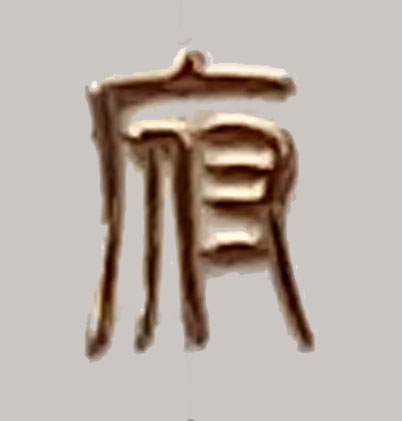
Chinese character number two:
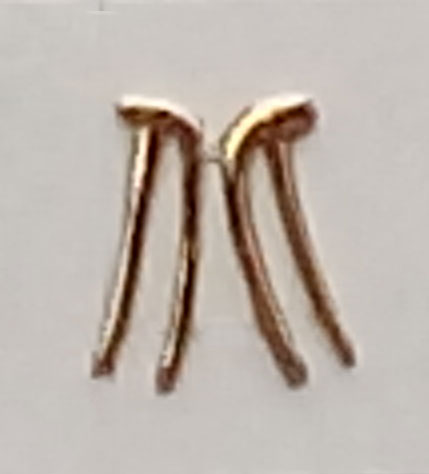
And Chinese character number three:

OK? Ready?
Here are the answers:
How’d you do?
*** SPOILERS BELOW ***
If you got even one right, hái bùcuò. That’s probably as well as or better than the average person literate in Chinese characters.
Here is the entire sign, which will probably make things much clearer.
If you’re a Mandarin speaker and used to reading Chinese characters, you can probably tell what the entire sign says without too much effort. But as this exercise may help to show, that is not because most people can truly read all the characters but because they can fill in the blanks, as it were, when presented with adequate context. Yes, those are all written in seal script, not in a modern style; but seal script is all that is given on the sign.
I want to stress that this isn’t a sign for a historical museum or even the Cultural Bureau. Nope, it’s for the Xinbei City Government’s Environmental Protection Department, here in lovely Banqiao. Those used to the ways of Taiwan (or maybe just the ways of the world) have probably already correctly guessed that it was the director who thought a seal-script font would be a good idea. (See the news stories below for more on that. Although the reports are from a couple of years ago, I took the photos just a couple of weeks ago.)
Don’t forget: If you want to put Chinese characters or tonal Pinyin in your comments, use the encoder first and copy and paste the results into the comments box.
News stories:


