
Lonely Planet switches back to Hanyu Pinyin for Mandarin phrasebook

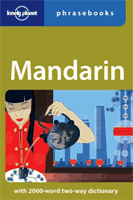
cover of the 6th edition of the Lonely Planet Mandarin phrasebookFor the latest (sixth) edition of its Mandarin phrasebook, Lonely Planet has abandoned its disastrous experiment with its own irregular and downright awful romanization system for Mandarin and switched back to full and exclusive use of Hanyu Pinyin.

No one should even think about buying the fifth edition, which is the one with the weird romanization. Another caveat: The covers for the Pinyin-less fifth edition and the Pinyin-using sixth edition have the exact same illustration; the only difference is in the background color. The fifth edition has a red background, while the sixth (shown here) has a greenish background.

Here’s a more or less random example of the romanization in the fifth edition. The book gives “jèr shìr shér·mer jùn” for what should be written “Zhè shì shénme zhàn?” (“What station is this?”) in Hanyu Pinyin. So in addition to having weird romanization, the fifth edition fails to put a capital letter at the beginning of a sentence and fails to include punctuation at the end. I see this sort of thing a lot and am puzzled by the practice. Capital letters at the beginning of a sentence and punctuation at the end — that’s not too much to ask, is it?

Moreover, sometimes the romanization does not match the Chinese characters! In the example above, for instance, the sentence in Chinese characters should read “这是什么站?” But instead it is written “这是哪个站?”, which would be “Zhè shì nǎge zhàn?” in Hanyu Pinyin. In this case, the two sentences mean basically the same thing. But on the very next page (p. 58) for the question “Do I need to change?” it gives “sēw·yào líng·chyén ma” (Pinyin: Xūyào língqián ma?).

This is a real howler. Somehow those responsible for writing the book managed to mix up two of the meanings of “change” in English. So the phrasebook will have unwary travelers asking not “Do I need to change trains to reach my destination?” but “Do I need coins?” A Chinese person hearing this would probably just answer “no” and ponder how very strange foreigners are to think they might specifically need coins on a train. So woe to the trusting Lonely Planet customer who needs to change trains! Admittedly, foreigners ending up in the wrong part of China as a result of such sloppiness may not have happened too often, since the given romanization is so weird that foreigners could probably not make themselves understood with it and had to point to the Chinese characters. At least the characters manage to give the correct question, Xūyào dǎochē ma? (需要倒车吗?), instead of Xūyào língqián ma? (需要零钱吗?). But that’s hardly enough to make up for such errors.

There are many more errors in the fifth edition. I certainly hope they have been corrected in the sixth; but I didn’t have time the other day in the bookstore to check for sure. If any readers of Pinyin News have a copy of the sixth edition, please let me know; I’d like to check if the Lonely Planet’s hovercraft is still full of eels.

Now that at least the weird romanization has been banished in favor of Hanyu Pinyin (would that Taiwan take that lesson to heart!), it would be good if Lonely Planet could get some other things right, like correcting the misinformation about Mandarin not being a real language but a “dialect.” Some of the word parsing is also incorrect. And the Mandarin-English dictionary should be available in alphabetical order, too, not just stroke order.
new book on language policy in Taiwan during the Japanese era

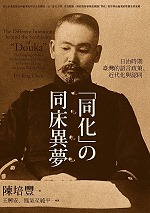
photo of the cover of the book discussed in this postWhile browsing at Eslite the other day I happened across a new book that sounds interesting: Tónghuà de tóngchuángyìmèng: Rìběn zhì shíqī Táiwān de yǔyán zhèngcè, jìndài huà yǔ rèntóng (同化的同床異夢: 日治時期臺灣的語言政策、近代化與認同), by Chen Pei-feng (Chén Péi-fēng / 陳培豐).

Although the book is written in Mandarin and has essentially no English, it has a strange but intriguing English title: The Different Intentions Behind the Semblance of “Douka”: The Language Policy, Modernization, and Identity in Taiwan during the Japan-Ruling Period. This doesn’t quite match the Mandarin.

I’d be interested in hearing from anyone who has read this.

Beijing’s reaction to Taiwan’s language-education moves

China’s unofficial propaganda machine has come up with a predictable response to Taiwan’s recent approval of an official romanization for Hoklo/Taiwanese, calling it an attempt at wenhua Tai-Du (“cultural Taiwanese independence”). And Beijing doesn’t much care for earlier developments, either:

Lìngwài jù bàodào, zǎo zài 2002 nián Táiwān dāngjú “Jiàoyùbù” jiù zuòchū juéyì, Táiwān xuésheng cóng xiǎoxué sānniánjí kāishǐ tíqián shíshī xiāngtǔ yǔyán Mǐnnányǔ, Kèjiāyǔ de “yīnbiāo fúhào” xìtǒng jiāoxué, yǐ tú jìnyībù qiēduàn Táiwān yǔ zǔguó dàlù de wénhuà niǔdài. Rújīn yòu zài Táiwān gè zhōng-xiǎoxué tuīxíng “Táiwān Mǐnnányǔ Luómǎzì pīnyīn fāng’àn”, qǐtú yǐcǐ ruòhuà yǔ Pǔtōnghuà jiējìn de “Guóyǔ” zài Táiwān de dìwèi. Zhèizhǒng kèyì zài wénhuà shàng zhìzào Táiwān yǔ zǔguó dàlù de chāyì yǔ qūfēn, shì Táiwān dāngjú chìluǒluǒ de “wénhuà Tái-Dú” tǐxiàn.

(另据报道,早在2002年台湾当局“教育部”就做出决议,台湾学生从小学三年级开始提前实施乡土语言闽南语、客家语的“音标符号”系统教学,以图进一步切断台湾与祖国大陆的文化纽带。如今又在台湾各中小学推“台湾闽南语罗马字拼音方案”,企图以此弱化与普通话接近的“国语”在台湾的地位。这种刻意在文化上制造台湾与祖国大陆的差异与区分,是台当局赤裸裸的“文化台独”体现。)

Blah, blah, blah.

source: “Wénhuà Tái-Dú” — Mǐnnányǔ pīnyīn xìtǒng chūlú ([两岸纪行]“文化台独” 闽南语拼音系统出炉), October 17, 2006, ChinaTaiwan.org

Hainan primary school kicks out new student for poor Mandarin

A man surnamed Huang enrolled his boy in school in Sanya, Hainan Province, China. But the boy’s teacher, after receiving no response to his question in Mandarin as to which student was named A Hao, decided school was no place for a child who didn’t speak Mandarin. The youngster could return after mastering Mandarin, the teacher said. (“Xuéhuì Pǔtōnghuà zàilái shàngxué ba.”)

Although the school has defended the indefinite suspension of the small child, citing “safety concerns,” it doesn’t seem to have many supporters of this action. Mr. Huang is considering a lawsuit against the school, and the district’s authorities have launched an investigation.

Mandarin is not even the native language for that part of China. The linguistic situation on Hainan is similar to that in Taiwan: most of the native population grew up speaking Hoklo or a non-Sinitic “minority” language, which are all suppressed in favor of Mandarin, whose speakers have poured in relatively recently. Although the active suppression of non-Mandarin languages in Taiwan is no longer as active as before or as the situation remains in China, indirect suppression remains very much in force.

Huáng xiānsheng xiàng jìzhě fǎnyìng, yóuyú gōngzuò xūyào, tā jiāng qī’ér cóng Hǎinán Shěng Wànnìng Shì bāndào Sānyà Shì Ānyóu Dìqū. Tā dǎsuan jiāng háizi sòngdào fùjìn de Ānyóu Xiǎoxué dúshū, dànshì háizi yīn bù huì Pǔtōnghuà ér bèi lèlìngtuìxué.

Qǐyīn: háizi zǒucuò jiàoshì

Huáng xiānsheng duì jìzhě shuō, háizi dì-yī tiān kāixué huílai hòu jiù duì tā shuō: “Bàba, wǒ zǒucuò jiàoshì le, lǎoshī jiào nǐ míngtiān qù yīxià xuéxiào.”

Dì-èr tiān, Huáng xiānsheng láidào xuéxiào hòu cái dézhī wèntí de yánzhòngxìng. Xiàozhǎng gàosu tā, tā de háizi yīn zǒu cuòle jiàoshì, ràng quán xuéxiào lǎoshī wèicǐ xūjīng yī chǎng. Bānzhǔrèn liǎng cì dào xuésheng qián bān xúnwèn něige xuésheng jiào Ā Hào, dànshì Ā Hào zuòzài jiàoshì lǐ què méiyǒu huídá. Bānzhǔrèn duì Huáng xiānsheng shuō, “Wǒ yī dào xuéxiào, Lóng lǎoshī jiù gēn wǒ shuō, ràng nǐ de háizi huíjiā ba, xuéhuì Pǔtōnghuà zàilái shàngxué ba.”

Huáng xiānsheng shuō, tā de háizi yuánlái zài lǎojiā dúguò yī niánjí, chéngjì bùcuò, dàn zài jiāxiāng jiǎng de duō shì Hǎinán huà, yīncǐ, tā de háizi shuō Pǔtōnghuà de nénglì hěn chà, zhǐnéng jiǎndān de tīngdǒng yīdiǎn.

Jiāzhǎng: yào dǎ guānsi tǎo gōngdào

Huáng xiānsheng duì jìzhě shuō, tā de xiǎohái yòu méiyǒu fàn cuòwu, méiyǒu shénme guòcuò, jiù yīnwèi bù huì Pǔtōnghuà, zǒu cuòle jiàoshì, jiù zhèyàng bèi chéngfá, zhè tài bù gōngpíng le. Jìrán xuéxiào yǐ tōngguò kǎoshì tóngyì qí bàomíng, jiù xiāngdāngyú shuāngfāng qiān le héyuē, xuéxiào bùnéng dānfāngmiàn huǐyuē.

Huáng xiānsheng chēng, wèile háizi de dúshū quánlì, tā jiāng dào jiàoyù zhǔguǎn bùmén tóusù, bìng dǎsuan jiāng xuéxiào gào shàng fǎtíng, wèi háizi tǎo huí gōngdào.

Xuéxiào: shìwéi ānquán kǎolǜ

Jìzhě jiù Huáng xiānsheng fǎnyìng de qíngkuàng láidào Ānyóu Xiǎoxué héshí qíngkuàng. Gāi xuéxiào Shàn xiàozhǎng jiēshòu jìzhě cǎifǎng shí chēng, gāi xuésheng bù shì běnxiào fànwéi nèi de xuésheng, yòu tīngbudǒng Pǔtōnghuà, bù huì yǔ rén jiāoliú. Shàn xiàozhǎng shuō, ràng gāi xuésheng tuìxué de zhíjiē yuányīn shì, gāi xuésheng zǒu cuòle jiàoshì, quán xuéxiào shī-shēng dàochù zhǎo, tā què zuòzài xué; qián bān de jiàoshì lǐ yī shēng bù kēng, xià de quán xuéxiào lǎoshī xūjīng yī chǎng. Shàn xiàozhǎng biǎoshì, rúguǒ bù fāshēng zhèyàng de shì, xuéxiào jiù bù huì lèlìng qí tuìxué le, zhè zhǔyào shì cóng ānquán fāngmiàn lái kǎolǜ de.

Jiàoyùjú: xuéxiào zuòfǎ bùduì

Jiù Huáng xiānsheng fǎnyìng qí háizi yīn bù huì Pǔtōnghuà ér bèi lèlìngtuìxué yīshì, jìzhě cǎifǎng le Sānyà Shì Jiàoyùjú fù júzhǎng zhāng wèi lán. Zhāng fù júzhǎng shuō, xuéxiào de zuòfǎ kěndìng bùduì, bùnéng yīnwèi xuésheng bù huì shuō Pǔtōnghuà jiù lèlìngtuìxué. Háizi bù huì Pǔtōnghuà, dào xuéxiào zhèyàng de huánjìng zhōng jiù kěyǐ xuéhǎo Pǔtōnghuà, zhè yěshì yī zhǒng xuéxí de guòchéng.

Zhāng fù júzhǎng shuō, huì pài yǒuguān rényuán yǔ xuéxiào xiétiáo, zélìng Ānyóu Xiǎoxué gǎizhèng cuòwù, jìxù ràng Huáng xiānsheng de háizi lái shàngxué.

Lǜshī: háizi yǒu dúshū quánlì

Jiù gāi xuésheng bèi xuéxiào lèlìngtuìxué yīshì, jìzhě cǎifǎng le Sānyà Shì yán bì xìn lǜshī shìwùsuǒ lǜshī chén chuān Huà xiānsheng. Chén lǜshī shuō, gēnjù wǒguó wèichéngniánrén bǎohù fǎ hé jiǔ nián zhì yìwù jiàoyùfǎ, wèichéngniánrén tóngyàng xiǎngyǒu shòu jiàoyù de quánlì, xuéxiào, shèhuì, jiātíng yǒu yìwù ràng wèichéngniánrén dúshū. Chén lǜshī rènwéi, Ānyóu Xiǎoxué de zuòfǎ shì wéifǎn yǒuguān fǎlǜ fǎguī de, xuésheng jiāzhǎng wánquán kěyǐ tōngguò fǎlǜ tújìng wèi qí háizi tǎo huí gōngdào.

sources:

At least 40% of people in PRC can’t speak Mandarin: official

The head of China’s department charged with getting everyone in the country to speak Mandarin admitted on Monday that at least 40 percent of those in the PRC can’t speak the country’s official language.

A survey from 2004 gave the figure of 47 percent of China’s population able to speak Mandarin. Even assuming that figure is correct (not a wise thing to do with PRC statistics), I doubt there has been much of a change since then.

The figures include those who are not native speakers of the language and may not speak it often.

Yuan Zhongrui, director of the Mandarin popularization department under the Ministry of Education, said that those who cannot speak Mandarin “are mainly those with ‘little education,’ or ‘the illiterate,’ and most of them are rural residents.” This describes the majority of the country’s population — and also those hardest to reach with Mandarin programs.

China is unlikely have all of its population speak Mandarin any time in the foreseeable future, an official from the same department admitted earlier this year.

sources and further readings:

Festschrift for John DeFrancis now available for free

Most readers of Pinyin News will already know of John DeFrancis, editor of the ABC Chinese-English Comprehensive Dictionary and author of The Chinese Language: Fact and Fantasy and many other important works. (If you haven’t read The Chinese Language: Fact and Fantasy yet, order it now.)

In recognition of the 95th(!) birthday today of Professor DeFrancis, Sino-Platonic Papers is rereleasing Schriftfestschrift: Essays in Honor of John DeFrancis on His Eightieth Birthday. Previously, this important compilation, which runs more than 250 pages, was available only in a printed edition priced at US$35. The fifteenth-anniversary edition, however, is being released for free as a PDF (15 MB — so have a fast Internet connection, or a lot of patience).

I’d like to draw special attention to an article written in Pinyin: “Hanzi Bu Tebie Biaoyi,” by Zhang Liqing. (Zhang’s work also appears here on Pinyin Info, in her translations of The Historical Evolution of Chinese Languages and Scripts and of the amazing Comparing Chinese Characters and a Chinese Spelling Script — an evening conversation on the reform of Chinese characters.)

Feel free to print out a copy of the Schriftfestschrift for your own use or for inclusion in a library. Just don’t sell it.

The original publication contained several color photos. I’ll add those later. Also, the English tex is searchable to some degree, as I used OCR after scanning these pages; but the results weren’t perfect.

Here are the contents:

  • Tabula Gratulatoria
  • Introduction, by Victor H. Mair
  • Publications of John DeFrancis
  • Hanzi Bu Tebie Biaoyi, by Zhang Liqing
  • Typology of Writing Systems, by Zhou Youguang
  • Dui Hanzi de Jizhong Wujie, by Yin Binyong
  • The Information Society and Terminology, by Liu Yongquan
  • A Bilingual Mosaic, by Einar Haugen
  • The Polysemy of the Term Kokugo, by S. Robert Ramsey
  • Memorizing Kanji: Lessons from a Pro, by J. Marshall Unger
  • Why Chinese Is So Damn Hard, by David Moser
  • Ethnolinguistic Notes on the Dungan, by Lisa E. Husmann and William S-Y. Wang
  • Korean Views on Writing Reform, by Wm. C. Hannas
  • Language Policies and Linguistic Divergence in the Two Koreas, by Ho-min Sohn
  • Okinawan Writing Systems, Past, Present, and Future, by Leon A. Serafim
  • Proposal of a Comparative Study of Language Policies and Their Implementation in Singapore, Taiwan, and China (PRC), by Robert L. Cheng
  • The Topical Function of Preverbal Locatives and Temporals in Chinese, by Feng-fu Tsao
  • Yes-No Questions in Taipei and Peking Mandarin, by Robert M. Sanders
  • Patronizing Uses of the Particle ma: Bureaucratic Chinese Bids for Dominance in Personal Interactions, by Beverly Hong Fincher
  • Gender and Sexism in Chinese Language and Literature, by Angela Jung-Palandri
  • A zhezi Anagram Poem of the Song Dynasty, by John Marney
  • Some Remarks on Differing Correspondences in Old Chinese Assumed to Represent Different Chinese Dialects, by Nicholas C. Bodman
  • Can Taiwanese Recognize Simplified Characters?, by John S. Rohsenow
  • Simplified Characters and Their (Un)relatedness, by Chauncey C. Chu
  • The Teaching of Culture and the Culture of Teaching: Problems, Challenges, and Opportunities in Language Instruction, by Eugene Eoyang
  • The Culture Component of Language Teaching, by Kyoko Hijirida
  • Thinking About Prof. John DeFrancis, by Apollo Wu
  • Wo suo Renshi de De Xiansheng, by Chih-yu Ho
  • Two Poems for Professor John DeFrancis, by Richard F. S. Yang
  • Announcement, by Stephen Fleming

Happy birthday, John! And many happy returns!

Don’t use rare characters in teaching Taiwanese: official

It looks like some standardization might slowly be coming to the teaching in Taiwan of Taiwanese and Hakka. Beginning with the 2007-2008 school year, material from publishing companies for teaching “local languages” (i.e., Taiwanese, Hakka, and, sometimes, the languages of Taiwan’s tribes) must first pass inspection by the Ministry of Education. The ministry should have its own teaching materials ready by the 2009-2010 school year. Schools will be free to choose among textbooks from publishers or from the ministry.

Specifically, publishers should by all means avoid dredging up obscure Chinese characters to use for Taiwanese morphemes, Pan Wen-zhong, a high-ranking official with the ministry, said on Monday. There are easier ways to read and write the language than with such characters, especially when teaching elementary school students, he noted.

As much as I agree with this, it is still probably a case of too little, too late.

國小鄉土語言教材怪字連篇、拼音混亂的情況,很多家長教起孩子既頭痛、又氣 憤。教育部國教司長潘文忠表示,96學年度起,民間編印的鄉土語言教材,一律要 先經過審查,才能選用,一些罕見的怪字可望從教材中消失。

教育部國語推行委員會也已經著手編印閩南語、客家語教材,預計98學年度開始, 學校教閩南語或客語,就可以選用部編本教材。

在審定本和部編本教材還沒有出來之前,潘文忠呼籲老師使用既有教材教鄉土語言 時,盡量不要教、不要用罕見漢字。尤其是小學生,他強調應該使用「老師教過、 學生學過」的字辭,像蟑螂就用蟑螂,不必刻意教閩南語發音的新辭,更不要用罕 見字。

國小民編本鄉土語言教材怪字連篇的情況,多年來在立法院和地方議會經常被批 評,連官員都被考倒,家長更是苦不堪言。光是蟑螂、蒼蠅這些日常生活中常用 辭,不同教材,蟑螂就有「虼」、「假裁縫」等不同寫法,蒼蠅也有「真司公」、 「呼神」、「胡蠅」、「互蠅」等用法。

source: xiāngtǔyǔ jiàocái yào xiàn shěn — bùnéng yòng qíguài Hànzì (鄉語教材要先審 不能用怪字), August 27, 2006

Turkey, Hunchback, and Stinky Head — more on no-no names in Malaysia

A-giâu’s attempt at reconstructing some of the Sinitic names on Malaysia’s list of forbidden personal names (which I posted on yesterday) had me feeling a little guilty that I didn’t do more research on this. So I did some additional digging and came up with an article that listed some of the Hanzi (Chinese characters).

Here are the Sinitic names, as given in the article (see ref. below). I’ve added romanization in Pinyin and approximate English translations. A few of these, though, have me perplexed. What, for example, is so bad about Hor Kianh (??)?

Hoklo/Hokkien/Taiwanese

source’s romanization Hanzi Romanization in Pinyin (Mandarin) English translation
Ah Chwar 阿蛇 Ā Shé Snake
Ang Mor 紅毛 Hóngmáo Westerner (figuratively; literally: “red hair”)
Heoy Kay 火雞 Huǒjī Turkey
Hor Kianh 虎仔 Hǔzi Tiger
Khiow Koo 駝背 Tuóbèi Hunchback
Tok Sim 毒心 Dúxīn Evil Mind
Tua Pooi 大肥 Dà Féi Fatty
Tua Bug 大目 Dà Mù Big Eyes

Cantonese

source’s romanization Hanzi Romanization in Pinyin (Mandarin) English translation
Ai Chai 矮仔 Ǎizi Dwarf
Chow Kow 臭狗 Chòu Gǒu Smelly Dog
Chow Tow 臭頭 Chòu Tóu Stinky Head
Sor Chai 傻仔 Shǎzi Fool
Kou Lou 高佬 Gāo Lǎo Tall Devil
Tai Ngan 大眼 Dà Yǎn Big Eyes
Soh Low 傻佬 Shǎ Lǎo Stupid Imp
Tai Yee 大耳 Dà Ěr Big Ears

Mandarin

source’s romanization Hanzi Romanization in Pinyin (Mandarin) English translation
Ar Loo 阿驢 Ā Lǘ Donkey
Hwai Sze 壞死 Huàisǐ Bad Death
Chang Chee 娼妓 Chāngjì Prostitute
Ho Sze 猴子 Hóuzi Monkey
Sun Choo 山豬 Shānzhū Wild Boar
Tha Thaw 大頭 Dàtóu Wastrel, Silly Person (lit. “Big Head”)
Chue Sze 豬仔 Zhūzi Piggy
Sze Kwee 死鬼 Sǐguǐ Devil

source: Jiazhang wèi háizi qumíng xuzhi: Agou, Jizi, A-Zhuàng jìn yòng (????????? ????????), China Press (Malaysia), July 30, 2006