Hakka
Archived Posts from this Category
news and discussions related to romanization
Archived Posts from this Category
Posted by site admin on 04 Sep 2007 | Tagged as: Chinese, Hakka, Taipei, Taiwan
What’s being touted as the first Broadway-style Hakka musical will open in October at Taipei’s National Theater. The play, “Fú chūn jiànǚ” (to give the Mandarin title) (「福春嫁女」, My Daughter’s Wedding), is based on Shakespeare’s The Taming of the Shrew.
sources and further reading:
Posted by site admin on 06 Aug 2007 | Tagged as: Aborigine languages, Chinese, Chinese characters, Hakka, Hanyu, Mandarin, Taiwan, languages, literacy, romanization, writing systems
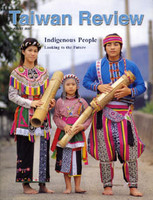
The most recent issue of Taiwan Review has a number of articles about Taiwan’s aborigines. I found two of them particularly interesting: Giving Indigenous People a Voice, which discusses Taiwan Indigenous TV, a television station established in July 2005 for Taiwan’s aboriginal population, and Whither Aboriginal Education?, which consists of excerpts from a panel discussion.
From “Giving Indigenous People a Voice”:
[T]he station is struggling with how to broadcast to people from 13 tribes, each of which speak a different language and have widely different customs.
“It’s very difficult to be fair,” says station director Masao, himself from the Atayal tribe. “Out of 13 tribes, which tribe’s language do you choose to broadcast in? So we have no choice but to use Mandarin” (the language of the majority Han Chinese population). “Some Atayal viewers complain there’s too little Atayal news. Of course it would be best if every tribe had its own channel, but that’s impossible.”
Another problem the station faces is finding skilled aboriginal staff, especially reporters and technicians, and those who can speak their own tribal language, even if not fluently….
Kolas, who grew up in the city with no aboriginal friends, recalls realizing the importance of being able to speak her own language when she first switched from being a mainstream reporter to being a reporter covering aboriginal issues for TITV.
“I realized that, just because I was an aborigine, it didn’t mean I could get interviews with aborigines. Without speaking their language, it was very hard for me to win their trust and interview them,” she says. She is now studying the Amis language.
Less than 5 percent of aboriginal children can speak their own language, Masao estimates, but like many things concerning aborigines, no solid statistics are available. To encourage the learning of one’s own language, the station has now made it an employment requirement….
The desuetude of aboriginal languages is such a problem that the TV station is trying to devote more airtime to tribal language broadcasting. Throughout the day, tribal folk tales are told in tribal languages, although the programs are generally short, resembling commercial breaks. Once a week, there are news programs in a select number of tribal tongues. The main programs, however, including news and cooking shows, are mostly broadcast in Mandarin, unlike another Taiwanese minority channel, Hakka TV, which broadcasts almost entirely in the Hakka language.
From “Whither Aboriginal Education?”:
Sun Ta-chuan: The truth is that many of the tribes have been integrated into modern society and traditional skills such as building a slate house or building a canoe no longer exist. Children of indigenous families that have moved to the cities no longer speak their mother tongues and nor do many of those who still live in the tribal areas. The thing is that we cannot force aboriginal children to shoulder the responsibility of keeping their cultures alive. The question is, should all aboriginal children receive education about the indigenous peoples from preschool to college, or are a couple of hours a week enough? I think the way to go is a “limited two-track” system, where students are free to change track between a complete aboriginal education and regular education.
Teachers are another problem. When the College of Indigenous Studies was set up, we were hoping that it could be equipped with aboriginal faculty members but in reality most of them are not. The standard for recruiting faculty members was the same as any other university [i.e., Ph.D.s are required for most faculty positions]. But where can you find someone with a doctorate to teach an indigenous language? We complained, but to no avail. In fact, we did not know what to teach the students, because there were no textbooks about aboriginal cultures and we had to compile our own teaching materials. Currently in tribal primary and high schools, people who have completed regular normal education and receive some hours of extra courses can teach indigenous culture. That is way too easy to qualify a teacher.
The problem is that we have been making a lot of effort in education for indigenous people, but there has been little done in the way of education about them. If we are determined to work on the latter, we need to invest a lot more. The government has actually invested a lot in local education, but it is mostly about Taiwanese and Hakka cultures. From my point of view, aboriginal languages and cultures are in much greater danger than these two, but are not receiving the same level of investment. There are millions who speak Taiwanese and Hakka, but each and every one of Taiwan’s indigenous languages is in immediate danger of disappearing. Take my people, the Pinuyumayans, there are only 10,000 of us and fewer than 2,000 speak our mother tongue.
Take the preservation of languages. The government has spent considerable time and money on this. Normally, you need to have a romanization system for the languages to be able to compile the teaching materials and then you establish the tribal language certification system. But the government started to issue certificates before the romanization system came out in 2006. The same goes for the teaching materials. The fundamental reason for this waste of money and time is the lack of a policy goal, and consequently that of a blueprint and efficient process for its execution. Facing these problems, I think we had better slow down and rethink carefully our goals and priorities.
Wang Ming-huey: The key problem, I think, is that the education provided for aborigines diverges from the work of cultural transmission. Though the Indigenous Peoples Basic Act and the Education Act for Indigenous Peoples are made to promote indigenous ethnic cultures, neither the goal nor the nature of the education to be given the indigenous peoples is clearly stated therein. We hope to change the past experience of being assimilated into the rulers’ cultures–first the Japanese and then the Kuomintang, but we find no way.
Establishing a university for ethnic communities is indicative of what the new law attempts to achieve. But the curriculum taught at the College of Indigenous Studies covers such subjects as anthropology, sociology, ethnology, or political science, and Mandarin is still the language used to teach, which is no different from teaching at regular colleges. Intrinsically, we are still implementing the assimilation policy. The indigenous people have to master Mandarin, in order to learn about their tribes, whereas the knowledge still alive in the tribe is ignored.
source: Taiwan Review, Vol. 57 No. 8, August 2007
additional resources:
Posted by site admin on 22 Apr 2007 | Tagged as: Aborigine languages, Chinese, Hakka, Hanyu, Hokkien, Hoklo, Mandarin, Minnan, Taiwan, Taiwanese, dialect, languages, romanization
The Taiwan Peace Foundation and the Taiwan Society, which are both non-governmental organizations, are holding a competition for a new national anthem for Taiwan. In the first stage, they are looking just for lyrics. They recommend the use of multiple languages of Taiwan in this and thus also recommend that the submission contain some romanization (“yǐ běnguó yǔyán wéizhǔ, fùzhù pīnyīn wéi jiā, kě jiāohù shǐyòng bùtóng yǔyán”). Given Taiwan’s linguistic situation, I think this is a reasonable approach. Of course, whether it has any chance of becoming officially enacted in the near future is another matter.
Táiwān Hépíng Jījīnhuì hé Táiwān Shè tuīdòng “xīn guógē yùndòng”, jīntiān gōng bù “xīn guógē” zhēng xuǎn bànfǎ, xīwàng jièyóu gōngkāi zhēngqiú hé shèhuì cānyù, xuǎnchū fúhé Táiwān mínzhòng qīpàn, néng gǎndòng mínzhòng de xīn guógē.
Táiwān Hépíng Jījīnhuì biǎoshì, “xīn guógē” yùndòng dì-yī jiēduàn jiāng jìnxíng gēcí zhēng xuǎn, Liùyuè shí’èr rì jiézhǐ shōujiàn, zìshù yǐ wǔshí dào yībǎi zì wéiyí, yǐ běnguó yǔyán wéizhǔ, fùzhù pīnyīn wéi jiā, kě jiāohù shǐyòng bùtóng yǔyán. Jiāng píngxuǎn yōushèng yīzhì wǔ míng, jiǎngjīn xīn tái bì shíwàn yuán, jiāzuò ruògān míng, jiǎngjīn yīwàn yuán.
Dì-èr jiēduàn wéi gēqǔ zhēng xuǎn, bìxū cóng dì-yī jiēduàn yōushèng gēcí zhōng, xuǎnzé yīzhì liǎng shǒu pǔqǔ, chángdù liǎng zhì sān fēnzhōng wéiyí, wǔ fēnzhōng wéixiàn, Bāyuè sānshíyī rì jiézhǐ shōujiàn. Dì-yī míng jiǎngjīn èrshí wàn yuán, dì-èr míng jiǎngjīn shíwàn yuán, dì-sān míng jiǎngjīn wǔwàn yuán, jiāzuò ruògān míng, jiǎngjīn gè yīwàn yuán.
Táiwān Hépíng Jījīnhuì dìzhǐ wéi Táiběi Shì Sōngjiāng Lù yībǎi liùshíbā hào sì lóu, wǎngzhǐ www.twpeace.org.tw.
source: Táiwān Hépíng Jījīnhuì hé Táiwān Shè zhēngqiú xīn guógē (台灣和平基金會和台灣社徵求新國歌), CNA, April 20, 2007
further reading: ROC National Anthem, Wikipedia
Posted by site admin on 10 Apr 2007 | Tagged as: Cantonese, China, Chinese, Classical Chinese, Dungan, English, Hakka, Hanyu, Hokkien, Hoklo, Mandarin, Minnan, Shanghainese, Sino-Platonic Papers, Taiwan, Taiwanese, Uygur / Uighur, Victor H. Mair, dialect, languages, linguistics
Another back issue of Sino-Platonic Papers has been released, this one of particular relevance to the themes of this site: What Is a Chinese “Dialect/Topolect”? Reflections on Some Key Sino-English Linguistic Terms (1991), by Professor Victor H. Mair of the University of Pennsylvania’s Department of East Asian Languages and Civilizations.
Here is the abstract:
Words like fangyan, putonghua, Hanyu, Guoyu, and Zhongwen have been the source of considerable perplexity and dissension among students of Chinese language(s) in recent years. The controversies they engender are compounded enormously when attempts are made to render these terms into English and other Western languages. Unfortunate arguments have erupted, for example, over whether Taiwanese is a Chinese language or a Chinese dialect. In an attempt to bring some degree of clarity and harmony to the demonstrably international fields of Sino-Tibetan and Chinese linguistics, this article examines these and related terms from both historical and semantic perspectives. By being careful to understand precisely what these words have meant to whom and during which period of time, needlessly explosive situations may be defused and, an added benefit, perhaps the beginnings of a new classification scheme for Chinese language(s) may be achieved. As an initial step in the right direction, the author proposes the adoption of “topolect” as an exact, neutral translation of fangyan.
The entire text is now online as a 2.2 MB PDF: What Is a Chinese “Dialect/Topolect”? Reflections on Some Key Sino-English Linguistic Terms.
Strongly recommended.
Posted by site admin on 20 Oct 2006 | Tagged as: China, Chinese, Chinese characters, Hakka, Hokkien, Hoklo, Mandarin, Minnan, Taiwan, Taiwanese, dialect, languages, literacy, pinyin, romanization, writing systems
China’s unofficial propaganda machine has come up with a predictable response to Taiwan’s recent approval of an official romanization for Hoklo/Taiwanese, calling it an attempt at wenhua Tai-Du (”cultural Taiwanese independence”). And Beijing doesn’t much care for earlier developments, either:
Lìngwài jù bàodào, zǎo zài 2002 nián Táiwān dāngjú “Jiàoyùbù” jiù zuòchū juéyì, Táiwān xuésheng cóng xiǎoxué sānniánjí kāishǐ tíqián shíshī xiāngtǔ yǔyán Mǐnnányǔ, Kèjiāyǔ de “yīnbiāo fúhào” xìtǒng jiāoxué, yǐ tú jìnyībù qiēduàn Táiwān yǔ zǔguó dàlù de wénhuà niǔdài. Rújīn yòu zài Táiwān gè zhōng-xiǎoxué tuīxíng “Táiwān Mǐnnányǔ Luómǎzì pīnyīn fāng’àn”, qǐtú yǐcǐ ruòhuà yǔ Pǔtōnghuà jiējìn de “Guóyǔ” zài Táiwān de dìwèi. Zhèizhǒng kèyì zài wénhuà shàng zhìzào Táiwān yǔ zǔguó dàlù de chāyì yǔ qūfēn, shì Táiwān dāngjú chìluǒluǒ de “wénhuà Tái-Dú” tǐxiàn.
(另据报道,早在2002年台湾当局“教育部”就做出决议,台湾学生从小学三年级开始提前实施乡土语言闽南语、客家语的“音标符号”系统教学,以图进一步切断台湾与祖国大陆的文化纽带。如今又在台湾各中小学推“台湾闽南语罗马字拼音方案”,企图以此弱化与普通话接近的“国语”在台湾的地位。这种刻意在文化上制造台湾与祖国大陆的差异与区分,是台当局赤裸裸的“文化台独”体现。)
Blah, blah, blah.
source: “Wénhuà Tái-Dú” — Mǐnnányǔ pīnyīn xìtǒng chūlú ([两岸纪行]“文化台独” 闽南语拼音系统出炉), October 17, 2006, ChinaTaiwan.org
Posted by site admin on 29 Aug 2006 | Tagged as: Chinese, Chinese characters, Hakka, Hokkien, Hoklo, Mandarin, Minnan, Taiwan, Taiwanese, dialect, languages, linguistics, literacy, romanization, writing systems
It looks like some standardization might slowly be coming to the teaching in Taiwan of Taiwanese and Hakka. Beginning with the 2007-2008 school year, material from publishing companies for teaching “local languages” (i.e., Taiwanese, Hakka, and, sometimes, the languages of Taiwan’s tribes) must first pass inspection by the Ministry of Education. The ministry should have its own teaching materials ready by the 2009-2010 school year. Schools will be free to choose among textbooks from publishers or from the ministry.
Specifically, publishers should by all means avoid dredging up obscure Chinese characters to use for Taiwanese morphemes, Pan Wen-zhong, a high-ranking official with the ministry, said on Monday. There are easier ways to read and write the language than with such characters, especially when teaching elementary school students, he noted.
As much as I agree with this, it is still probably a case of too little, too late.
國小鄉土語言教材怪字連篇、拼音混亂的情況,很多家長教起孩子既頭痛、又氣 憤。教育部國教司長潘文忠表示,96學年度起,民間編印的鄉土語言教材,一律要 先經過審查,才能選用,一些罕見的怪字可望從教材中消失。
教育部國語推行委員會也已經著手編印閩南語、客家語教材,預計98學年度開始, 學校教閩南語或客語,就可以選用部編本教材。
在審定本和部編本教材還沒有出來之前,潘文忠呼籲老師使用既有教材教鄉土語言 時,盡量不要教、不要用罕見漢字。尤其是小學生,他強調應該使用「老師教過、 學生學過」的字辭,像蟑螂就用蟑螂,不必刻意教閩南語發音的新辭,更不要用罕 見字。
國小民編本鄉土語言教材怪字連篇的情況,多年來在立法院和地方議會經常被批 評,連官員都被考倒,家長更是苦不堪言。光是蟑螂、蒼蠅這些日常生活中常用 辭,不同教材,蟑螂就有「虼」、「假裁縫」等不同寫法,蒼蠅也有「真司公」、 「呼神」、「胡蠅」、「互蠅」等用法。
source: xiāngtǔyǔ jiàocái yào xiàn shěn — bùnéng yòng qíguài Hànzì (鄉語教材要先審 不能用怪字), August 27, 2006
Posted by site admin on 11 May 2006 | Tagged as: Aborigine languages, Chinese, Hakka, Hokkien, Mandarin, Taiwan, Taiwanese, romanization
Aborigine politicians should use their original names, not Han Chinese names, or explain to their constituents why they don’t, the head of an aboriginal group called the Vine Cultural Association stated on Tuesday.
All eight of Taiwan’s legislators holding the seats reserved for Aborigines — Chen Ying, Liao Kuo-tung, Lin Cheng-er, Yang Jen-fu, Kao Chin Su-mei, Kung Wen-chi, Lin Chung-te, Tseng Hua-te — currently officially use “Chinese” names rather than Aborigine ones.
The head of Taiwan’s Council of Indigenous Peoples, however, does use his original name: Walis Pelin.
I’m waiting for someone to get on TV and talk about how few legislators who are Hoklo use Taiwanese rather than Mandarin forms for the romanizations of their names. (I could probably count them all on one hand, even though Taiwan has some 225 legislators.) Same thing for legislators who are Hakka but who don’t use the Hakka forms of their names in romanization.
sources:
Posted by site admin on 20 Apr 2006 | Tagged as: Chinese, Hakka, Hokkien, Mandarin, Taiwanese, languages, romanization, writing systems
No-Sword brings up Karl Richard Lepsius’s early, IPA-like system, with Matt linking to Google Print’s online edition of Standard Alphabet for Reducing Unwritten Languages and Foreign Graphic Systems to a Uniform Orthography in European Letters.
The book groups Taiwanese, Hakka, and Mandarin — or Hok-lo, Hak-ka, and Mandarinic (my favorite), as it refers to them — under “monosyllabic languages” (grr). OTOH, Tibetan is given as an “isolated language.” Interestingly, Mandarin pronunciation is given following the practice of Nanjing, not Beijing; a similar choice made a couple of hundred years ealier is also part of what’s behind the “Peking” spelling for what is now referred to as Beijing (1 MB PDF).