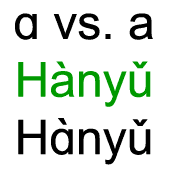
a brief list of some romanization-related books

My good friend Jim, known to many through his blogs Beijing Boyce (the guide to the bars of Beijing — and lots of restaurants there as well) and Grape Wall of China (for China’s wine scene), has a new site focusing on books about or touching upon China.

He asked me to contribute my list of the top five romanization-related books in English. I cheated some, such as by leaving out Palmer’s The Principles of Romanization, with Special Reference to the Romanization of Japanese, which is difficult to find, somewhat outdated, and doesn’t focus much on Sinitic languages; and by including other works primarily in romanized Mandarin.

But it’s a start.

To see my list and lots of others, go to China Book Bites (a.k.a. Chuānchuànr).

roots of the stone lions story

The tongue-twisting tale of Mr. Shi, the poet who likes to eat lions (better known as the story that goes Shi shi shi shi shi… — see section 3 of that page), is often reproduced — though usually by people who misunderstand its meaning. (It is not an argument against romanization.)

I haven’t been able yet to track down just when and where Y.R. Chao (Zhao Yuanren / Zhào Yuánrèn / 趙元任) first published this. But what is particularly interesting, at least to me, is that this — probably the most widely known thing Chao ever wrote, outside the musical realm at least — is not entirely original to him but was inspired by another shi-story … by Chao’s roommate at Cornell.

Here’s an excerpt from “The Problem of the Chinese Language,” which Chao wrote in 1916.

I agree with Mr. Hu [Shih], therefore that living words are not intrinsically vulgar and that we should use them in writing. Secondly, whether we write with characters or with letters, we should use sounds that are at least auditorily intelligible. Differences between the spoken and the written languages do, and ought to exist in all languages, but the two must not be separated by a chasm. A poem must be recitable, an oration must be deliverable, not to oneself, but to others. I wager that if a poem is read aloud to a hundred educated persons of the same dialect as the reader, unless it is on a hackneyed them with hackneyed phrases, it will not be understood by more ears than one can count on his fingers — two ears to a person.

With one syllable shi and four variations of tones in northern mandarin, one can write a whole story. The example in 111323,嗜32,失33,誓3111。獅1331,史2313,恃313,使333111。俟311,始2133。史2使23313,視333。試3133…… was written by Mr. M. T. Hu. (Similar homonymic passages can be constructed in other dialects.) If we paraphrase it as in 石頭房子裏的詩翁,姓史的,愛吃豬肉,云云, we shall notice two points. First, the auditorily intelligible form has polysyllabic words for single ideas. Secondly, it uses better sounding syllables. Sin3 for surname, ai3 for like, chu1 for swine, are both more pleasant and less ambiguous than shi. Such spoken words as hao2 (good), men1 (door), yao3 (want), in their proper tones have no other common words of the same sound. This polysyllabism and the choice of sounds are the results of natural selection of speech sounds according to their survival value.

M.T. Hu stands for Minfu Ta Hu (also sometimes written Minfu Tah Hu), who went on to get his Ph.D. in mathematics at Harvard in 1917. (My initial guess was that he’s “Hu Minfu” and that his nickname is “da Hu”, given how there were several Chinese with the family name of Hu studying at Cornell at the same time. But he seems to have used the long form even in formal contexts.)

Here’s the text again without the tone numbers (which don’t correspond with current systems anyway, something that might make a good post (“Tone Wars and the Standardization of Guoyu/Putonghua”) but which I’ll probably never get around to writing). I’ve highlighted sections longer than two characters that also appear in Chao’s version (see below).

石室詩士史氏,嗜豕,失仕,誓食十獅。獅似嗜虱,史氏設寺,恃師勢,使施氏拾獅屍。俟食時,始識世事。史使侍逝適市,視施氏。試釋是事……

And here’s Chao’s version:

石室詩士施氏嗜獅,誓食十獅。氏時時適市視獅。十時,氏適市,適十碩獅適市。是時,氏視是十獅,恃十石矢勢,使是十獅逝世。氏拾是十獅尸適石室。石室濕,使侍試拭石室。石室拭。氏始試食是十獅尸。食時,始識是十碩獅尸實十碩石獅尸。是時,氏始識是事實。試釋是事。”(原文無標點)

So Chao certainly made this his own.

For more from the same essay, see Responses to objections to romanization, which is well worth reading.

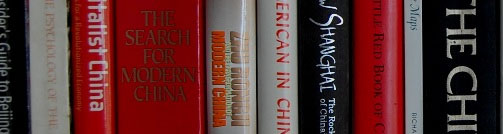
ɑ vs. a

image of the rounded 'a' and the normal 'a' with the example given of the word 'Hanyu' (with tone marks)About a year ago (which is roughly how overdue this post is), a commenter noted that some Chinese publishers “are convinced that Pinyin must be printed with ɑ (single-story „Latin alpha“, as opposed to double-story a), and with ɡ (single story; not double story g).”
But does Hanyu Pinyin in fact call for this longstanding Chinese habit of bad typography? This was one of the first questions I asked of Zhou Youguang, the father of Hanyu Pinyin, when I met with him: Are those who insist upon the ɑ-style letter correct?

“Oh, no,” Zhou replied. “That ‘ɑ’ is just for babies!” And he laughed that wonderful laugh of his that no doubt has contributed to his remarkable longevity.

Zhou was referring to the facts that the “ɑ” style of letter is usually found specifically in books for infants … and that this style generally does not belong elsewhere. In fact, ɑ and ɡ (written thusly, as opposed to g) are often referred to as infant characters. A variant of the letter y is sometimes included in this set.

Letters in that style are also found in the West — but almost always in books for toddlers, and often not even in those. Furthermore, even in those cases the use of such letters appears to have no positive effect on children’s reading.

The correct-style letters for Pinyin are the same as those for English, Zhou stated.

I hope that anyone who has been using “ɑ” will both officially and in practice switch to “a”. It’s long past time that the supposed rule calling for “ɑ” was treated as a dead letter.

Long live good typography!

persistent MPS2

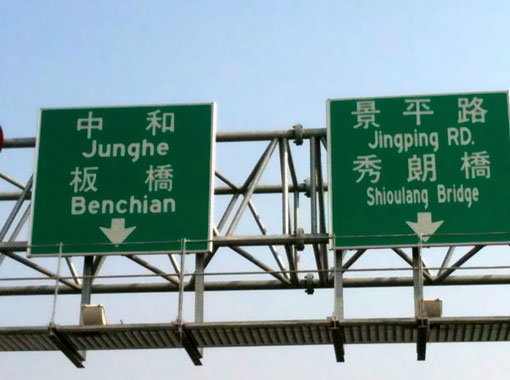
Poagao sent me this photo of signs on Zhong’an Bridge, which joins Xindian and Zhonghe (both in Taipei County). (So the zhong is probably for Zhonghe; but I’m not sure what the an is meant to be short for.) The signs are a good illustration of the sloppy approach to romanization in Taiwan. Because this is a new bridge, these are definitely new signs and thus should be in Hanyu Pinyin, which is official not just in Taipei County but nationally.

two large directional signs above a road across a bridge, as described in this post

As the table below shows, however, the only name that definitely isn’t written in MPS2 — the romanization system that predated Tongyong, which in Taiwan predated Hanyu Pinyin — is a typo. MPS2 hasn’t been official for the better part of a decade.

on the sign system Hanyu Pinyin
Junghe MPS2 Zhōnghé
Benchian wrong in all systems Bǎnqiáo
Jingping (MPS2, Tongyong, Hanyu Pinyin) Jǐngpíng
Shioulang MPS2 Xiùlǎng

And there’s no excuse for making “Shioulang Bridge” so small and squashed. This also brings to mind another aspect of Hanyu Pinyin: because of its design and the fact that it uses abbreviated forms of some vowel combinations (e.g., uei -> ui, iou -> iu), it doesn’t need as much horizontal space as MPS2 or Tongyong Pinyin, which means it can be written with larger letters — an important factor in signage. (See the second table of the comparative typing chart to see such differences between Hanyu Pinyin and Tongyong Pinyin.)

system spelling
MPS2 Shioulang
Tongyong Pinyin Sioulang
Hanyu Pinyin Xiulang

history bite: around this time in 1977

Thirty-three years ago the third United Nations Conference on the Standardization of Geographical Names voted 43-1 in favor of adopting Hanyu Pinyin as “the international system for the romanization of Chinese geographical names,” which was a major step in establishing the use of Hanyu Pinyin internationally.

The one nay vote came from the United States, which said that changing the Library of Congress’s records from Wade-Giles to Pinyin would be prohibitively expensive. (The Library of Congress did not begin its Pinyin-conversion project until twenty years later.) This may also have had to do with the fact that at the time the United States did not recognize the People’s Republic of China but instead had diplomatic relations with the Republic of China (i.e., Taiwan), which didn’t adopt Hanyu Pinyin itself until more than thirty years later (and its implementation here is still incomplete).

1977 nián zài Yǎdiǎn jǔxíng de Liánhéguó dì-sān jiè dìmíng biāozhǔnhuà huìyì shàng, yǐ 43 piào zànchéng, 1 piào fǎnduì de jiéguǒ, tōngguò le cǎiyòng Hànyǔ Pīnyīn zuòwéi Zhōngguó dìmíng Luómǎ zìmǔ de guójì biāozhǔn de tí’àn. 1 piào fǎnduì de shì Měiguó. Jùshuō shì yīnwèi rúguǒ gǎiyòng Hànyǔ Pīnyīn, Měiguó Guóhuì Túshūguǎn jiāng “hàozī tài dà” (cǐ túshūguǎn de Zhōngwén shūkān míng yǐqián quán yòng Wēituǒmǎshì pīnyīn).

source: Xinhua Pinxie Cidian, by Yin Binyong.