Taiwan’s Executive Yuan will ratify the Sakizaya (撒奇萊雅 / Sāqíláiyǎ) as an indigenous tribe on January 17, raising the number of officially recognized tribes here to thirteen.
During Japan’s rule over Taiwan (1895-1945), Japanese ethnologists classified the Sakizaya as members of the Ami. Later scholars, however, have distinguished the two groups as a separate because of linguistic differences and the Sakizaya’s sense of their own identity.
Representatives of the Sakizaya applied in 2004 with the Council of Indigenous Peoples for official recognition.
The Sakizaya live mainly in Hualian City and Hualian County’s townships of Shoufeng, Ruisui, and Fengbin.
I hope to find more information about the tribe’s language, as well as the origins of the tribe’s name.
sources:
- Sakizaya ratified as thirteenth indigenous tribe, CNA, via the China Post, January 17, 2007
- Dì 13 ge yuánzhùmín zú Sāqíláiyǎ zú: Xíngzhèngyuàn míng zhèngmíng (第13個原住民族撒奇萊雅族 行政院明正名), CNA, January 16, 2007
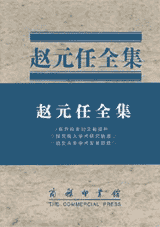
 The
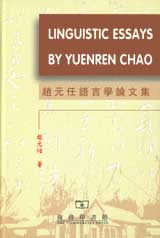
The 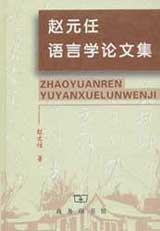 Note how the cover of Linguistic Essays, a book printed just last year in China, uses “Yuenren Chao,” the traditional spelling and Western order of his name, rather than “Zhao Yuanren,” the spelling used in Hanyu Pinyin. Also note how the Mandarin title is given in traditional, not simplified, characters: 趙元任語言學論文集, not 赵元任语言学论文集. A nice surprise, on both counts. On the other hand, the botched romanization on the cover of the Mandarin-language collection, which gives “ZHAOYUANREN YUYANXUELUNWENJI” instead of “