A 28-year-old Taiwanese woman has been arrested in Hong Kong on charges of drug smuggling. Customs officials there found that the woman, who had arrived from Cambodia, had 3 kg of heroin hidden inside preserved plums. (I have a hard time thinking of these as “prunes” because they are so different than the U.S. prunes I grew up with — or rather avoided as best I could as I was growing up.)
One of the things that alerted the suspicions of the officials was that the lettering on her seven packages of plums (chénpíméi, 陳皮梅) read, in part, “Cnan.”
Yī míng 28 suì Táiwān nǚzǐ, jiāng zhěngzhěng 3 gōngjīn de hǎiluòyīn cáng zài 300 duō kē chénpíméi lǐ, zhǔnbèi yóu Jiǎnpǔzhài yùnsòng dào Táiwān fàn shòu, túzhōng zài Xiāng Gǎng jīchǎng bèi hǎiguān dāngchǎng dǎizhù, bèi jīyā zài Xiāng Gǎng kānshǒusuǒ, wànyī zuìmíng chénglì, xiánfàn jiāng miànduì 10 nián yǐshàng de yǒuqī túxíng.
Xiánfàn shì yī wèi cóng Jiǎnpǔzhài dào Xiāng Gǎng de 28 suì Táiwān nǚzǐ, jìhuà jiāng dúpǐn yùnsòng dào Táiwān fàn shòu, zhěngzhěng 3 gōngjīn de hǎiluòyīn jiàzhí 560 wàn yuán, qiǎomiào de cáng zài 300 duō kē chénpíméi lǐ, kěshì yīnwèi bāozhuāng shang “chénpíméi” de Yīngwénzì pīncuò le, yǐnqǐ Xiāng Gǎng hǎiguān de huáiyí, jiēfā zhè qǐyùn dú àn.
Xiāng Gǎng hǎiguān jiāndū Lǐ Zhāngróng biǎoshì, xiánfàn bǎ chénpíméi zhōngjiān de hé[tao] wā chūlai shōucáng hǎiluòyīng, dànshì yóuyú chénpíméi Yīngwén pīnyīn shì Chan, fàndú jítuán pīnchéng cnan, zāodào hǎiguān rényuán huáiyí dàibǔ.
Mùqián zhè wèi Táiwān xiánfàn bèi Xiāng Gǎng jǐngfāng yǐ fànyùn wēixiǎn yàowù zuì, jīyā zài Xiāng Gǎng de kānshǒusuǒ, 4 yuè 24 rì jiāng zài Xiāng Gǎng fǎyuàn jiēshòu shěnxùn, wànyī zuìmíng chénglì, xiánfàn jiāngyào miànduì 10 nián yǐshàng de yǒuqī túxíng.
sources:
- Yīngwénzì pīncuò! Cáng dúpǐn chénpíméi — Táiwān nǚzǐ zài Xiāng Gǎng bèibǔ (英文字拼錯! 藏毒陳皮梅 台灣女子在香港被捕), April 13, 2006
- Heroin hidden in prunes, April 12, 2006
- Chénpíméi cáng dúpǐn — Táiwān nǚzi luòwǎng (陳皮梅藏毒 台女落網), Wen Wei Po (Hong Kong), April 13, 2006
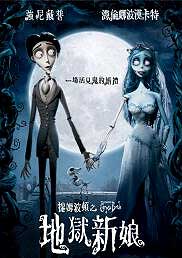 The cover for the DVD for Tim Burton’s Corpse Bride (Dìyù Xīnniáng / 地獄新娘 / “Hell Bride”) has what for me is an arresting usage: the roman letter “e” has been incorporated into a Chinese character.
![Tim Burton's ['Corpse Bride'] -- in Chinese characters](https://pinyin.info/news/news_photos/2006/03/corpse_bride.gif)
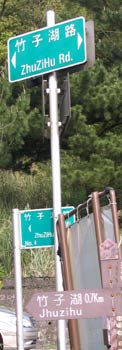 Less than 10 years ago the romanization on Taipei’s street signs was a complete mess. The “standard,” such as it was, was the inherently bad
  The reason for the different spellings here is almost certainly that the road, being within Taipei, is labeled in Hanyu Pinyin, whereas the trail marker, for a trail within Yangming Shan National Park, was put up by the central government and is thus in Tongyong Pinyin — well, almost. The misspelled Tongyong in the sign isn’t just a one-off, either. All of the Tongyong-ish signs I saw in the area are misspelled in the same way. See, for example, the sign at right. (The arrows, by the way, are both correct: The road is a loop.)
  Closer examination, however, reveals that Zhuzihu is based upon a bisyllabic name after all. Zhuzi Hu means “Bamboo Lake” (Zhúzi Hú / 竹子湖). The only particular reason for writing it solid (Zhuzihu) rather than as “Zhuzi Hu” is that there’s no actual hu (lake) there anymore. (It was more like a marsh, anyway.) Come to think of it, I don’t remember seeing any bamboo there, either. A case could be made for writing it either way: Zhuzi Hu or Zhuzihu