
sad state of ‘native-language education’ in Taiwan

Today’s Taipei Times has an interesting article on the state of teaching Taiwan’s “native languages.” (This means Taiwanese (a.k.a. Hokkien, Minnan, etc.), Hakka, and the languages of Taiwan’s tribes, but not Mandarin.) From the look of things, the government has basically botched the situation, despite having thrown twice as much money toward these languages as is being spent on English.

Although some of the problems and expenses are to be expected, given how new this is and how much resistance there has been from conservative forces, I’d say that things are still far from acceptable. A large part of the problem is that the government can’t even decide on a script for these languages: sometimes romanization (various systems), sometimes Chinese characters, sometimes zhuyin. It’s a mess.

No progress in native-language education has been made in schools despite the central government promising to encourage local culture and language education three years ago, native-language teachers said yesterday.

Liu Feng-chi (???), director of the Taiwan Association of Mother Language Teachers and a teacher of Hoklo (also known as Taiwanese), said he felt cheated that the government had “not taken in any of our suggestions to improve native-language education in school” over the past three years.

Liu said the Ministry of Education had not put much effort into reform nor native-language education. Classes in schools were not being planned carefully and lack continuity, he said.

“Classes [for native languages] should continue after elementary school so that students can keep learning the languages in junior high,” Liu said.

Association executive director Huang Hsiu-jen (???) said teachers of Hoklo are being “reselected” every year and must undergo a “disrespectful” selection process.

Huang said the selection committee was sometimes composed of teachers who did not speak Hoklo themselves.

“The selection team tends to choose young Hoklo teachers who can sing and dance in class, while older teachers like us end up with no job,” Huang said.

Liu also said that the salary for teachers was based on the number of hours worked in a week and that the hourly wage was a mere NT$320.

Furthermore, native language teachers are called “assistant teachers,” and schools do not provide them with health insurance, Liu added.

The association also expressed concern that many schools were using the time reserved for language classes to teach other subjects, and that many language teachers were required to teach mathematics or science as well.

Meanwhile, Perng Fuh-yuan (???), section chief at the ministry’s Department of Elementary Education, said there are more than 300,000 children learning native languages in the country.

Perng said the selection process applied not only to language teachers but to teachers in general, and that former language teachers were added to the selection committee to provide specialist advice.

“It is hard for students to continue native-language classes in junior high school under all of the exam pressure,” he said. “However, schools have tried to incorporate these languages into extracurricular activities connected to the school, such as Hoklo language clubs.”

The ministry spends NT$400 million (US$11.9 million) annually on native-language courses, while English classes have NT$200 million per year in funding. Elementary school students are required to take at least one period of native-tongue classes per week.

Taiwan’s native tongues include Hoklo, Hakka and a variety of Aboriginal languages.

source: Native-language teachers lash ‘disrespectful’ ministry, Taipei Times, November 18, 2005.
Fujian gov’t proposes rules against local languages, certain uses of Pinyin

The government of China’s Fujian Province is calling for official suppression of the use of languages other than Mandarin, though Mandarin is not native to that region, and for Chinese characters to be seen as more important than Pinyin and foreign languages.

The scope of this is about as broad as I’ve ever seen. The basics are roughly these:

  • Thou shalt not write in Sinitic languages other than Mandarin and in other than officially standard characters.
  • Thou shalt not even speak thy mother tongue, if it be not Mandarin, at work in the broadly defined public sphere other than in a few limited contexts.
  • Thou shalt have no other script lest thou also employ Chinese characters, which must be made larger than all others.

Wǒ shěng lìfǎ guīfàn yǔyán wénzì, xiāngguān bànfǎ cǎo’àn tíjiāo shěng Rén-Dà chángwěihuì shěnyì

《Fújiàn shěng shíshī 《Zhōnghuá Rénmín Gònghéguó tōngyòng yǔyán wénzì fǎ》 bànfǎ》 (cǎo’àn) zuórì tíjiāo shěng 10 jiè Rén-Dà chángwěihuì dì 20 cì huìyì shěnyì. Zhè bù dìfāngxìng fǎguī (cǎo’àn) míngquè guīdìng, guójiā jīguān gōngzuò rényuán zài bàngōng, huìyì, miànduì shèhuì gōngkāi jiǎnghuà děng gōngwù huódòng shí yīngdāng shǐyòng Pǔtōnghuà.

Bànfǎ (cǎo’àn) lièchū le tuīguǎng Pǔtōnghuà hé tuīxíng guīfàn Hànzì de 4 dà zhòngdiǎn lǐngyù:
(yī) guójiā jīguān gōngwù yòngyǔ yòngzì;
(èr) jiàoyù jīgòu de jiàoyù jiàoxué yòngyǔ yòngzì;
(sān) dàzhòng méitǐ, Hànyǔ wén chūbǎnwù, xìnxī jìshù chǎnpǐn de yòngyǔ yòngzì;
(sì) gōnggòng fúwù hángyè, gōnggòng chǎngsuǒ de yòngyǔ yòngzì.

Bànfǎ (cǎo’àn) guīdìng, xuéxiào jí qítā jiàoyù jīgòu yǐ Pǔtōnghuà wèi jīběn de jiàoyù jiàoxué yòngyǔ. Guǎngbō diàntái, diànshìtái de bōyīn, zhǔchí hé cǎifǎng, yǐng-shì, Hànyǔ wén yīnxiàng diànzǐ chūbǎnwù yīngdāng shǐyòng Pǔtōnghuà. Shāngyè, jīnróng, lǚyóu, wénhuà, tǐyù, yīliáo wèishēng, tiělù, mínháng, chéngshì jiāotōng, yóuzhèng, diànxìn, bǎoxiǎn děng gōnggòng fúwù hángyè, yǐjí gèlèi huìyì, zhǎnlǎn, dàxíng huódòng de fāyánrén, jiěshuōyuán yīngdāng yǐ Pǔtōnghuà wèi jīběn gōngzuò yòngyǔ. Tóngshí guīdìng, zài zhíxíng gōngwù shí yùdào wúfǎ yòng Pǔtōnghuà jìnxíng jiāoliú de duìxiàng shí, jīng pīzhǔn shǐyòng fāngyán bōyīn de shěng nèi guǎngbō, diànshìtái de yǒuguān jiémù yòngyǔ, kěyǐ bù shǐyòng Pǔtōnghuà. Duì Xiāng Gǎng, Àomén, Táiwān tóngbāo yǐjí Qiáobāo de liánluò hé jiēdài, yǔ Xiāng Gǎng, Àomén tèbié xíngzhèngqū hé Táiwān dìqū jīngjì, wénhuà, jiàoyù, kējì, tǐyù, wèishēng děng lǐngyù de jiāoliú huódòng, gēnjù xūyào kě[yǐ] shǐyòng xiāngguān fāngyán. Dìfang xìqǔ, fāngyán gēqǔ děng shǔyú mínzú mínjiān chuántǒng wénhuà bǎohù de huódòng yǐjí fāngyán yánjiū kě[yǐ] shǐyòng fāngyán.

Zài guīfàn yòngzì fāngmiàn, bànfǎ (cǎo’àn) guīdìng, guójiā jīguān de gōngwù yòngzì, yǐng-shì píngmù yòngzì, gōnggòng fúwù hángyè yòngzì, Hànyǔ wén chūbǎnwù, dìmíng, jiànzhùwù biāozhì děng yòngzì yīngdāng shǐyòng guīfàn Hànzì. Rénmíng yòngzì yīngdāng fúhé guójiā Hànzì rénmíng guīfàn hé gōng’ān jīguān yǒuguān guīdìng.

Zài gōnggòng chǎngsuǒ de yòngzì bùdé dāndú shǐyòng wàiguó wénzì huò Hànyǔ Pīnyīn. Xūyào pèihé shǐyòng wàiguó wénzì huò Hànyǔ Pīnyīn de, yīngdāng cǎiyòng yǐ guīfàn Hànzì wéizhǔ, wàiguó wénzì huò Hànyǔ Pīnyīn wèi fǔ de xíngshì, guīfàn Hànzì de zìtǐ yīng dàyú wàiguó wénzì huò Hànyǔ Pīnyīn; wàiguó wénzì jí yìwén huò Hànyǔ Pīnyīn yào zuòdào guīfàn hé biāozhǔn.

我省立法规范语言文字,相关办法草案提交省人大常委会审议

本报福州讯 (记者 田家鹏)《福建省实施《中华人民共和国通用语言文字法》办法》(草案)昨日提交省十届人大常委会第二十次会议审议。这部地方性法规(草案)明确规定,国家机关工作人员在办公、会议、面对社会公开讲话等公务活动时应当使用普通话。

办法(草案)列出了推广普通话和推行规范汉字的四大重点领域:
(一)国家机关公务用语用字;
(二)教育机构的教育教学用语用字;
(三)大众媒体、汉语文出版物、信息技术产品的用语用字;
(四)公共服务行业、公共场所的用语用字。

办法(草案)规定,学校及其他教育机构以普通话为基本的教育教学用语。广播电台、电视台的播音、主持和采访,影视,汉语文音像电子出版物应当使用普通话。商业、金融、旅游、文化、体育、医疗卫生、铁路、民航、城市交通、邮政、电信、保险等公共服务行业,以及各类会议、展览、大型活动的发言人、解说员应当以普通话为基本工作用语。同时规定,在执行公务时遇到无法用普通话进行交流的对象时,经批准使用方言播音的省内广播、电视台的有关节目用语,可以不使用普通话。对香港、澳门、台湾同胞以及侨胞的联络和接待,与香港、澳门特别行政区和台湾地区经济、文化、教育、科技、体育、卫生等领域的交流活动,根据需要可使用相关方言。地方戏曲、方言歌曲等属于民族民间传统文化保护的活动以及方言研究可使用方言。

在规范用字方面,办法(草案)规定,国家机关的公务用字、影视屏幕用字、公共服务行业用字、汉语文出版物、地名、建筑物标志等用字应当使用规范汉字。人名用字应当符合国家汉字人名规范和公安机关有关规定。

在公共场所的用字不得单独使用外国文字或汉语拼音。需要配合使用外国文字或汉语拼音的,应当采用以规范汉字为主、外国文字或汉语拼音为辅的形式,规范汉字的字体应大于外国文字或汉语拼音;外国文字及译文或汉语拼音要做到规范和标准。

source: Gōngwùyuán bàngōng kāihuì yàoshuō Pǔtōnghuà (公务员办公开会要说普通话), Xiàmén Rìbào, November 16, 2005. I first spotted this at What’s On Xiamen.

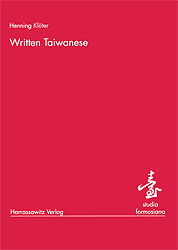
‘Written Taiwanese’ — new book

Harrassowitz has released a new book by Henning Klöter, Written Taiwanese (ISBN 3447050934).

Here’s the publisher’s blurb:

Written Taiwanese provides the first comprehensive account of the different ways in which Taiwanese (i.e., the Southern Min language of Taiwan) has been represented in written sources. The scope of the study ranges from early popular writings in closely related dialects to present-day forms of written Taiwanese. The study treats written Taiwanese both as a linguistic and as a socio-political phenomenon. The linguistic description focuses on the interrelation between written units and Taiwanese speech and covers various linguistic sub. elds, such as Taiwanese lexicography, phonology, and morphosyntax. The socio-political analysis explores the historical backgrounds which have led to different conventions in writing Taiwanese.

cover of book 'Written Taiwanese'
Here are some related links:

Look for a review of this book in a forthcoming issue of the Journal of Chinese Linguistics.

writing Taiwanese: language, script, and myths

I’ve been fortunate to be able to add to this site a major essay on Taiwan’s language situation, etymology, and scripts: “How to Forget Your Mother Tongue and Remember Your National Language,” by Victor H. Mair, a professor of Chinese language and literature at the University of Pennsylvania.

Here is the abstract:

The concept of guoyu (“national language”) is deeply embedded in the consciousness of everyone who has grown up in Taiwan during the past half century. Lately, however, people have begun to speak of their muyu (“mother tongue”) as being worthy of inculcation. Guoyu, of course, refers to Modern Standard Mandarin (MSM), which in China is called putonghua (“common speech”). Mandarin is not native to Taiwan, yet it is the national language of Taiwan’s citizens and is the sole official written language. In contrast, the citizens of Taiwan are discouraged from writing their native languages (viz., Taiwanese, Hakka, and various aboriginal languages) and it is only recently that it has been possible to teach them in the schools. This paper will examine the complicated processes whereby the citizens of Taiwan are transformed from speakers of their mother tongues to speakers and writers of the national language. This transformation does not rely purely on educational activities carried out in the schools, but involves political, social, and cultural factors as well. The transformation of Cantonese and Shanghainese speakers into Mandarin speakers and writers will also be examined for comparative purposes.

This, however, hardly does justice to the scope of the essay.

I strongly recommend reading this. Again, here is the link to the full essay.

Romanization and teaching Taiwan’s languages

Three recent articles.

教育部極力推動鄉土語言教學,但第一線的老師碰到不少瓶頸。93學年度鄉土語言教學訪視今(26)日舉行頒獎典禮,教授母語的老師表示,最大的困難是缺乏實用的環境,有些學生在學校學了母語,回到家後缺乏和父母練習,加上教材缺乏生活化,都是教學現場中經常會遇到的問題。

近年來由於強調本土化,所以母語教學也變得很重要,教授的母語包括河洛語、客家話和原住民語;國小是每週有1小時的母語課程,到了國中則改為選修。儘管教育部加強推動,但老師也遇到不少困難。

台北市福德國小老師蔡(系秀)珍表示,因為缺乏實用的環境,許多學生在學校學習母語之後,回到家中缺乏練習的機會,所以很容易就忘記,加上台北市以講國語為主,學生練習的機會更少。

另外,她提到,教材編寫不夠生活化,無法引起學生的興趣,所以在教學時都要改編教材,加入更多生活化的題材,吸引學生注意。

北市國語實小老師朱阿莉則認為,語文領域應該有一套同整的音標,羅馬拼音就是很實用的工具,像她就是用羅馬拼音學會河洛語和客家話。她強調,全世界都是使用羅馬拼音,如果台灣不用,其實很可惜。

另一位教授原住民語的花蓮縣水璉國小老師宋德讓表示,他的學生多是阿美族,有很多不會講母語也不會聽,甚至不懂為什麼要學會講原住民的母語,但他透過遊戲和唱歌,在過程中就教導學生講幾句母語,學生學會之後就會和阿嬤用母語交談,大人們都會很高興,也增加學生的樂趣。

source: 缺乏實用環境、教材不夠生活化 母語教師教學遇瓶頸, 台北報導 September 26, 2005

國語實小教師朱阿莉今天指出,語文教學工具對鄉土語教學很重要,她建議九年一貫課程應有一套可學國語、英語、閩南語、客家話等語言的統整拼音系統。

教育部首度舉辦的鄉土語言教學訪視評鑑結果今天出爐並舉行頒獎典禮,教育部長杜正勝親自頒獎評鑑遴選出來的八個績優縣市、五十二所績優學校、四十九位教學績優教師,朱阿莉等得獎教師認為鄉土語言教學的路還很長,鄉土語言教師應有更積極努力的空間。

台北市福德國小教師蔡 (糸秀)珍表示,鄉土語言教師編教材要結合時事經驗和生活化,她曾在兩年前把SARS編成童謠。

阿美族人宋德讓在花蓮縣水璉國小退休後,仍回校義務教阿美族語,他說水璉國小大部分學童是阿美族,卻不會講母語,也不懂為什麼要學母語,因此,他先教唱歌玩遊戲,再穿插教一兩句母語,孩子回去與阿媽對話,彼此都很開心,顯見教母語要先激發孩子的興趣。

教育部表示,這次評鑑發現很多縣市的用心與創意,例如台北縣利用K12數位學校,營造無所不在的學習環境,結合資訊與鄉土語言教育,深具創意及方便性,尤其運用動畫技巧,將親師生共同創作的繪本,予以數位化,更能吸引孩子的目光。

高雄縣透過鄉土月、主題週、鄉土語言日、社團活動,認識其他各族群語言;台北市編印鄉土語言教材,每一種都包括書本及CD,且包含閩、客及原住民三種語言。

台中縣辦理閩南語卡拉OK歌唱比賽及爭取行政院客家委員會經費,成立大埔音客語教學資源中心;台南市將校園公共設施及場所標示牌納入台語諺語、俚語及俗語等內容,並透過英語老師協助翻譯成英語,採﹁中、英、台﹂介紹給到校參觀的外國人士,充分讓鄉土語言俚語國際化;高雄市每年辦理台語文教學學術研討會,有效提升鄉土語言學術價值。

今天得獎的績優縣市共計有屏東縣、高雄市、高雄縣、新竹市、台中縣、台北市、台北縣、台南市等八個單位,由杜正勝頒發獎牌一面,並頒給五十萬元推展鄉土語言教學專案補助款。

source: 母語教師:鄉土語教學應有一套統整拼音工具, 中央社 September 26, 2005

教育部昨天表揚鄉土語言教學評鑑績優單位及個人,共有8縣市、52所學校及49位教師及支援人員得獎。有得獎老師嗆聲表示,政府力排的羅馬拼音,現在各國都在積極學習,而一套統整的羅馬拼音可以同時學華、閩、客、英語,教育部應推動整合。

教育部長杜正勝致詞時表示,聯合國教科文組織宣示「世界上的少數族群語言、文化、宗教,是人權的一部分,全世界應共同維護」,鼓勵鄉土語言是世界主流價值,社會對母語教學應有正確認識。

受獎人之一的台北市國語實小老師朱阿莉說,學習語文的工具很重要,她不是閩南人或客家人,但根據羅馬拼音學會閩南語和客家語;全世界都積極用羅馬拼音來學習華語,國內應趕緊發展可同時學習華語、閩南語、客家語及英語4種語言且和大陸漢語拼音接軌的羅馬拼音系統,學生只要花2、3個月學會這套拼音系統,不但可學母語,也才能和全世界競爭。

台北市福德國小老師蔡綉珍則認為現在部分母語教材與生活脫節,她必須自編教材加一課專講台北的捷運、百貨公司、孔廟,才能結合兒童接觸過的生活時事。

蔡綉珍強調,語言教學不能只靠課堂,家長在家一定要協助,若回家不講母語,教學無法落實。

已退休的花蓮水璉國小老師宋德讓是阿美族人,他說很多阿美族小朋友不會聽、說母語,也不懂為何要學,所以他花很多心思讓小朋友了解學習母語是很重要的事,再利用唱歌、遊戲引起興趣,讓小朋友喜歡學習母語。

source: 得獎老師嗆聲:政府不該排斥羅馬拼音, 台北報導 September 27, 2005

Presbyterian Church in Taiwan

For many years, the Presbyterian Church in Taiwan has been an important voice for human rights in Taiwan, including the right of people to speak and worship in their native language.

Probably the best-established romanization system for writing Taiwanese (Hoklo, Hokkien, Minnan, etc.) is known as the “church system,” having been developed by Presbyterian missionaries. Publications are still being issued in this, as I intend to discuss in a later edition of Pinyin News.

Through the efforts of David Alexander, many writings and news releases from the church are available in English.

Articles that might be of interest to readers of Pinyin News include:

Taiwan naturalization and language exams

The Taipei Times reports that Taiwan’s Ministry of the Interior has drafted amendments to the regulations for acquiring ROC citizenship.

The amendments, which are still under discussion, would require naturalization applicants to possess basic language ability in either Mandarin, Hoklo (commonly known as Taiwanese), Hakka or any of the nation’s Aboriginal languages. I’m very glad of the inclusiveness of this test, which contrasts well with what is being done in China. (I’ll post about Beijing’s actions in Shanghai later.)

An exam on citizen rights and responsibilities, such as in regard to taxation and education, will be offered in any one of the above languages in both written and oral format. Applicants may choose either format, which will feature 20 questions. [emphasis added]

Those who have studied in private or public schools in Taiwan for more than a year or who have taken government-recognized classes for more than 200 hours will not need to take the exam.

Sample exam questions and answers should be available in about six weeks, with the final version of the proposal to be ready by the beginning of next year.

It may be too much to hope for a version of the test in romanization, but I’ll try to keep abreast of the progress of this.

source: Ministry floats draft changes to naturalization law

Addendum: The China Post, a much less reliable newspaper (in large part because it frequently relies on bad translations of badly written stories from the local Mandarin Chinese papers), reports this somewhat differently.

Taiwan’s minister of education on language teaching

Dù Zhèng-shèng: xiāngtǔ yǔ jiàoxué pīnyīn xìtǒng jiāng xuǎn [róng]yì xué, [róng]yì yòng bǎn

Guózhōng xiǎoxué shǐyòng de xiāngtǔ yǔyán jiàocái méiyǒu biāozhǔn běn, cǎiyòng de pīnyīn xìtǒng yě bù yīzhì, yīxiē tiáojiào huò zhuǎnxué de jiàoshī yǔ xuésheng xiāngdāng kùnrǎo, jiàoyù bùzhǎng Dù Zhèng-shèng jīntiān biǎoshì, Jiàoyùbù Guóyǔ tuīxíng wěiyuánhuì tǎolùn guo jǐ cì, jiànlì yǐ “róngyì xué, róngyì yòng” zuòwéi pīnyīn xìtǒng zéyī de gòngshí, xīwàng bā, Jiǔyuè quèdìng.

Jiàoyùbù Guóyǔ tuīxíng wěiyuánhuì zhǔrèn wěiyuán Liáng Róng-mào biǎoshì, Huáyǔ, Kèjiāhuà de pīnyīn fúhào xìtǒng, zài Mínguó jiǔshí’èr niánchū tōngguò cǎiyòng tōngyòng pīnyīn xìtǒng, Mǐnnányǔ pīnyīn xìtǒng dào xiànzài hái méiyǒu quèdìng, tōngyòng, jiàohuì Luómǎ, TLPA sān zhǒng dōu yǒurén yòng, Guóyǔ huì zhèng diàochá xuéxiào jiàoshī rènwéi nà yī zhǒng pīnyīn xìtǒng bǐjiào hǎoxué, hǎo jiāo, zài tǎolùn juédìng.

Jiǔshísān (2004) xuénián dù Jiàoyùbù tuīdòng de xiāngtǔ yǔyán jiàoxué zhèngzài píng jiàn, píng jiàn wěiyuán shídì fǎngshì gè xiàn-shì xuéxiào hòu, zhè jǐ tiān zài guólì biānyìguǎn jìnxíng xiàn-shì shūmiàn zīliào jízhōng shěnchá, Dù Zhèng-shèng jīntiān guānkàn gè xiàn-shì zīliào, wèiwèn shěnchá wěiyuán, zhēnduì xiāngtǔ yǔyán jiàoxué jiàocái pīnyīn xìtǒng zhēngyì, tíchū qiánshù shuōmíng.

Dù Zhèng-shèng shuō, xiāngtǔ jiàoxué jiàocái bùlùn Héluò huà Mǐnnánhuà, Kèjiāhuà, yuánzhùmín yǔ, dōu shìyǐ yǔyán zuò jīchǔ, yǔyán zhīwài, háiyǒu wénhuà, lìshǐ, dìlǐ, zhěnggè xiāngtǔ jiàoxué nèiróng shì bǎ xiāngtǔ yǔyán yǔ xiāngtǔ jiāocái nèiróng jiéhé, wàijiè bǎ jiāodiǎn fàng zài pīnyīn xìtǒng, duì dì-yī xiàn gōngzuò de jiàoshī bìngbù zhòngyào.

Bùguò, Dù Zhèng-shèng biǎoshì, Jiàoyùbù Guóyǔ huì kāi guo jǐ cì huì, huòdé jīběn gòngshí, jiùshì yǐ “róngyì xué, róngyì yòng” wéizhǔ, cóng xuéxí zhě de jiǎodù chūfā, xīwàng tǎolùn chū yī tào dàjiā kě jiēshòu de pīnyīn xìtǒng.

杜正勝:鄉土語教學拼音系統將選易學易用版
中央社 2005-06-14 19:44

國中小學使用的鄉土語言教材沒有標準本,採用的拼音系統也不一致,一些調校或轉學的教師與學生相當困擾,教育部長杜正勝今天表示,教育部國語推行委員會討論過幾次,建立以﹁易學易用﹂作為拼音系統擇一的共識,希望八、九月確定。

教育部國語推行委員會主任委員梁榮茂表示,華語、客家話的拼音符號系統,在民國九十二年初通過採用通用拼音系統,閩南語拼音系統到現在還沒有確定,通用、教會羅馬、TLPA三種都有人用,國語會正調查學校教師認為那一種拼音系統比較好學、好教,再討論決定。

九十三學年度教育部推動的鄉土語言教學正在評鑑,評鑑委員實地訪視各縣市學校後,這幾天在國立編譯館進行縣市書面資料集中審查,杜正勝今天觀看各縣市資料,慰問審查委員,針對鄉土語言教學教材拼音系統爭議,提出前述說明。

杜正勝說,鄉土教學教材不論河洛話閩南話、客家話、原住民語,都是以語言做基礎,語言之外,還有文化、歷史、地理,整個鄉土教學內容是把鄉土語言與鄉土教材內容結合,外界把焦點放在拼音系統,對第一線工作的教師並不重要。

不過,杜正勝表示,教育部國語會開過幾次會,獲得基本共識,就是以﹁易學易用﹂為主,從學習者的角度出發,希望討論出一套大家可接受的拼音系統。

Another story on the same topic:

Xiāngtǔ yǔyán pīnyīn bùyī Guóyǔ huì yán yì

Jīn niándù (xiāngtǔ yǔyán jiàoxué píng jiàn) kāishǐ shěnchá, jiàoyù bùzhǎng Dù Zhèng-shèng jīntiān qiánwǎng guólì biānyìguǎn, liào jiě gè xiàn-shì xiāngtǔ yǔyán jiàoxué chéngguǒ. Dù Zhèng-shèng kěndìng gè xiàn-shì chuàngxīn jiàocái de yòngxīn, duìyú dāngjīn xiāngtǔ yǔyán pīnyīn xìtǒng bùyī de wèntí, dù bùzhǎng biǎoshì, jiāng jiāo yóu Guóyǔ tuīxíng wěiyuánhuì yán yì, bùguò wúlùn shì-fǒu cǎiqǔ tǒngyī pīnyīn xìtǒng, dōu yào yǐ xuéxí zhě jiǎodù chūfā, ràng lǎoshī hǎo jiāo, xuésheng hǎoxué cáihǎo.

Liào jiě gè xiàn-shì tuīdòng xiāngtǔ yǔyán jiàoxué chéngguǒ, Jiàoyùbù jīnnián dì-èr nián shíshī xiāngtǔ yǔyán jiàoxué píng jiàn, jiàoyù bùzhǎng Dù Zhèng-shèng Xīngqī’èr yě dào guólì biānyìguǎn shěncháhuì chǎng, qīnzì liào jiě gè xiàn-shì tuīdòng chéngjì. Dù Zhèng-shèng kěndìng xiànzài hěn duō xiàn-shì jiāo xiāngtǔ yǔyán de shíhou, bùzhǐ jiāo yǔyán, yě róngrù dāngdì lìshǐ wénhuà tèsè de yòngxīn, kàndào xǔduō xuéxiào dōu shànyòng duōméitǐ, wǎnglù děng kējì zì biān jiàocái, yě biǎoshì wèimiǎn, rènwéi cóng zhèxiē chéngguǒ lái kàn, yǐjing kěyǐ kàndào jiàogǎi de chéngjì. Zhìyú miànduì dāngjīn zuì ràngrén fánnǎo de gè dì pīnyīn xìtǒng bù yīzhì wèntí, Dù Zhèng-shèng biǎoshì, Jiàoyùbù yǐjing wēi tuō Guóyǔ tuīxíng wěiyuánhuì yán yì, huì cóng xuéxí zhě jiǎodù chūfā, zài zuò juédìng.

Jīn niándù xiāngtǔ yǔyán jiàoxué píng jiàn zhè jǐ tiān jìnxíng shūmiàn shěnchá, zhīhòu yóu gè xiàn-shì jìnxíng chéngguǒ jiǎnbào, xiàn-shì chéngjì zhīwài, Liùyuè dǐ yě jiāng xuǎnbá jì yōu jiàoshī, zuìhòu píng jiàn jì yōu xiàn-shì jiāng zài Qīyuè xiàxún bānjiǎng biǎoyáng.

鄉土語言拼音不一 國語會研議

今年度﹝鄉土語言教學評鑒﹞開始審查,教育部長杜正勝今天前往國立編譯館,瞭解各縣市鄉土語言教學成果。杜正勝肯定各縣市創新教材的用心,對於當今鄉土語言拼音系統不一的問題,杜部長表示,將交由國語推行委員會研議,不過無論是否採取統一拼音系統,都要以學習者角度出發,讓老師好教、學生好學才好。(羅皓恩報導)

瞭解各縣市推動鄉土語言教學成果,教育部今年第二年實施鄉土語言教學評鑑,教育部長杜正勝星期二也到國立編譯館審查會場,親自瞭解各縣市推動成績。杜正勝肯定現在很多縣市教鄉土語言的時候,不只教語言、也融入當地歷史文化特色的用心,看到許多學校都善用多媒體、網路等科技自編教材,也表示慰勉,認為從這些成果來看,已經可以看到教改的成績。至於面對當今最讓人煩惱的各地拼音系統不一致問題,杜正勝表示,教育部已經委託國語推行委員會研議,會從學習者角度出發,再做決定。

今年度鄉土語言教學評鑑這幾天進行書面審查,之後由各縣市進行成果簡報,縣市成績之外,六月底也將選拔績優教師,最後評鑑績優縣市將在七月下旬頒獎表揚。