Guangzhou opts for Pinyin ‘Lu’ over English ‘Road’

In the push for Guangzhou to revamp its street signs, it appears the initial move for all general terms to be translated into English — e.g., as road — has been overturned. I’m pleased. Thus, Guangzhou’s street signs will be written differently than those in Beijing and many other cities in China.

Of course, I’d be more pleased if, say, 白云路 were rendered as Baahk-wahn Louh (or however that should be spelled in Cantonese) instead of or in addition to Báiyún Lù. Fat chance of that happening, though. And, anyway, the ratio for stories that please me vs. those that really piss me off is not nearly what I’d like it to be, so at least today I’ll take what I can get.

Some excerpts from stories on this topic:

No, it is not “street,” nor “road”. It is simply lu.

The English translation for signs in Guangzhou will be based on Mandarin pronunciation with pinyin spelling and come into effect from May 1, the city government said.

This means busy Beijing Road will be translated as Beijinglu and east Dongfeng Road will be known as Dongfeng Donglu. Lu means road or street in English.

I really hope that “Beijinglu” is just a typo. It should be Beijing Lu / Běijīng Lù.

From a Mandarin-language story:

Zài “gōnggòng biāozhì Yīngwén yì fǎguī fàn” zuìchū de cǎogǎo xiàng shèhuì zhēngqiú yìjiàn shí, jiāng “lù” hé “dàdào” fānyì chéng Yīngyǔ dāncí Road, Avenue. Zuórì gōngbù de “gōnggòng biāozhì Yīngwén yì fǎguī fàn” dìnggǎo zhōng, cóng “dàdào” dào “lù” dào “xiàng”, “lǐ”, “jiē” děng, yīlǜ zhíjiē yòng Hànyǔ Pīnyīn jìnxíng biāozhù. Dànshì xiāngyìng de, “qiáo”, “lìjiāoqiáo”, “gōnglù”, “suìdào” děng jiāotōng shèshī, “guīfàn” zé míngquè guīdìng shǐyòng yìyì, rú “Guǎngzhōu Dà Qiáo” yì wéi Guangzhou Bridge, “Guǎngshàn Gōnglù” yìchéng Guangshan Highway.

Note the translation (which, however, won’t be used) of dàdào as “avenue.” In Taiwan, this is rendered as “boulevard.”

OK, being pleased was nice while it lasted. Now, unfortunately, it’s time to go back to being pissed off. It takes real chutzpah to bring up a U.N. resolution that backs native languages in support of putting Mandarin on signs in a Cantonese-speaking region.

A resolution made by the UN in 1967 stipulated all the English translations of place names in each country and region should be based on its mother language. The State Council issued a plan to standardize place names in 1986, stipulating all public names should be based in pinyin.

Or, as a Mandarin-language article puts it in greater detail:

Zhōng yāoqiú duì shìzhèng dàolù de fānyì cǎiqǔ pīnyīn zhíyì de fāngshì, shì yǒu jù kěchá de. 1967 nián dì-èr jiè Liánhéguó dìmíng biāozhǔnhuà huìyì zuòchū juéyì, yāoqiú gèguó guójì jiāowǎng zhōng dōu shǐyòng Luómǎ (Lādīng) zìmǔ pīnxiě, měi ge dìmíng zhǐyǒu yī zhǒng Luómǎ zìmǔ de pīnxiě xíngshì, jí “dānyī Luómǎhuà”. Yīncǐ, “báiyún lù” jiùyào yì wéi Baiyun Lu, ér bù shì Baiyun Road, yīnwèi hòuzhě shì liǎng zhǒng bùtóng de Luómǎ zìmǔ pīnxiě xíngshì, bùfú “dānyī huà”. 1977 nián, dì-sān jiè Liánhéguó dìmíng biāozhǔnhuà huìyì shàng, tōngguòle Zhōngguó tíchū de cǎiyòng Hànyǔ Pīnyīn Fāng’àn zuòwéi Zhōngguó dìmíng Luómǎ zìmǔ pīnxiěfǎ de guójì biāozhǔn. 1986 nián Guówùyuàn bānbù “dìmíng guǎnlǐ tiáolì”, guīdìng Zhōngguó dìmíng de Luómǎ zìmǔ pīnxiě, yī “Hànyǔ Pīnyīn Fāng’àn” zuò tǒngyī guīfàn. Yīncǐ “báiyún lù” yě bùnéng yì wéi White Cloud Road, yīnwèi bù fúhé “Hànyǔ Pīnyīn Fāng’àn”. Suǒyǐ, shǐyòng Hànyǔ Pīnyīn zuòwéi Zhōngguó dìmíng pīnxiě guīfàn, bùjǐn wèi wǒmen fǎlǜ fǎguī suǒ guīdìng, yěděi dàoliǎo guójì shàng de rènkě.

Well, I suppose those could be separate instances of subversive irony; but my money is still on deeply offensive and clueless chutzpah. Or doublespeak. Take your pick.

sources:

related entries

Huzhu Mongghul and Minhe Mangghuer

The latest rerelease from Sino-Platonic Papers is an enormous work (almost 300 pages) on the languages of the Huzhu Mongghul and Minhe Mangghuer, who are known in China by the Mandarin name of Tǔzú (土族).

Some of the material was written for a television program, part of which is available online, which means that people can listen to native speakers reading the texts!

The Huzhu Mongghul and Minhe Mangghuer language materials presented here are from Huzhu Mongghul Autonomous County and Minhe Hui and Mangghuer Autonomous County in eastern Qinghai Province, the People’s Republic of China. Other Monguor areas, that is Tianzhu Tibetan Autonomous County, Gansu Province and, in Qinghai, Datong Hui and Mongghul Autonomous County and Huangnan Tibetan Autonomous Prefecture, are not represented. We employ “Mangghuer” to refer to Minhe Monguor and “Mongghul” to refer to Monguor residents of Huzhu, for these are the terms the people themselves employ. When we are unsure how people refer to themselves, we use “Monguor,” which we also employ as a collective term to refer to all those classified as “Tu” by the Chinese government in the 1950s.

The material is in the form of the alphabet, numbers, and the calendar; 300 sentences rendered in English, Huzhu Mongghul and Minhe Mangghuer; 900 sentences in English and Minhe Mangghuer; Huzhu Mongghul readings, language points, the text of a television program that taught English in Huzhu Mongghul in Huzhu County and a word list.

The Mongghul/Mangghuer materials are given in a modified Chinese pinyin….

The dictionary at the back of the work is larger and more comprehensive than might be expected. Here are some sample entries:

  • frontier — jiixan
  • frost — xuutira, {SHOUDIERE}
  • froth — kusizi, {MOMOZI}
  • fruit — alimaa, {ALIMA, AMULA}
  • fry — tuusila qina, {TUOSILA CHINA}
  • fuck — mule, {MULI}
  • fuel — shdajin, shdaghua, {XIDAKUNI, GHAR JIALAKUNI}
  • fulfill — banki, gi, {GE}
  • full — diuri, {DURAN, YIGUA}
  • fumigate — funiidigha, {XUNKE}
  • fun — natigu, {NADUJI} (to make fun of)
  • funeral — rgai, {ERGU}
  • fur — ghuasi, {ARASI}
  • fury — ruari, {SHUGUO WERKURJIANG}
  • future — huina, {NINSA KHUONO}

Here’s the link to the SPP 69: Language Materials of China’s Monguor Minority: Huzhu Mongghul and Minhe Mangghuer (15 MB PDF).

The video, which is a massive 528 MB, begins with lesson 26, no. 98 (SPP p. 152, PDF p. 166), and stops abruptly about two-thirds of the way through no. 110 (SPP p. 159, PDF p. 173).

Here are a few internal points of reference in the video:

  • no. 100, p. 153, begins at 5:36
  • no. 103, lesson 27, p. 155, begins at 21:30
  • no 105, p. 156, begins at 29:50
  • no 109, lesson 28, p. 158, begins at 44:50

More of the video may be available later.

Taizhong street signs are ‘wushasha’

This isn’t much of a story, really. But since it talks, however vaguely, about the messy romanization situation in Taizhong and since I haven’t put up anything lately in Pinyin itself, I decided to go ahead and post it.

Just don’t expect any useful news herein, unless you’d be surprised to hear that Taizhong’s street signs are a mess.

Táizhōng Shì lùpái suǒ shǐyòng de Yīngwén pīnyīn qiānqíbǎiguài, pīnyīnfǎ jìyǒu Tōngyòng, Hànyǔ, zhùyīn fúhào dì-èrshì, Wēituǒmǎ pīnyīn, děng, jiù yǒu mínzhòng xiàng běnbào bào liào, zhǐchēng zhèxiē lùpái ràngrén kàn de “wùshàsha,” wàiguó guānguāngkè gèng zhǐnéng gān dèngyǎn.

Yǐ Táizhōng Shì nánqū Wǔ-quán Nánlù [i.e, “the Five Branches of Government South Road”] de xīn-jiù lùpái láishuō, jiù yǒu lùpái shì cǎiyòng Wēituǒmǎ pīnyīn, yīncǐ “權” zì shǐyòng chuan, ér gānggāng wángōng de xīnshì lùpái “權” zì zéshì shǐyòng cyuan, shìwéi Tōngyòng Pīnyīn, rán’ér xiànzài Táizhōng Shìzhèngfǔ zǎoyǐ quánmiàn gǎiyòng Hànyǔ Pīnyīn, “權” zì yīnggāi shì quan cái zhèngquè.

Lìngwài, zài nánqū xīng dàlù de lùpái, jiù yǒu lùpái “興” zì de pīnyīn wéi hsing, shì shǐyòng Wēituǒmǎ pīnyīn, rìqián gāi lùduàn yě gēnghuàn xīnshì lùpái shàng, shìyǐ Hànyǔ Pīnyīn jiāng “興” zì pīnyīn wéi xing, dàn liǎng ge lùpái dōu xuánguà zài lùkǒu, ràngrén kàn de “wùshàsha.”

Zhēnduì Táizhōng Shì lùpái suǒ shǐyòng Yīngwén pīnyīn gèzì bùtóng de qíngkuàng, Táizhōng Shìzhèngfǔ Jiāotōngchù jiāotōng guīhuà kē biǎoshì, zài gègè niándài suǒ xīngjiàn de lùpái shǐyòng bùtóng de pīnyīn fāngshì, cái huì zàochéng xiànjīn hùnluàn de qíngkuàng, mùqián Táizhōng Shì yǐjing quánmiàn cǎiyòng Hànyǔ Pīnyīn, wèile jiějué cǐ yī wèntí, yóu Táizhōng Shìzhèngfǔ dūshì fāzhǎn chǔyǐ “chéng-xiāng xīnfēngmào” de jīngfèi, jìnxíng tǒngyī lùpái pīnyīn de gōngzuò. Zài Wǔ-quán Nánlù de xīn lùpái fāngmiàn, yuánběn yīnggāi shǐyòng Hànyǔ Pīnyīn, dàn chéngbāoshāng què fāshēng cuòwù, mùqián yǐjing yāoqiú gǎijìn; zhìyú zài xīng dàlù fāngmiàn, yě huì yāoqiú chéngbāo yèzhě jiāyǐ gǎizhèng.

source: Lù míng pīnyīn luànzāozāo — kàn dé rén wùshàsha (路名拼音亂糟糟 看得人霧煞煞), Zìyóu Shíbào (Liberty Times), March 21, 2009

angling through dictionaries

The most recent rerelease from Sino-Platonic Papers is Tiao-Fish through Chinese Dictionaries (4.3 MB PDF), by Michael Carr.

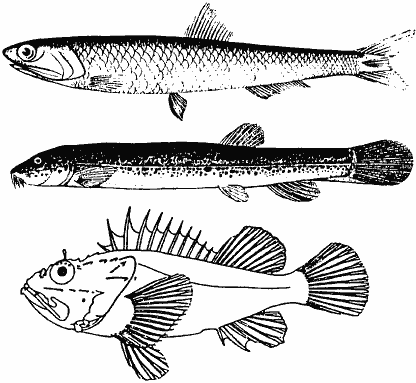
The tiáo < d’ieu < *d’iôg fish, a classical Chinese happiness metaphor, has been contradictorily identified as a chub, culter, dace, eel, goby, hairtail, hemiculter, loach, mullet, paddlefish, and pike. This paper illustrates the history of Chinese lexicography by comparing tiáo definitions from thirty-five Chinese monolingual dictionaries with tiáo translation equivalents from sixteen Japanese and seventeen Western language bilingual ones.

As Carr explains, “The tiáo fish provides a historical microcosm of Chinese lexicography because every principal dictionary defines it, and because *DZIOG‘s multifarious pronunciations and writings illustrate some unique linguistic problems in Chinese dictionaries.”

This was first published in September 1993 as issue no. 40 of Sino-Platonic Papers.

some tiao fish

kanji scandal

The Kyoto-based Japan Kanji Aptitude Testing Foundation — the group behind the Kanji of the Year announcement and which runs Japan’s well-attended kanji aptitude tests — is registered as a public-interest corporation, which means that it is not supposed to generate profits greater than it needs to operate (much like a non-profit organization in the United States). On March 10, however, Japan’s Ministry of Education stepped in, saying that the foundation was making too much money and needed to overhaul its operations.

How much money are we talking about?

The foundation racked up profits of ¥880 million [US$8.8 million] in fiscal 2006 and ¥660 million in fiscal 2007. The value of its assets increased from ¥5 billion at the end of fiscal 2004 to ¥7.35 billion at the end of fiscal 2007. It would not be far-fetched to say that the foundation has created a kanji business. Kanken became a registered trademark. In fiscal 2007 alone, the foundation sold some 1.5 million copies of books. It is also providing kanji-related questions to TV shows.

But there are more problems than just how much of the money the foundation makes. It has been funneling money into companies controlled by the foundation’s director and his son, the deputy director. “In fiscal 2007, commissions to these companies amounted to 2.48 billion yen [US$24.9 million], accounting for about 40 percent of the foundation’s annual expenditures,” the Asahi Shimbun reported.

Moreover, it appears the companies did little work for the large amount of money they received.

The Ministry of Education has warned the foundation before, with not much in the way of results. The foundation is to report back to the ministry by April 15. Given how entrenched the foundation is within Japan, I don’t expect much to change.

sources:

Y.R. Chao’s responses to arguments against romanization

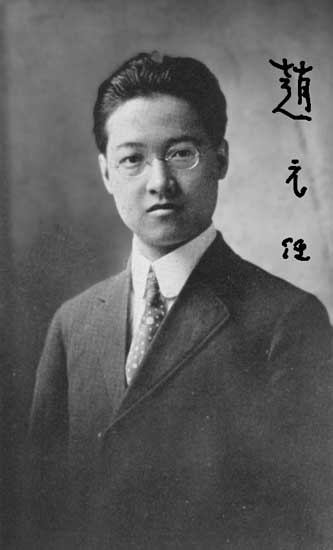
Y.R. Chao. Also, FWIW, Wikipedia took this image from Pinyin.Info, not the other way around.Pinyin.Info has a new reading: Responses to objections to romanization, written by the brilliant linguist Y.R. Chao in 1916, when he was a young man of 24.

It’s an unfortunate irony that another writing associated with Chao, the famous “stone lions” (a.k.a. shi, shi, shi) piece, is often mistakenly cited as evidence that the author opposed romanization. In fact, Chao favored using romanization for Mandarin, as his essay reveals.

It’s written in the form of 16 “objections,” each followed by Chao’s reply. For example:

Obj. 8 Alphabetized Chinese loses its etymology.

Rep. 8 This argument is like that often urged against simplified English spelling and is to be met similarly. In actual usage, how much attention do we give to etymology in words like 學, 暴, 發, 旋, 之, through, draught, etiquette, row, disaster? Of how many of these very common words do you know the original meaning? It is not to be denied, of course, that it is useful to know the etymology of words by looking them up, and our future dictionaries of alphabetized polysyllabic words should no doubt give their derivations.

The etymology of disaster (which is pretty cool) is certainly easy enough for an educated person to guess, if you stop to think about it. But I must admit I never had.

I have added notes following the text.