Google Translate has a new function: conversion to Hanyu Pinyin, which would be exciting and wonderful if it were any good. But unfortunately it’s terrible, all things considered.
What Google has created is about at the same level as scripts hobbyists cobbled together the hard way about a decade ago from early versions of CE-DICT. Don’t get me wrong: I greatly admire what sites such as Ocrat achieved way back when. But for Google — with all of its data, talent, and money — to do essentially no better so many years later is nothing short of a disgrace.
To see Google Translate’s Pinyin function in action you must select “Chinese (Simplified)” or “Chinese (Traditional)” — not English — for the “Translate into” option. And then click on “Show romanization”.
For example, here’s what happens with the following text from an essay on simplified and traditional Chinese characters by Zhang Liqing:
談中國的“語”和“文”的問題,我覺得最好能先了解一下在中國通用的語言。中國的主要語言有哪些?為甚麼我說這個,而不說那個?因為環境?因為被強迫?因為我愛這個語言?因為有必要?因為這個語言很重要?也想想什麼是中國人的共同語言。用一個共同語言有必要嗎?為什麼?別的漢語的去向會怎麼樣?如果你使用中國的共同語言普通話,你了解這個語言的語法(比如“的, 得, 地“ 和“了” 的不同用法)嗎? 知道這個語言的基本音節(不包括聲調)只有408個嗎?
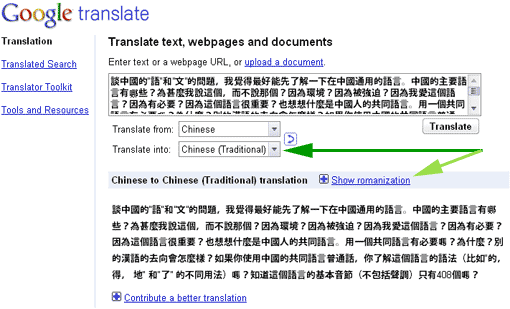
Google Translate will produce this:
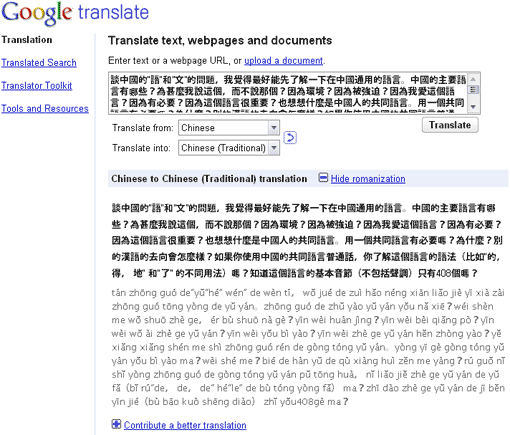
tán zhōng guó de“yǔ“hé” wén” de wèn tí, wǒ jué de zuì hǎo néng xiān liǎo jiè yī xià zài zhōng guó tōng yòng de yǔ yán。zhōng guó de zhǔ yào yǔ yán yǒu nǎ xiē?wéi shèn me wǒ shuō zhè ge, ér bù shuō nà gè?yīn wèi huán jìng?yīn wèi bèi qiǎng pò?yīn wèi wǒ ài zhè ge yǔ yán?yīn wèi yǒu bì yào?yīn wèi zhè ge yǔ yán hěn zhòng yào?yě xiǎng xiǎng shén me shì zhōng guó rén de gòng tóng yǔ yán。yòng yī gè gòng tóng yǔ yán yǒu bì yào ma?wèi shé me?bié de hàn yǔ de qù xiàng huì zěn me yàng?rú guǒ nǐ shǐ yòng zhōng guó de gòng tóng yǔ yán pǔ tōng huà, nǐ liǎo jiě zhè ge yǔ yán de yǔ fǎ(bǐ rú“de, de, de“ hé“le” de bù tóng yòng fǎ) ma?zhī dào zhè ge yǔ yán de jī běn yīn jié(bù bāo kuò shēng diào) zhǐ yǒu408gè ma?
Here’s what’s wrong:
- This is all bro ken syl la bles instead of word parsing. (So it’s never even a question if they get the use of the apostrophe correct.)
- Proper nouns are not capitalized (e.g., zhōng guó vs. Zhōngguó).
- The first letter in each sentence is not capitalized.
- Punctuation is not converted but remains in double-width Chinese style, which is wrong for Pinyin.
- Spacing around most punctuation is also incorrect (e.g., although a space is added after a comma and a closing parenthesis, there’s no space after a period or a question mark. See also the spacing or lack thereof around quotation marks, numerals, etc.)
- Because of lack of word parsing, some given pronunciations are wrong.
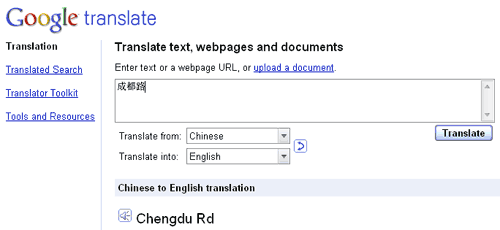
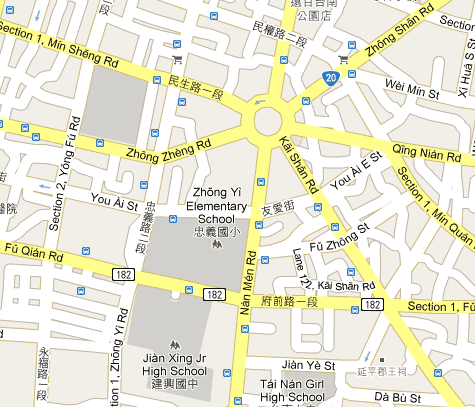
In my previous post I complained about Google Maps’ unfortunately botched switch to Hanyu Pinyin. I stated there that, unlike Google Maps, Google Translate would correctly produce “Chengdu” from “成都” (which it does when “translate into” is set for English). But I see that the romanization bug feature of Google Translate also fails this simple test. It generates the incorrect “chéng dōu”.
All of this indicates that Google apparently is using a poor database and not only has no idea of how Pinyin is meant to be written but also lacks an understanding of even the basic rules of Pinyin.
If you should need to use a free Web-based Pinyin converter, avoid Google Translate. Instead use Adso (from the fine folk at Popup Chinese) or perhaps NCIKU or MDBG — all of which, despite their limitations (c’mon, guys, sentences begin with capital letters), are significantly better than what Google offers.
By the way, Google Translate will also romanize Japanese texts written in kanji and kana, Russian texts written in Cyrillic, etc. But I’ll leave those to others to analyze.
For lagniappe, here’s a real Hanyu Pinyin version of the text above:
Tán Zhōngguó de “yǔ” hé “wén” de wèntí, wǒ juéde zuìhǎo néng xiān liǎojiě yīxià zài Zhōngguó tōngyòng de yǔyán. Zhōngguó de zhǔyào yǔyán yǒu nǎxiē? Wèishénme wǒ shuō zhège, ér bù shuō nàge? Yīnwei huánjìng? Yīnwei bèi qiǎngpò? Yīnwei wǒ ài zhège yǔyán? Yīnwei yǒu bìyào? Yīnwei zhè ge yǔyán hěn zhòngyào? Yě xiǎngxiang shénme shì Zhōngguórén de gòngtóng yǔyán? Yòng yīge gòngtóng yǔyán yǒu bìyào ma? Weishenme? Biéde Hànyǔ de qùxiàng huì zěnmeyàng? Rúguǒ nǐ shǐyòng Zhōngguó de gòng tóng yǔyán Pǔtónghuà, nǐ liǎojiě zhège yǔyán de yǔfǎ (bǐrú “de” hé “le” de bùtóng yǒngfǎ) ma? Zhīdao zhège yǔyán de jīběn yīnjié (bù bàokuò shēngdiào) zhǐ yǒu 408 ge ma?
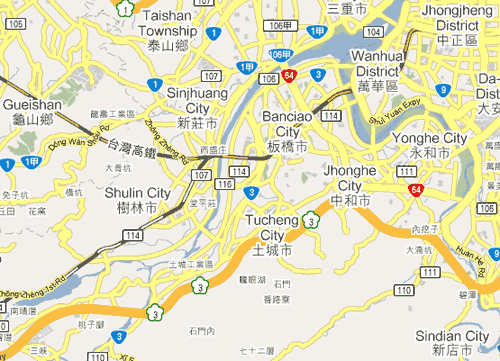
![screenshot from Google Maps of 'Cheng Dou [sic] Rd', near Taipei's Ximending](https://pinyin.info/news/news_photos/2009/11/cheng_dou_road.gif)