paper on Tongyong and Hanyu Pinyin in Taiwan

One-Soon Her (何萬順 / Hé Wànshùn), a professor in the Graduate Institute of Linguistics at Taiwan’s National Chengchi University (Guólì Zhèngzhì Dàxué), published a paper last month on Taiwan’s romanization issue in one of Academia Sinica’s journals: 「Quánqiúhuà」yǔ「zài dì huà」: cóng xīn jīngjì de jiǎodù kàn Táiwān de pīnyīn wèntí (Between Globalization and Indigenization: On Taiwan’s Pinyin Issue from the Perspectives of the New Economy).

Here’s the English abstract:

The only remaining controversy in Taiwan’s efforts to standardize its pinyin system for Chinese is whether to adopt Tongyong or Hanyu; while the former has an intense symbolic value of indigenization, the latter enjoys a substantial globalized distribution. This paper first makes clear the nature of ‘interface’ of any pinyin system and examines this seemingly domestic issue from the perspectives of the New Economy in the global Information Age. Given the characteristics of ‘increasing returns’ and ‘path-dependence’, Hanyu Pinyin, with its universal standardization and dominant global market share, is the obvious choice. Taiwan’s implementation of Tongyong Pinyin must necessarily incur the cost of dual interfaces. Given the 85% overlap between the two systems, Tongyong, as a politically meaningful symbol, ironically, creates a division among Taiwan’s population. The unfortunate politicization of the pinyin issue has cornered the nation into a dilemma: Tongyong costs economically, Hanyu costs politically. The ultimate reconciliation thus hinges upon the implementation of a system that optimizes Tongyong’s indigenized symbolic value and Hanyu’s globalized substance, to the furthest extent possible.

I disagree with the 85 percent figure; but the number doesn’t matter much in Her’s approach, which, considering he’s a linguist, is surprisingly non-linguistic. He gives two main recommendations for Taiwan’s central government, meant to be taken together. The first of these is that Taiwan should make Tongyong Pinyin the nation’s sole romanization system for Mandarin, with compliance among cities and counties mandatory. The delightfully arch second requirement, however, has an interesting twist: Everything that’s different between the national standard (i.e., Tongyong Pinyin) and the international standard (i.e., Hanyu Pinyin) should be changed to conform to the international standard. In other words, Taiwan should have Hanyu Pinyin in all but name.

???????????????????????????????
????100%??????????15%???????????????

I’d be OK with that. But I doubt Tongyong supporters will be willing to go along.

Many thanks to Dan Jacobson for the link.

Here are the essay’s subject headings:

  1. Qiányán: zài Tōngyòng yǔ Hànyǔ zhījiān
  2. pīnyīn xìtǒng de jièmiàn gōngnéng
  3. xīn jīngjì de xiànshí tèzhì
    1. lùjìng qǔjué
    2. wǎnglù xiàoyìng
    3. suǒdìng xiàoyìng
  4. jiànpán jièmiàn de lèibǐ
    1. dúbà quánqiú de QWERTY jiànpán
    2. Dvorak de jìngzhēng shībài
    3. jiànpán shìchǎng de jīngjì jiàoxun
    4. jiànpán jièmiàn yǔ pīnyīn jièmiàn de lèibǐ
    5. Tōngyòng Pīnyīn de「zài」zhuǎnhuàn dàijià
    6. pīnyīn yǐ shì zuórì de páijú yóu xì
  5. Yīngyǔ pīnyīn de lèibǐ
  6. pīnyīn lùnzhèng de qīzhébākòu
    1. 「biāozhǔnhuà」yǔ「lǒngduàn」de hùnxiáo
    2. Tōngyòng yǔ jiāo luó de zhēngyì
    3. Tōngyòng de fēi jīngjì lùnzhèng
    4. Tōngyòng Pīnyīn de fēnliè xiàoyìng
    5. Tōngyòng zhuǎnhuàn Hànyǔ de máodùn
    6. Tōngyòng yǔ Hànyǔ「xiāngróng」de máodùn
    7. pīnyīn dà héjiě de kěnéng fāngxiàng
  7. jiélùn:néng hézuò,guójiā rénmín cáinéng zhìfù
  8. cānkǎo shūmù(Zhōngwén shūmù àn bǐhuà páixù)

In case anyone’s wondering about the references to QWERTY and Dvorak, Her is drawing an analogy, saying the situation with Hanyu is largely the same as with QWERTY: whatever the merits of other systems, it’s very likely to remain the standard.
officials nix change to grandiose personal name

(Another story from my backlog.)

The application of a thirty-something woman in Taiwan’s Nantou County to change her name to “Hóng Cáishén Xuántiān Zǒngtǒng” (Hong Occult God of Wealth President) was rejected by local authorities because it contained the word zongtong (“president”).

“She did not tell us why she wanted to change her name,” Lin Chih-chun, an official from Tsaotun Household Registration Office, told Deutsche Presse-Agentur.

“We rejected her application because it contains the word ‘president’. We told her that the name is not suitable but she can appeal our rejection,” he said.

Under Taiwanese law, a citizen’s name must use Chinese characters listed in standard dictionaries. A citizen can change his or her name twice in a lifetime.

The Tsaotun Household Registration Office receives an average two to three applications to change names every day. Most of the applicants want to change their names to improve their fortune, usually at fortune-tellers’ advice.

This is quite true: Many people in Taiwan have changed their name because they think a special new name would bring them better luck.

source: Taiwan bars woman from changing name to ‘president’, Deutsche Presse-Agentur.

abbreviated source: Lofty name nixed

Here’s another version of the same story:

“Hóng Cáishén Xuántiān Zǒngtǒng”, zhème yī cháng chuàn de zìyǎn, jìngrán yǒurén yào bǎ tā nálái dàngzuò míngzi, hùzhèng rényuán tóuyī cì yùdào zhèyàng de zhuàngkuàng, fānbiàn fǎlìng yòu méiyǒu xiāngguān guīdìng, juéde hěn tóudà, zhǐhǎo dǎchéng gōngwén wǎng Nèizhèngbù chéngbào.

Cǎotún [Nántóu Xiàn] hùzhèng shìwùsuǒ rényuán: “Xìngmíng tiáolì yǒu gǎimíng cìshù xiànzhì, wǒmen jīyú shànyì gēn mínzhòng zuò quàndǎo.”

Nèizhèngbù huífù de gōngwén, rènwéi “zǒngtǒng” zhè liǎng ge zì shì zhíchēng, bìng méiyǒu hézhǔn, hùzhèng rényuán zhǐhǎo guīquàn zhè míng miàolíng nǚzǐ, dǎxiāo gǎimíng niàntou, érqiě qǔ míngwéi “Hóng Cáishén Xuántiān Zǒngtǒng”, bùzhǐ hùzhèng rényuán juéde bùtuǒ, jiù lián yībān mínzhòng yě juéde qíguài. Mínzhòng: “Rénjia jiào nǐ ‘cáishén,’ rúguǒ yào gěi nǐ bàibai, bù shì hěn qíguài ma?”

Zuìhòu nǚzǐ méiyǒu gǎimíng chénggōng, bùguò zhèige tèshū de gǎimíng ànlì, ràng hùzhèng rényuán duì zhè míng nǚzǐ liúxià shēnkè yìnxiàng.

source: Jiào wǒ “zǒngtǒng”! Miàolíng nǚ gǎimíng chéng qùwén, TVBS, November 7, 2005.

Y.R. Chao and Humpty Dumpty

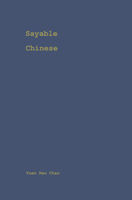
cover image of the book Sayable ChineseI’ve just added Y.R. Chao’s Sayable Chinese series to my list of recommended books. The second book in this series of three comprises Chao’s delightful translation of Lewis Carroll’s Through the Looking-Glass. I’ve selected part of the Humpty Dumpty chapter for the sample reading on Pinyin Info. Although the sample has romanization and English, the Sayable Chinese books have romanization and Chinese characters, presented en face. (I’ll add the Chinese characters one of these days, but they’re so much trouble to type! And scanning isn’t much of an improvement.)

These hardback books are a good deal at US$15 each.

The romanization method is Chao’s own Gwoyeu Romatzyh system.

Here’s a sample, with Hanyu Pinyin for comparative purposes:

Gwoyeu Romatzyh

Keesh neh jitzeel yueh jaang yueh dah, yueh jaang yueh shianq ren-yanql: Alihsy tzoou-dawle i-leang-janq luh gencheal, jiow kann.chu ta yeou yeanjing byitz tzoei lai le; ta tzay tzoou-jinn ideal jiow chingchingchuuchuu de kann.chulai ta jiowsh HUENDIH DUENDIH been-ren le. Ta duey tzyhjii shuo, “Jeh buhuey sh byeren le! Yonq.bu-jaur geei ta shieele maan-lean de mingtz woo jiow idinq jydaw sh ta le!”

Hanyu Pinyin

Kěshì nèi jīzǐr yuè zhǎng yuè dà, yuè zhǎng yuè xiàng rényàngr: Ālìsī zǒudào le yī liǎng zhàng lù gēnqián, jiù kànchū tā yǒu yǎnjing bízi zuǐ lái le; tā zài zǒujìn yīdiǎnr jiù qīngqingchǔchǔ de kànchūlai tā jiùshì HŪNDÌ DŪNDÌ běnrén le. Tā duì zìjǐ shuō, “Zhè bù huì shì biéren le! Yòngbuzháo gěi tā xiě le mǎnliǎn de míngzi wǒ jiù yīdìng zhīdao shì tā le!”

English

However, the egg only got larger and larger, and more and more human: when she had come within a few yards of it, she saw that it had eyes and a nose and mouth; and when she had come close to it, she saw clearly that it was HUMPTY DUMPTY himself. “It can’t be anybody else!” she said to herself. “I’m as certain of it, as if his name were written all over his face.”

Chinese characters

可是那雞子兒越長越大,越長越象人樣兒:阿麗思走到了一兩丈路跟前,就看出它有眼睛鼻子嘴來了;她再走近一點兒就清清楚楚的看出來它就是昏弟敦弟本人了。她對自己說,“這不會是別人了!用不著給他寫了滿臉的名字我就一定知道是他了!”

Recordings of all of the books in the Sayable Chinese series are available on cassette. The recordings were made by Chao and his family. Unfortunately, I don’t have any of these — they’re expensive! — so I can’t supply a sound file for the section above. The Folkways recording of Chao’s Mandarin Primer, however, has a 30-second excerpt from from the Tweedledum and Tweedledee section. Here’s the English version of what’s being said:

photo of Y. R. Chao

Tweedledee: You like poetry?

Alice: Ye-es, pretty well — some poetry. Would you tell me which road leads out of the wood?

Tweedledee: What shall I repeat to her? “The Walrus and the Carpenter” is the longest.

The sun was shining—

Alice: If it’s very long, would you tell me first which road —

Tweedledee:

The sun was shining—

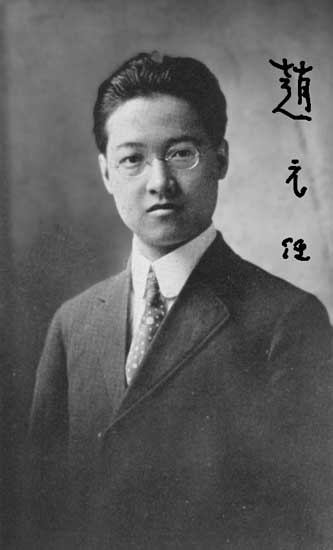
I think that’s Chao’s daughter, Rulan Chao Pian, as Alice, and Chao as Tweedledee.

Book Three contains Chao’s adaptation of The Mollusc, a 1908 stage comedy by H. H. Davies. (Alas, Project Gutenberg doesn’t have the text of this yet.) Interestingly, this play has an association with another romanization-related figure, Harold E. Palmer, who published The Principles of Romanization in 1930 and who was a leading figure in the field of English teaching. Palmer’s daughter Dorothee published an “annotated phonetic edition” (complete with tone marks) of The Mollusc in 1929. (Palmer had taught her how to read and write in phonetic notation, leaving her to pick up traditional spelling on her own!)

Pinyin Info also has the text of Y.R. Chao’s much-misunderstood stone lions story. Chao was making a point about Classical Chinese, not modern Mandarin. As the architect of a romanization system, Chao understood perfectly well that Mandarin is not doomed to a hell of homophony without Chinese characters.

Latin and Greek in U.S. schools

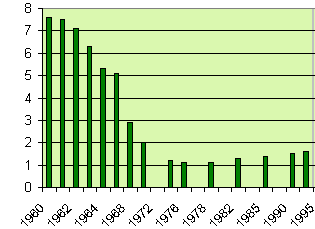
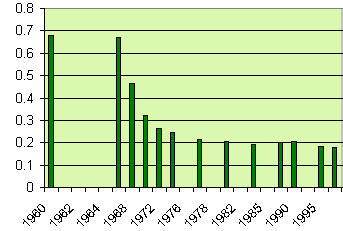
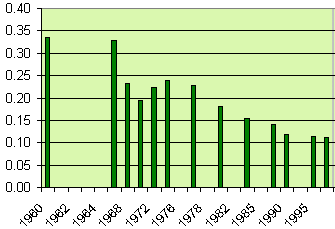
Mark Liberman at Language Log mentions the role Latin and Greek used to play in education (Old school), which is as good an excuse as any to post some graphs I made a few weeks ago from data (not current, alas) on Latin and Greek Enrollments in America’s Schools and Colleges. (I’m trying to post my backlog before Chinese New Year. And maybe then I can finally answer all the mail and comments that have been piling up.)

Note that these are not to scale with each other.

Latin as a Percentage of Enrollments, Grades 9-12
percentage of U.S. high school students enrolled in Latin courses, by year, showing a steep decline from the mid 1960s to mid 1970s

Latin, as a Percentage of College Enrollments
percentage of U.S. college students enrolled in Latin courses, by year, showing a steep decline from the late 1960s to mid 1970s

Greek, as a Percentage of College Enrollments
percentage of U.S. college students enrolled in Greek courses, by year

The numbers appear different in another paper from the same source: Foreign Language Enrollments in United States Institutions of Higher Education, Fall 2002 (PDF). This also gives data for many other languages.

I was going to have this lead into a discussion on the role of Classical Chinese in education in Taiwan, but I’m too far behind. So this makes two entries in a row without a direct tie-in to this site’s theme. Sorry about that.

Taiwan’s Y1C problem

So, how did you ring in the year 95?

Yes, 95. Taiwan continues to make official use of a calendar tied to the founding of the Republic of China on January 1, 1912. That day began year 1.

For anyone doing a double take, that’s the Republic of China, better known these days as “Taiwan,” though Taiwan wasn’t a part of China in 1912. (And plenty of people would argue it’s not part of China now.) The People’s Republic of China was founded on October 1, 1949. National day in Taiwan, however, is marked not on January 1 but October 10, to commemorate the 1911 revolution that overthrew the Qing dynasty.

This everything-begins-again-with-me dating system, which reflects the habits of the imperial dynasties the ROC was supposed to have eliminated, isn’t just a quaint local custom. Its continued use is heading Taiwan toward its very own type of Y2K problem. In just a few years, when the ROC reaches the age of 100 and has to jump to three-digit years, Taiwan will likely experience what I like to call the Y1C problem. (Yes, I know: I’m mixing systems in that C represents hundred in a system that uses M, not K, for “thousand.” But that’s the best I could come up with. I’m open to suggestions for catchy but correct names.)

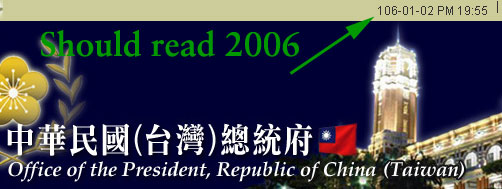
As far as I know, nothing is being done yet to address this. Slow are the wheels of Taiwan’s bureaucracy. To give an example of this, the Y2K problem certainly did not lack publicity, outrageous hype even; yet in 2005 the high-profile English Web site of the Office of the President gave the year as being “105.” About six weeks ago, when I gave a presentation to officials in charge of various government agencies’ Internet departments, listing some of the things wrong with the Taiwan government’s English-language Web sites, I specifically brought up the example of the presidential office’s howler.

I took it as a good sign that today, when I checked that site again, I saw the year given as 2006. But then I glanced at the Mandarin version of the same site. The year there: 106.

Before the year 100 comes in 2011, somebody remind me to find a bank outside Taiwan for what little money I have.

PRC publications on education

The PRC’s official China Education and Research Network (Zhōngguó Jiàoyù hé Kēyán Jìsuànjī Wǎng) has recently placed online several editions of the Zhōngguó Jiàoyù Niánjiàn (Chinese Education Yearbook):

Little to no English here, sorry. But there is some useful information to be found amid the usual governmentese and adulation of high-ranking officials.

Chinese New Year

The year 2006 has already begun here in Taiwan, but we have several more weeks to go before Chinese New Year, which will be on January 29 and which will be the beginning of a year of the dog.

I’ve dusted off and restyled some lists I made several years ago of all the dates of Chinese New Year between the years 1645 and 2644 — one thousand years in total. (See link above.) I think this is a nice resource, though it doesn’t have much to do with the normal concerns of this site.

One possible connection: It might be interesting to hear people’s views on the question of how to translate the names of some of the animals associated with the years in the Chinese calendar: “rat” or “mouse,” “ox” or “cow,” “goat” or “sheep,” and “rooster” or “chicken.” Of course that final example has another possible translation, but I still recall the difficulty of keeping a straight face the time one of my students in China pointed to a map of the country and told me, in all innocence, “China looks like a big cock.”

For lots more information on the Chinese lunisolar calendar, see Helmer Aslaksen’s Mathematics of the Chinese Calendar.

BTW, in case anyone is confused by my choice of ? (xīn) rather than the more common ? (also xīn) in “??” (xīnchūn —— I’ll finish in the morning

subtitling

Linda Jaivin, who has written an interesting range of works, including Rock ‘n’ Roll Babes from Outer Space, The Monkey and the Dragon: A True Story about Friendship, Music, Politics and Life on the Edge, and Eat Me, discusses some of the challenges of subtitling — especially of Chinese movies — in Tanks! Tanks! (You’re most welcome) (The Age, December 31, 2005).

Among these movies she has subtitled are Farewell, My Concubine and Hero. (I seem to recall some controversy about the translation of the final line in the former movie, but I can’t remember anymore what it was. Something about the sword being “wood”? The latter film, lovely though it was, I loathed for its despicable politics and general fascist embrace of death; but that’s off-topic.)

Jaivin also brings up a recent book edited by filmmaker Atom Egoyan and scholar Ian Balfour, Subtitles: On the Foreignness of Film (MIT Press, 2004). I was surprised to read in the book’s introduction (PDF file) that subtitles predate sound films:

The subtitle was actually introduced as early as 1907, that is to say, still in the era of intertitles, but it did not really come into its own until the age of the talkies and their international distribution. The era of the modern subtitle was ushered in with the screening of The Jazz Singer in Paris in 1929, two years after its American release.

As long as I’m on the subject, I might as well mention that in Taiwan and China almost all movies and TV shows — including those originally in Mandarin — are subtitled in Mandarin. I’d be interested in learning more about how much if any Cantonese is used in the subtitling of Hong Kong movies.

Also, as Joe Clark likes to remind people, subtitles and captions are not the same.