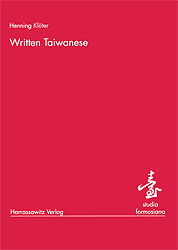
‘Written Taiwanese’ — new book

Harrassowitz has released a new book by Henning Klöter, Written Taiwanese (ISBN 3447050934).

Here’s the publisher’s blurb:

Written Taiwanese provides the first comprehensive account of the different ways in which Taiwanese (i.e., the Southern Min language of Taiwan) has been represented in written sources. The scope of the study ranges from early popular writings in closely related dialects to present-day forms of written Taiwanese. The study treats written Taiwanese both as a linguistic and as a socio-political phenomenon. The linguistic description focuses on the interrelation between written units and Taiwanese speech and covers various linguistic sub. elds, such as Taiwanese lexicography, phonology, and morphosyntax. The socio-political analysis explores the historical backgrounds which have led to different conventions in writing Taiwanese.

cover of book 'Written Taiwanese'
Here are some related links:

Look for a review of this book in a forthcoming issue of the Journal of Chinese Linguistics.

signage with tone marks

This morning I spotted something rare: official, government signage with tone marks. As a matter of fact, I can’t recall ever seeing this before in Taiwan. (It’s not so rare in China.)

There were three signs together, posted horizontally above the southeastern-bound lanes of a highway running through Zhonghe, near Taipei.

They read as follows:

新店
Sindiàn
秀朗橋
Siòulǎng Bridge
景平路
Jǐngpíng Rd.

Please note several points:

  • These are in Tongyong Pinyin rather than Hanyu Pinyin (in which they would be written Xiùlǎng Qiáo, Xīndiàn, and Jǐngpíng Lù, respectively.
  • They are written in a mix of romanization and English, which is typical in Taiwan. Although I don’t favor this style, it is so pervasive here that changing it is a relatively low priority compared with other romanization problems.
  • The use of tone marks differs in Tongyong Pinyin and Hanyu Pinyin, with first tone not being marked in Tongyong.

I suspect these signs are one-offs, not, um, signs of things to come. But I’ll keep my eyes open.

The tone marks on the signs were done poorly, with the marks being too small and placed far above the relevent vowels. The letter i, for example, should lose its dot when it takes a tone mark.


(I’ve adjusted the second image to move the signs closer together.)

I apologize for the poor quality of the photos. They were taken through the dirty windshield of a speeding bus.

Q, W, and Turkish law

Reuters is reporting that a Turkish court has fined 20 people some US$75 each for using the letters Q and W on placards. The signs, displayed last year at a Kurdish new year celebration, were written in Kurdish.

The 1928 Law on the Adoption and Application of Turkish Letters changed the Turkish alphabet from the Arabic script to a modified Latin script and required all signs, advertising, newspapers and official documents to only use Turkish letters.

Kurdish, when written in the Roman alphabet, makes use of several letters not found in the Turkish alphabet, including Q, W, and X.

A ban on Q and X here in Taiwan might go over well with some ideologues. Taiwan’s Ministry of Foreign Affairs already prevents people from using Hanyu Pinyin (which, unlike Wade-Giles and the locally developed Tongyong Pinyin, uses those two letters) on their passports, even though that’s the system the president of the country uses for the romanized version of his own name!

source: 20 fined for using letters W and Q, Reuters, October 25, 2005.

Microsoft, Dzongkha, and “dialects”

Dzongkha, the national language of Bhutan, has been relegated to the status of a dialect of Tibetan in Microsoft products. Rather than being labelled “Dzongkha” or “Bhutan-Dzongkha,” it is identified as “Tibetan – Bhutan” in the recently released beta version of Windows Vista. This is apparently an official Microsoft policy, likely aimed at appeasing China.

Microsoft has barred the use of the Bhutanese government’s official term for the Bhutanese language, Dzongkha, in any of its products, citing that the term had affiliations with the Dalai Lama. In an internal memorandum, Microsoft employees were told not to use the term Dzongkha in any Microsoft software, language lists or promotional materials since “Doing so implies affiliation with the Dalai Lama, which is not acceptable to the government of China. In this instance, replace “Dzongkha” with ‘Tibetan – Bhutan’.”

The Kingdom of Bhutan is situated in the Himalayas between India and Tibet. The state religion is the Drukpa Kagyu school of Tibetan Buddhism and Dzongkha is the official language. Dzongkha has a linguistic relationship to modern Tibetan in a similar way to that between Spanish and Italian.

The use of the word Dzongkha was graded by Microsoft as a ‘ship-stopper’, which means that a product may not be produced in any form until the problem is resolved. Microsoft has four levels of error severity, ship-stopper being the most severe.

Likely uses of the term may have been in Language Lists for Microsoft products, particularly the upcoming release of the next version of the Microsoft Windows operating system, Windows Vista. (Source: Microsoft Sensitive to Chinese Pressure on Bhutan Tibet Link, Tibet News. )

I didn’t know anything about Dzongkha, so I did some searching and found this:

Dzongkha is the modern Bhutanese vernacular language derived from Old Tibetan through many centuries of separate evolution on Bhutanese soil. Modern Dzongkha differs from Classical Tibetan as much as modern French does from Classical Latin. Only a few decades ago, the first attempts were undertaken to write in the vernacular in Bhutan, and the strong liturgical tradition in Bhutan has maintained the use of Classical Tibetan as the literary language to the present day. (source)

If this is accurate, the situation sounds familiar: A literary language (Classical Chinese in China, Classical Tibetan in Bhutan, Latin in Europe) continued to be used long after it was no longer spoken by the masses because over time the language had evolved in different ways in different places, becoming new languages (Mandarin, Cantonese, Hakka, etc., in China; Dzongkha and Tibetan in Bhutan and Tibet; French, Spanish, Italian, etc. in Europe). But because people in different locales primarily used the same literary language rather than writing in their own [modern] languages, their mutually unintelligible languages were mislabeled “dialects.”

But even if everyone in Europe were to switch to writing in Latin or even Italian, that wouldn’t make French, Spanish, Portuguese, etc., “dialects.” Similarly, the use of Modern Standard Mandarin in China as the written language doesn’t mean that Mandarin, Cantonese, Hakka, Taiwanese, etc., aren’t all separate languages.

And, lest I pass over the issue of romanization, Dzongkha is written in the Tibetan script and also has an official romanization system, “Roman Dzongkha,” which makes use of all the letters of the Roman alphabet other than F, V, Q, and X. Its three diacritic marks are the apostrophe, the circumflex accent, and the diaeresis. Bhutan, however, is not expected to replace Bhutanese orthography with Roman Dzongkha.

And for Suzanne, here’s a Dzongkha keyboard.

additional source: Dzongkha: out of Windows?, Kuensel, Monday, September 26, 2005.

writing Taiwanese: language, script, and myths

I’ve been fortunate to be able to add to this site a major essay on Taiwan’s language situation, etymology, and scripts: “How to Forget Your Mother Tongue and Remember Your National Language,” by Victor H. Mair, a professor of Chinese language and literature at the University of Pennsylvania.

Here is the abstract:

The concept of guoyu (“national language”) is deeply embedded in the consciousness of everyone who has grown up in Taiwan during the past half century. Lately, however, people have begun to speak of their muyu (“mother tongue”) as being worthy of inculcation. Guoyu, of course, refers to Modern Standard Mandarin (MSM), which in China is called putonghua (“common speech”). Mandarin is not native to Taiwan, yet it is the national language of Taiwan’s citizens and is the sole official written language. In contrast, the citizens of Taiwan are discouraged from writing their native languages (viz., Taiwanese, Hakka, and various aboriginal languages) and it is only recently that it has been possible to teach them in the schools. This paper will examine the complicated processes whereby the citizens of Taiwan are transformed from speakers of their mother tongues to speakers and writers of the national language. This transformation does not rely purely on educational activities carried out in the schools, but involves political, social, and cultural factors as well. The transformation of Cantonese and Shanghainese speakers into Mandarin speakers and writers will also be examined for comparative purposes.

This, however, hardly does justice to the scope of the essay.

I strongly recommend reading this. Again, here is the link to the full essay.

‘I very want your deceitful surface’

A newspaper in China ran the following humor piece: Qiānwàn bié luàn yòng pīnyīn shūrùfǎ! Fǒuzé… (“For heaven’s sake don’t sloppily use Pinyin input! Otherwise…” / 千万别乱用拼音输入法!否则……).

The piece takes the form of an imagined text-message conversation between two people identified as “GG” (gēge 哥哥) and “MM” (mèimei 妹妹), i.e. a boy and a girl (probably both around high school age).

The joke here is that the couple are being sloppy in how they’re using pinyin to input Chinese characters, occasionally resulting in incorrect characters being displayed.

GG:你嚎!
MM:你嚎!你在哪里?
GG:我在忘八里。你呢?
MM:我也在忘八里。
GG:你是哪里人?
MM:我是鬼州人。你呢?
GG:我是山洞人。
MM:你似男似女?
GG:我当然是难生了。你肯定是女生吧?
MM:是啊。
GG:你霉不霉?
MM:还行吧,人家都说我是大霉女。你衰不衰?
GG:还好啊,很多人都说我是大衰哥。
MM:真的呀?咱们多怜惜好不好?
GG:好呀,你的瘦鸡多少号?
MM:咱别用瘦鸡,瘦鸡多贵呀,你有球球吗?
GG:有啊。
MM:你球球多少号呀?
GG:*******,你真可爱,我很想同你奸面。
MM:慢慢来啊,虽然隔得远,也有鸡会啦。

Since this particular text is meant to be weird, I think the product of an online translator captures the spirit well:

GG: You are howling!
MM: You are howling! Where are you at?
GG: I in [expletive deleted] in. You?
MM: I also in [expletive deleted] in.
GG: Where person are you?
MM: I am the clever state person. You?
GG: I am the cave person.
MM: You resemble male resemble the female?
GG: I certainly was difficult to live. You definitely are the female student?
MM: Yes.
GG: Your mildew?
MM: Also good, others all said I am the big mildew female. Do you fade?
GG: Fortunately, very many people all said I am greatly fade the elder brother.
MM: Really? Are we take pity on good?
GG: Good, your thin chicken how many numbers?
MM: We with the thin chicken, the thin chicken be inexpensive, you have the ball ball?
GG: Has.
MM: Your ball ball how many numbers?
GG: [number] You are really lovable, I very want with your deceitful surface.
MM: Slowly comes, although separates far, also has the chicken to meet.

Readers in China will probably laugh and get the message that, yeah, you have to be careful with pinyin. Otherwise you could end up writing altogether the wrong thing.

But let’s have a look at the dialog when presented in pinyin. The text is clear, even with almost all of the tone marks omitted.

GG: Ni hao!
MM: Ni hao! Ni zai nali?
GG: Wo zai wǎngba li. Ni ne?
MM: Wo ye zai wǎngba li.
GG: Ni shi nali ren?
MM: Wo shi Guizhou ren. Ni ne?
GG: Wo shi Shandong ren.
MM: Ni shi nan shi nu?
GG: Wo dangran shi nansheng le. Ni kending shi nusheng ba?
MM: Shi’a.
GG: Ni mei bu mei?
MM: Hai xing ba, renjia dou shuo wo shi da meinu. Ni shuai bu shuai?
GG: Hai hao a. Hen duo ren dou shuo wo shi da shuaige.
MM: Zhen de ya? Zanmen duo liánxí, haobuhao?
GG: Hao ya. Ni de shouji duoshao hao?
MM: Zan bie yong shouji; shouji duo gui ya. Ni you qiuqiu ma?
GG: You a.
MM: Ni qiuqiu duoshao hao ya?
GG: [number]. Ni zhen ke’ai. Wo henxiang tong ni jianmian.
MM: Manman lai a, suiran ge de yuan, yeyou jihui la.

There’s no homophone problem here. That’s because Pinyin doesn’t really have one, despite frequent claims to the contrary.

A few words and expressions in the dialog strike me as odd: the use of wǎngba rather than wǎngka, for instance. And I’ve never heard of a “qiuqiu.” But that can probably be ascribed to differences between Mandarin in China and Taiwan, and to the fact that I’m not a young Mandarin speaker up on all the latest slang.

Here’s a rough English translation of what the couple was really saying:

GG: Hi!
MM: Hi! Where are you?
GG: I’m in an Internet café. How about you?
MM: I’m also in an Internet café.
GG: Where are you from?
MM: I’m from Guizhou. And you?
GG: I’m from Shandong.
MM: Are you a boy or a girl?
GG: I’m a guy, of course. You’re definitely a girl, right?
MM: Yes.
GG: Are you beautiful or not?
MM: Not bad. People all say I’m a real beauty. Are you handsome or not?
GG: I’m OK. Lots of people say I’m a really handsome guy.
MM: Really? Let’s keep in touch, OK?
GG: OK. What’s your cellphone number?
MM: I don’t use a cellphone; they’re expensive. Do you have a qiuqiu?
GG: Yes.
MM: What’s your qiuqiu number?
GG: [gives number]. You’re really cute. I’m eager to meet you.
MM: Don’t hurry. [This is a polite expression, not a brush-off.] Although we’re far apart, we’ll still have the opportunity to meet.

A side note: the Mandarin Chinese word for “opportunity” in the last line is jihui. Note that the word for “opportunity” is jihui, not just ji, which means something altogether different. So the next time someone tries to tell you that the Chinese word for “crisis” consists of “danger” plus “opportunity,” you can explain to them that, no, it doesn’t. For more on this, see “Crisis” Does Not Equal “Danger” Plus “Opportunity”.

Wm Hannas to speak in Philadelphia

William Hannas, author of The Writing on the Wall: How Asian Orthography Curbs Creativity and Asia’s Orthographic Dilemma, will speak at the University of Pennsylvania on Wednesday, October 5. His talk will cover his controversial thesis on the impact of orthography on patterns of thought. For details, see the events calendar of the University of Pennsylvania’s Center for East Asian Studies.

Those of you in the Philadelphia area should make an effort to attend.

Romanization and teaching Taiwan’s languages

Three recent articles.

教育部極力推動鄉土語言教學,但第一線的老師碰到不少瓶頸。93學年度鄉土語言教學訪視今(26)日舉行頒獎典禮,教授母語的老師表示,最大的困難是缺乏實用的環境,有些學生在學校學了母語,回到家後缺乏和父母練習,加上教材缺乏生活化,都是教學現場中經常會遇到的問題。

近年來由於強調本土化,所以母語教學也變得很重要,教授的母語包括河洛語、客家話和原住民語;國小是每週有1小時的母語課程,到了國中則改為選修。儘管教育部加強推動,但老師也遇到不少困難。

台北市福德國小老師蔡(系秀)珍表示,因為缺乏實用的環境,許多學生在學校學習母語之後,回到家中缺乏練習的機會,所以很容易就忘記,加上台北市以講國語為主,學生練習的機會更少。

另外,她提到,教材編寫不夠生活化,無法引起學生的興趣,所以在教學時都要改編教材,加入更多生活化的題材,吸引學生注意。

北市國語實小老師朱阿莉則認為,語文領域應該有一套同整的音標,羅馬拼音就是很實用的工具,像她就是用羅馬拼音學會河洛語和客家話。她強調,全世界都是使用羅馬拼音,如果台灣不用,其實很可惜。

另一位教授原住民語的花蓮縣水璉國小老師宋德讓表示,他的學生多是阿美族,有很多不會講母語也不會聽,甚至不懂為什麼要學會講原住民的母語,但他透過遊戲和唱歌,在過程中就教導學生講幾句母語,學生學會之後就會和阿嬤用母語交談,大人們都會很高興,也增加學生的樂趣。

source: 缺乏實用環境、教材不夠生活化 母語教師教學遇瓶頸, 台北報導 September 26, 2005

國語實小教師朱阿莉今天指出,語文教學工具對鄉土語教學很重要,她建議九年一貫課程應有一套可學國語、英語、閩南語、客家話等語言的統整拼音系統。

教育部首度舉辦的鄉土語言教學訪視評鑑結果今天出爐並舉行頒獎典禮,教育部長杜正勝親自頒獎評鑑遴選出來的八個績優縣市、五十二所績優學校、四十九位教學績優教師,朱阿莉等得獎教師認為鄉土語言教學的路還很長,鄉土語言教師應有更積極努力的空間。

台北市福德國小教師蔡 (糸秀)珍表示,鄉土語言教師編教材要結合時事經驗和生活化,她曾在兩年前把SARS編成童謠。

阿美族人宋德讓在花蓮縣水璉國小退休後,仍回校義務教阿美族語,他說水璉國小大部分學童是阿美族,卻不會講母語,也不懂為什麼要學母語,因此,他先教唱歌玩遊戲,再穿插教一兩句母語,孩子回去與阿媽對話,彼此都很開心,顯見教母語要先激發孩子的興趣。

教育部表示,這次評鑑發現很多縣市的用心與創意,例如台北縣利用K12數位學校,營造無所不在的學習環境,結合資訊與鄉土語言教育,深具創意及方便性,尤其運用動畫技巧,將親師生共同創作的繪本,予以數位化,更能吸引孩子的目光。

高雄縣透過鄉土月、主題週、鄉土語言日、社團活動,認識其他各族群語言;台北市編印鄉土語言教材,每一種都包括書本及CD,且包含閩、客及原住民三種語言。

台中縣辦理閩南語卡拉OK歌唱比賽及爭取行政院客家委員會經費,成立大埔音客語教學資源中心;台南市將校園公共設施及場所標示牌納入台語諺語、俚語及俗語等內容,並透過英語老師協助翻譯成英語,採﹁中、英、台﹂介紹給到校參觀的外國人士,充分讓鄉土語言俚語國際化;高雄市每年辦理台語文教學學術研討會,有效提升鄉土語言學術價值。

今天得獎的績優縣市共計有屏東縣、高雄市、高雄縣、新竹市、台中縣、台北市、台北縣、台南市等八個單位,由杜正勝頒發獎牌一面,並頒給五十萬元推展鄉土語言教學專案補助款。

source: 母語教師:鄉土語教學應有一套統整拼音工具, 中央社 September 26, 2005

教育部昨天表揚鄉土語言教學評鑑績優單位及個人,共有8縣市、52所學校及49位教師及支援人員得獎。有得獎老師嗆聲表示,政府力排的羅馬拼音,現在各國都在積極學習,而一套統整的羅馬拼音可以同時學華、閩、客、英語,教育部應推動整合。

教育部長杜正勝致詞時表示,聯合國教科文組織宣示「世界上的少數族群語言、文化、宗教,是人權的一部分,全世界應共同維護」,鼓勵鄉土語言是世界主流價值,社會對母語教學應有正確認識。

受獎人之一的台北市國語實小老師朱阿莉說,學習語文的工具很重要,她不是閩南人或客家人,但根據羅馬拼音學會閩南語和客家語;全世界都積極用羅馬拼音來學習華語,國內應趕緊發展可同時學習華語、閩南語、客家語及英語4種語言且和大陸漢語拼音接軌的羅馬拼音系統,學生只要花2、3個月學會這套拼音系統,不但可學母語,也才能和全世界競爭。

台北市福德國小老師蔡綉珍則認為現在部分母語教材與生活脫節,她必須自編教材加一課專講台北的捷運、百貨公司、孔廟,才能結合兒童接觸過的生活時事。

蔡綉珍強調,語言教學不能只靠課堂,家長在家一定要協助,若回家不講母語,教學無法落實。

已退休的花蓮水璉國小老師宋德讓是阿美族人,他說很多阿美族小朋友不會聽、說母語,也不懂為何要學,所以他花很多心思讓小朋友了解學習母語是很重要的事,再利用唱歌、遊戲引起興趣,讓小朋友喜歡學習母語。

source: 得獎老師嗆聲:政府不該排斥羅馬拼音, 台北報導 September 27, 2005