new Taiwan ID cards

Nèizhèngbù guānyuán zhǐchū, bǐjiào xīn-jiù shì shēnfenzhèng shèjì de chābié, xīnshì shēnfenzhèng jiāng zàochéng shǐyòng xíguàn de gǎibiàn, qízhōng bāokuò xìngmíng lán zuìduō kě tiánrù 22 ge zì, fāngbiàn yuánzhùmín tóngshí biāozhù Hànzì yǔ Luómǎ pīnyīn xìngmíng; tóupiào shí bùbì yú shēnfenzhèng shàng gàizhāng, jǐn jìnxíng shēnfen biànshí, héduì míngcè, tóupiào tōngzhīdān děng dòngzuò; qiānyí hùjí jiùděi chóngxīn huàn fā; shēnfenzhèng bùzài yǒu xìngbié de yánsè qūgé.

內政部官員指出,比較新舊式身分證設計的差別,新式身分證將造成使用習慣的改變,其中包括姓名欄最多可填入廿二個字,方便原住民同時標註漢字與羅馬拼音姓名;投票時不必於身分證上蓋章,僅進行身分辨識、核對名冊、投票通知單等動作;遷移戶籍就得重新換發;身分證不再有性別的顏色區隔。

Spaces for 22 zì on the new Taiwan ID cards. I wonder if that means Hanzi, because my complete name (first, middle, and last, along with my three-character “Chinese name”) is longer than 22 letters.
If a proportional font is used, more than 22 alphabetic letters should fit within the space for 22 Hanzi. But if 22 zì does mean alphabetic letters, then there’s going to be a problem.

sign of ignorance

I came across an article today about some sign designers working in China. The title alone, “Graphics That Bridge a Linguistic Divide”, was enough to raise a red flag (pun not intended), because for many it will evoke the widespread myth that Chinese characters transcend languages.

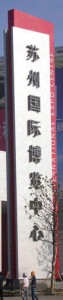
The designers were describing the making of a large sign for the “Suzhou International Exposition Centre” (苏州国际博览中心 Sūzhōu guójì bólǎn zhōngxīn).

Here’s a good example of the problems with their remarks:

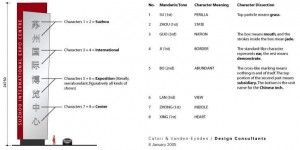
“The last two characters for Centre–it’s interesting they went with the British spelling–are actually redundant,” Calori says. “Often you see the seventh character–it means ‘middle’–for center. But the client also added the eighth character, which is the symbol of ‘heart.’ The heart is the middle, so they reinforce each other. This was a total embellishment.” Adds Vanden-Eynden: “They wanted the warm, fuzzy heart center, as opposed to the cold, hard center of hell.”

This is so wrongheaded and absurd it’s hard to know whether to laugh or cry. The client didn’t add the eighth character (心). It’s used in writing the word for “center,” which is zhōngxīn (中心). The only thing “fuzzy” here is the thinking behind this nonsense. It’s possible, though, that the designers aren’t responsible for this way of thinking; few Chinese people are aware of how their own writing system works and thus tend to believe such crap.

Colors: … “There are certain colors, you don’t use. White, for instance, is the color of death. It’s like directing people to a funeral.”

Well, yes, white can have that connotation. But white is the background color of the sign! Are the designers saying they wanted to direct people to a funeral? Of course not. The reality is that white has that connotation only in certain contexts. So what’s all this talk about leading people to a funeral? Sheesh.

Letters vs. Characters: … “Each character is really an idea,” Calori says.

Wrong.

“They’re called ideograms.”

Although some people, through ignorance or force of habit, might use this unfortunate term, the fact remains that Chinese characters aren’t ideograms.

The pullbox giving “character dissection” is also an embarrassment. Almost everything there is wrong or at least misleading. They couldn’t even get many of the tones right.
But the article isn’t a total washout. A few points are of interest.

Sizing: English characters tend to be heavy compositionally, while Chinese is complex and delicate. “So we always size Chinese twenty percent taller to give it balance,” Vanden-Eynden says.

Type Position: The Chinese characters appear here in the “superior” position, on the left side. “In Hong Kong, before the handover, English always appeared first,” Vanden-Eynden says. “On the mainland today, Chinese is always in the superior position, but the Chinese still want English on all their signs, even if there are no tourists around, because to them it makes it look like [they are part of] the 21st century.”

Fonts: Due to the seemingly infinite nature of Chinese, there are a limited amount of usable fonts. “Unlike here, you don’t have 10,000 readable options,” Vanden-Eynden says. “You have what they call the big five type faces.”

Chengdu signage

地名标志只能汉拼双写
http://www.sina.com.cn 2005年04月13日03:33 四川在线-天府早报

  早报讯(记者侯林利)针对目前不断有市民来信建议城区街路牌应“中英文双语对照”的问题,昨(12)日,成都市民政局区域地名处就此表示,地名标志只有采用“汉字及汉语拼音书写”才符合国际通行惯例和国家相关法律政策。

  据介绍,根据相关规定,城镇街(路、巷)名标志的设置禁止使用外国文字标志,不是采用汉拼双语的路牌标志都应该是违规路牌。成都市民政局借此提醒广大市民,路牌标志的书写事关国家的主权和尊严,必须规范书写形式,“中英文双语对照”的书写方式有悖国家相关法律。

signage in Guangzhou

广州拟投资355万元设立新型国际化路标
http://www.sina.com.cn 2005年04月06日01:11 信息时报

  时报讯 (记者 高江虹 通讯员 穗规宣) 记者昨日从广州市规划局获悉,为解决目前指路标志存在交通指示不足、信息表现形式不一、交通信息连贯性差、牌面视认性较差、部分指路标志过期使用及引导信息过时等等问题。广州将借助“申亚”成功的契机,着手进行一系列指路标志系统改造,使整个指路标志系统更加规范化、国际化。目前包括投资355万元让重点部门、大型公建及旅游景点都设立新型国际化路标。

  旧路标信息指示不足

  据介绍,随着广州市城市布局的拓展和城市道路网络的发展,广州市指路标志系统的建设逐渐得到完善。但是现有指路标志系统存在重点部门、大型公建及旅游景点等指示信息的严重缺乏、整体布局缺乏足够的系统性、交通指示信息的连贯性较差等不足之处,大大影响了整个指路标志系统的交通指导效率。

  经有关部门调查发现,广州市区现有指路标志系统交通信息指示不足的现象比较普遍,不仅严重缺乏重点部门、大型公建及旅游景点等信息的指示,路标提供的信息量也明显不足,这对市民出行、城市公共服务设施的使用造成了一定的影响。

  调查还发现,部分指路标志存在过期及不规范使用的现象,如沙和路已经更名,指路标志的牌面信息却没有更新,过时的信息给人们带来了不便。还有一些指路牌虽然提供了相应的道路信息,但实际上该路段是不允许车辆进入的,这种禁令标志与指路标志分开设置的情况,非常容易引起误导。

  而现有路牌牌面规格和信息表现形式都存在问题,如通名译写形式混合使用汉语拼音和英文两种方式,不利于外来人员阅读和识别,容易混淆信息含义。还有不少路标被绿化和道路附属设施遮挡,使驾驶员无法及时辨认指路信息。

  拟投资355万让路标变脸

  为此,广州市市委、市政府于去年7月份,正式委托广州市交通规划研究所、广州市公安交警支队和广州至信交通顾问公司负责开展“广州市区道路交通指路标志系统改善方案研究”系列专题研究工作。据悉,目前“广州市道路交通管理设施设计施工指南”和“重点部门、大型公建及旅游景点指路标志系统布局方案研究”已经完成,正准备开始实施。据有关部门透露,这项广州市道路指示标志系统“大变脸”拟投资355万元,于亚运前完成。

  公园前区域将示范新路标

  规划局方面透露,指路标志系统的“变脸前奏”将选择在公园前地区做示范改善区域,完善区域现有指路标志系统指示信息的不足,及时更新区域过期及不规范使用的路标,为全市区域指路标志系统的改善研究提供借鉴。

  按照有关规范要求,各类指路标志将采用不同的牌面形式。如重要政府机关单位、医院、学校、文体设施、交通枢纽及展览会议中心等指路牌均采用一般道路指路标志形式,牌面颜色为蓝底白图案;具有旅游特色底商业中心及商业步行街、旅游景点采用旅游区指引标志形式,牌面颜色为棕底白图案。

  同时,将会统一中英文对照形式,以及增设必要信息指路标志。如增设省政府、市委、市人大、中山纪念堂、北京路步行街等指路标志。

another language & the brain study

Hmm. I’m curious to see the study itself.

发现之旅:中国人大脑前端有独特的语言功能区
http://cul.sina.com.cn 2005/03/31 11:19
人民网-人民日报
教育部设在解放军306医院的认知科学与学习重点实验脑功能成像中心与香港大学合作的最新科研成果揭示,使用表意象形文字的中国人与使用拼音文字的西方 人的大脑中,语言障碍区不在同一个地方,中国人有独特的语言区。该项发现对临床外科医生将有很大帮助,因为很多尖端的颅脑手术技术都是从西方引进的,手术 中如果医生了解了不同语言人群大脑语言区的确切位置,就可以减少大脑功能区受损。目前,该研究成果已在世界科技类最具权威的刊物美国《自然》杂志上发表公 布。

该中心金真主任介绍说,在人的大脑中,语言功能区有两个,分别是位于前脑的布鲁卡区和位于后脑的威尔尼克区。在此研究公布之前,所有的科研报告都众口一词:后脑的威尔尼克区主导语言功能,而前脑的布鲁卡区一般来说很少用。但是,现在的研究推翻了这一观点。

研究发现,中文的语言区更接近于大脑运动功能区,使用拼音文字的人,常用的是后脑的 威尔尼克语言区,但使用中文的人,此区几乎用不到,常用的是前脑的布鲁卡区。由于中文语言功能区与运动区紧密相连,要想学好中文要多看、多写、多说,靠 “运动”来记忆,而学习英文则应注重营造一个语音环境,注重多做听说的练习,因为英文的那一个语言功能区更靠近听力区。

现在很多人学了多年英文却是“哑巴英语”,因为用学习中文的方法来学习英文是行不通的。(徐))

public signage in Fuzhou

福州年底前统一门牌路牌(图)

地名重名“近亲”多

记者调查发现,福州地名标志不规范主要是历史遗留问题导致。如晋安区新店镇有个“后坂”,仓山区也有“后坂”;而据福州公交集团统计,福州市区叫“招呼站”的公交车站仅市区就有29个;还有的是开发商给楼盘命名常常雷同,导致“近亲”楼名与地名多。福飞路上有湖前社区与湖前路,在省游泳跳水馆背后有个“湖前支路”与“湖前新村”,给当地居民生活带来了不少麻烦,很多客人常走错门,就连警察接警也常摸错路。

福州市民政局工作人员告诉记者,地名导向问题看似简单、微小,但由此导致的使人走错路、发错货、寄错邮件却会给市民生活带来很多麻烦。还可能导致严重后果,如在医疗急救中,由于病人家属说不清地址或救护人员不能准确找到目标,往往耽误了患者的及时就诊。消防、公安等部门的工作也常受到地名导向问题的影响。统一标志

一般不改原门楼牌号

据悉,福州市此次出台《福州市标准地名标志设置管理工作实施方案》,目的在于结束过去地名重复、标志混乱模糊、指示不清、导向不明的状况,在全市范围内最大限度地实现地名标志的统一,方便群众生活。

今后福州市标准地名标志设置将分为街路巷牌设置与门楼牌设置两大类。

街路巷牌设置:现有市区所设置的街路牌符合国家标准的,继续采取以广告牌养路牌的办法,按合同约定履行,福州市民政局要督促合同一方履行合同的义务,维护到位。

门楼牌设置:市区门楼牌设置应本着“坚持标准、逐步规范、不重不漏、分步实施”的原则进行,更换标准门楼牌一般不改变原门楼牌号码。标准门楼牌标志设置重点是主次干道、沿街店面、住宅小区、楼宇、居民区、机关、企事业单位等。

福州市有关部门下一步将设标定价,成立由福州市民政局牵头,物价局、财政局、质量技术监督局、监察局等单位组成的门楼牌定价招标工作小组,共同制订招标文件。招投标后研究确定门楼牌收费标准,并选定有资质的厂家承制标准地名标志,并举办标准地名标志设置工作培训班。

与第二代身份证结合

标准地名标志设置管理工作要与标准地名使用管理相结合,福州市计委、建设、规划部门要按《福州市地名管理办法》规定,协同做好地名管理工作。住宅小区和建筑物等项目名称,必须使用经市地名办核准备案的标准名称。福州市地名办新编或变更门牌号码,应在福州市公安局社区警务指导处备案。

同时,标准地名标志设置管理工作要与第二代身份证普查、登记、发证工作相结合。房地产交易登记中心办理产权登记时,要使用经福州市地名办核准的标准名称和编制的门牌号码,并填写规范明确;因工作原因造成单位、居民产权证上名称和地址差错的,福州市地名办负责提供相关证明材料,房地产交易登记中心要给予简化手续并无偿更改或换证。

规范的地名标志 应包含哪些内容

据了解,符合国家标准的现有规范的街、路、巷牌牌面内容由地名汉字和汉语拼音两部分组成;楼牌由地名汉字、汉语拼音、楼号和所在政区邮政编码等内容组成;门牌分大、小两种,大门牌由地名汉字、编号、所在政区邮政编码等内容组成;小门牌由地名汉字、编号两部分内容组成;单元牌、户室牌有编号内容。

another official look at kanji in Japan

TOKYO — Education minister Nariaki Nakayama on Wednesday asked a government panel on the Japanese language to come up with guidelines on the use of the honorific and polite form of speech, known as “keigo” in Japanese, to counter its widespread misuse, ministry official said.

“Although many people feel the need to use ‘keigo,’ it can hardly be said that they are using it properly,” Toshio Kojima, senior vice education minister, said in explaining the reason for making the request on Nakayama’s behalf.

The minister also asked the Council for Cultural Affairs — an advisory body to the government’s Agency for Cultural Affairs — to review the most commonly used Chinese characters in Japanese to reflect their current usage on computers.

The council’s subcommittee on the Japanese language is expected to discuss the issues and come up with a final report within two years for “keigo” and four to five years for the Chinese characters, known as the “joyo kanji.”…

A 2003 survey on the Japanese language by the agency found that 96% of Japanese believe “keigo” will remain a necessary part of speech in the future, while 60% said they do not mind using extremely polite phrases even though they may be considered grammatically incorrect by purists.

The subcommittee will check on the use of honorifics and polite phrases deemed to deviate from perceived standard usage, including phrases commonly used by sales clerks.

The guidelines will study the three conventional “keigo” categories — honorific, self-effacing and polite — to improve understanding of proper usage and indicate specific situations when each level of speech should be used as well as examples of improper usage.

As for the “joyo kanji,” Kojima said the current “joyo kanji” table should be reviewed in line with the widespread use of computers.

The current table, which specifies 1,945 common Chinese characters, has not been updated since 1981.

The subcommittee will conduct research in the next two years on the public’s ability to write and read Chinese characters, and how frequently certain ones are used for the names of people and places, as well as on some characters that are often used on computers but not included in the table.

source

literacy in China

The Taipei Times had a story today about Tainan’s Wennan Township offering a program to help foreign spouses who cannot read Chinese. In this case, “foreign spouses” doesn’t mean Westerners like me but rather the modern equivalent of mail-order-brides. (Tainan is in Taiwan, for those who don’t know.)

In order to help foreign spouses who can’t read or write Chinese to pass their written test, during the week-long program, questions are read out loud in Chinese by instructors and the students simply answer yes or no, or pick the right answer on answer sheets….

Additionally, the program has been able to help spouses from China that are unable to take written tests — because of either illiteracy or an inability to read traditional Chinese characters.

This brought to mind the question of (il)literacy in China.

I’ve long been skeptical of the claims of high literacy for China, because “literacy” is seldom defined in any specific and useful manner and because most statistics from the PRC are none too reliable. One definition I saw for literacy in China was the ability to “recognize” 2,000 characters — or just 1,500 characters for people in the countryside. (Perhaps this could be a new ad campaign for relieving population pressures on China’s overcrowded cities. “Are you a city dweller having trouble reading? Move to the countryside and — shazam! — become literate!”) How is this recognition tested? What does this recognition consist of? What does any of this have to do with the ability to write as well as read? Who knows. And then there’s the question of literacy in what language.

I browsed around the Internet and came across some Unesco figures on literacy in China. According to a 1997 survey posted on that site, in Hubei, where I used to live, 22 percent of women are not literate — and that number is better than the national average for women.