Beijing Olympics to use icons modeled after seal script

Danwei notes that Beijing’s Olympics committee has come up with its version of the icons for the sports of the games. These graphics are modeled after seal script, a style of writing that came to prominence about two thousand years ago.

images of icons for the 2008 Olympics in Beijing, China
Above are the icons for baseball, shooting, sailing, softball, cycling, and golf hockey.

Here’s part of how the committee describes the items:

Named “the beauty of seal characters” and with strokes of seal characters as their basic form, the Pictograms of the Beijing 2008 Olympic Games integrate pictographic charm of inscriptions on bones and bronze objects in ancient China with simplified embodiment of modern graphics, making them recognizable, rememberable and easy to use.

Although seal script can still be seen on name chops (seals) and some calligraphy, few people can read it well if at all.

additional resources:

source: New Olympic Icons, Danwei, August 7, 2006

Miao people losing their language: report

From Xinhua:

The language spoken by the Chinese Miao ethnic group in southwest China’s Guizhou Province is in danger of disappearing, a local political advisor has warned.

“Native people in Miao villages communicate in their own language less and less,” said Han Kan, vice chairman of the Ethnic and Religious Affairs Committee of the Guizhou Provincial People’s Political Consultative Conference, citing a report made by his organization.

In the Tianzhu County of the Qiandongnan Autonomous Prefecture of Miao and Dong Nationalities where Miao people live in a compact community, only 32 out of 112 Miao language-speaking villages use their own language, according to the report.

In Qiandongnan’s Taijiang County, where the Miao population accounts for 97 percent of the total, 40 out of 180 Miao villages no longer use the Miao language.

In Danzhai County, also in Qiandongnan, only 60 percent of the people — mostly over 50 years old — speak their own language. In 1999, the figure was 85 percent.

I hate writing a post about a non-Sinitic language of China without S. Robert Ramsey’s invaluable The Languages of China at hand. But I won’t be able to get to my copy of this for several more days and I’ve been putting off finishing far too many posts as it is.

source: Language of China’s Miao ethnic group may disappear, Xinhua, July 27, 2006

Malaysia deems some names ‘unsuitable’

Malaysia’s National Registration Department has compiled a list of personal names deemed “unsuitable.” Parents will be blocked from having their children registered under these names. Among the groups contributing to the compilation of the list are the Buddhist Missionary Society of Malaysia, the Malaysian Hindu Sangam, and the Universiti Malaya Tamil Language Association.

Parents will be prevented from bestowing upon their children specific names in a variety of languages (including Cantonese and Hoklo/Hokkien/Taiwanese). In addition, entire categories of names — such as the names of animals, colors, fruits, and vegetables — will also be blocked. Numbers and initials are also to be denied approval.

According to Jainisah Mohd Noor, a spokeswoman for the National Registration Department, parents who insisted upon using a name on this list could appeal to the department.

“We can only advise them, but if they are insistent even after knowing they are unsuitable, they may be allowed to use them,” Jainisah said.

I haven’t been able to find a copy of the list. Perhaps it’s on the National Registration Department’s Web site; but that’s only in Malay.

Here are some “unsuitable” names from Sinitic languages, as given in the news stories below. I’m just copying these from the news stories listed below, so don’t blame me for the romanizations.

  • Ah Kow (dog)
  • Ah Gong (unsound mind)
  • Chai Too (pig)
  • Kai Chai (chick)
  • Sum Seng (gangster)
  • Ah Chwar (snake)
  • Khiow Khoo (hunchback)
  • Chow Tow (smelly head)
  • Sor Chai (insane)

Here are some forbidden names from other languages:

  • Zaniah (female adulterer)
  • Zani (male adulterer)
  • Woti (sexual intercourse)
  • Karruppan (black fellow)
  • Sivappi (fair)
  • Vellayan (fair)
  • Amma-kannu (mother’s eye)
  • Batu Malai (stone hill)

You will also have to prove your lineage if you want your child to carry the prefix Ungku, Engku, Ku, Syed or Syarifah to your name.

Names with officials titles such as Tun, Tan Sri or Dato’ Wira Jaya, Haji, Nabi, Rasul, Guru, Ustaz and Hakim are also out.

Courage… Cabnap… Grunplitk: zhuyin and the movie Fearless

Many Westerners are so attracted by Chinese characters, which tend to be absurdly exoticized as symbols [sic] or ideograms [sic] of deep meaning, that they place them here and there as if they were some sort of pixie dust that bestows coolness upon any object (or body). Often when they do so, they write these characters incorrectly or are mistaken about their meaning, as Tian of Hanzi Smatter continues to note. But you’d think that at least those who make trailers for Chinese movies would be a little better informed.

Fearless (Mandarin title: Huò Yuánji? / ???), which is billed as Jet Li’s final martial-arts movie, has been out in Asia since January but won’t reach the States until later this year. (I have no plans to see this movie, which appears from the trailer to be a string of the usual clichés. And, anyway, I have yet to forgive Jet Li for appearing in Hero, which is probably the biggest cinematic valentine to totalitarianism since Triumph of the Will.) One of the trailers for Fearless features a number of Chinese characters. They’re even written correctly. But, oddly enough, interspersed with the Chinese characters are zhuyin fuhao, also known as bopo mofo, a semi-syllabic script used in Taiwan mainly to help teach children to read. Odder still, the zhuyin make absolutely no sense.

Here’s how Taiwanonymous, on whose site I found this story, puts it:

Intercut with scenes from the movie was a burnt-yellow background, suggesting aged parchment, with Chinese characters flying past. Along with the Chinese characters were some Mandarin phonetic symbols (zhuyin fuhao ????). It’s bad enough that they included phonetic symbols (which are mainly used in Children’s books) in the flying sea of what wanted to be an ancient Chinese text, but the symbols flew past in strings of gibberish! Imagine the following text dramatically moving across the screen, “Integrity… Peace… Courage… Cabnap… Grunplitk… Uwsugls.” Gives you chills just thinking about it.

Here’s a screenshot from the trailer:
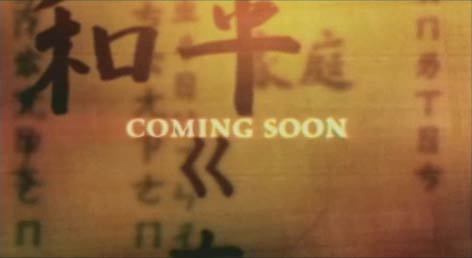
gibberish zhuyin in the background

Just below COMING SOON is a giant ?. For something written in English this would be the equivalent of putting a large letter G on the screen.

Along the right side of the screen is the following, in zhuyin fuhao: ?????. This, in Hanyu Pinyin, would be “maixrici,” which is complete gibberish. The other vertical lines of text are also nonsense in zhuyin fuhao.

Again, there’s nothing wrong with how these are written. It’s just that they’re no more meaningful than a random string of letters.

Here’s one more shot:
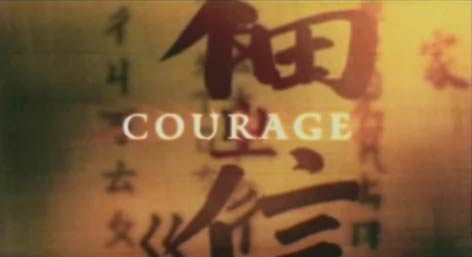
gibberish zhuyin in the background
The zhuyin fuhao on the left read, from top to bottom, ?????, which would be “chjktp” in Hanyu Pinyin. As I think should be obvious even to those who don’t know Mandarin or any other Sinitic language, this is simply nonsense.

sources:

Shanghai theater puts on play in Shanghainese

It’s a sad situation that it’s newsworthy when a play is presented in the native language of most of those in one of the world’s largest cities. But in this case it’s also an occasion for hope.

Recently, for the first time in decades, a drama primarily in Shanghainese was presented in Shanghai. (I would guess that local operas, however, have been performed in Shanghainese with little interruption.) Unfortunately, as the Shanghaiist reports, there were some problems with this production of 《乌鸦与麻雀》 (Mandarin title: Wūyā yǔ Máquè; English title: The Crow and the Sparrow).

[T]he blame is being assigned to the fact that the production was too hastily prepared, leading them to overlook things like subtitles.

You might ask, why, if most of the dialogue is in Shanghainese, would people other than non-locals need subtitles? It turns out that aside from standard Shanghai dialect, Ningbo, Suzhou, Shandong and other dialects were also thrown in—the story takes place during the Republic period (1911-1949) at a time when many immigrants were first putting down roots in Shanghai. The production team also prepared a putonghua version of the play, which they used during the last performance here and will use if they take the play to other parts of China. All in all, it seemed as if this was a less than ideal way to restart this tradition.

Nonetheless, I’m encouraged that the authorities allowed this play to be staged in Shanghainese. Perhaps its roots as a popular film from the late 1940s and its anti-KMT storyline helped it get by the censors.

The Shanghaiist also mentions an interesting-sounding book: Rendering the Regional: Local Language in Contemporary Chinese Media, by Edward M. Gunn. The introduction (663 KB PDF) is available online. I look forward to reading the entire book once I can find it in a library or locate an inexpensive copy.

sources:

bopomofo: the band

I suppose it was inevitable: a Taiwan band named after bopomofo (a.k.a. zhuyin fuhao), the semi-syllabic script still used in Taiwan schools in place of a romanization system. I need to remember to ask Poagao or Sandy of David Chen and the Muddy Basin Ramblers if the band is any good.

So, does anyone know if anyone in China or elsewhere has named a band after Pinyin? So-and-so and the Hanyu Pinyins might work for a doo-wop group; but I’m guessing that particular musical style has never really taken off in China. So there’s probably not much hope either for “Y.R. Chao and the Gwoyeu Romatzyhs.” But maybe a punk or metal band could name itself Tongyong.

via The Real Taiwan blog

Maori Language Week

It’s Māori Language Week (July 24-30) in New Zealand. In his post on this, Kevin of the eclectic Languageandhumor.netcom links to a newspaper article that notes some of the controversy involved in putting up bilingual street signs. (One councilor, for example, called the idea of installing such signs “stupid.”)

As long as I’m on the subject of Maori, I’d like to note that even though, like Mandarin, the language has many fewer individual syllables than English, no one goes around claiming that Chinese characters are essential for its written form to be clear. Indeed, Maori has many fewer syllables than Mandarin and the other Sinitic languages; but a stripped-down version of the Roman alphabet (along with a macron) is enough to handle writing the language.

sources:

kanji conversions cause crash

This is a weird one: Sharp Corp. has acknowledged that more than 10 million of its cell phones have a “software glitch that disables the handsets when certain hiragana phrases are converted into kanji when writing e-mail.”

The phrases known to freeze the phones are: “mirare makuccha,” which roughly means “people’s eyes were fixed on me,” and “kazega naori kaketa,” meaning, “I was recovering from a cold,” according to Nikkei Net, a Web-based business and information technology news site.

I’m not sure I could come up with a proper comment on this even if I didn’t have a bad case of jet lag.

sources:
