
Here are some photos I took a couple of years ago in San Francisco’s Chinatown.
As should be clear from the Mandarin and Cantonese pronunciations I’ve provided for the Chinese characters, the Sinitic names for streets in Chinatown certainly don’t come from Mandarin, which isn’t surprising given how the Chinese diaspora was not predominantly Mandarin speaking until recently. My guess would be Taishanese Cantonese.
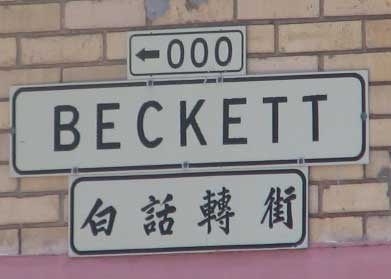
Beckett: 白話轉街 (Mandarin: Báihuàzhuǎn Jiē; Cantonese: baahk- wa/ jyun/ )
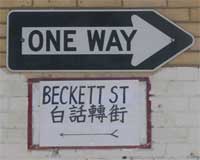
I like this unofficial sign even better.
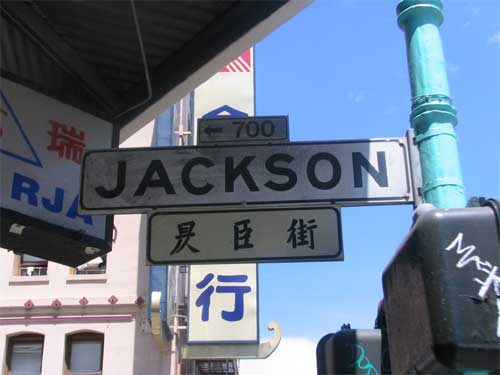
Jackson: 昃臣街 (Mandarin: Zèchén Jiē; Cantonese: jak\ sahn\)
The first Chinese character, 昃, is a surprising choice since it is quite rare and would not be known by most people. Some far more common characters that perhaps could have been used instead include 則 (Cantonese: jak\), 責 (Cantonese: jaak-), 澤 (Cantonese: jaahk-), and 擇 (Cantonese: jaahk-) — all of which are pronounced zé in Mandarin.
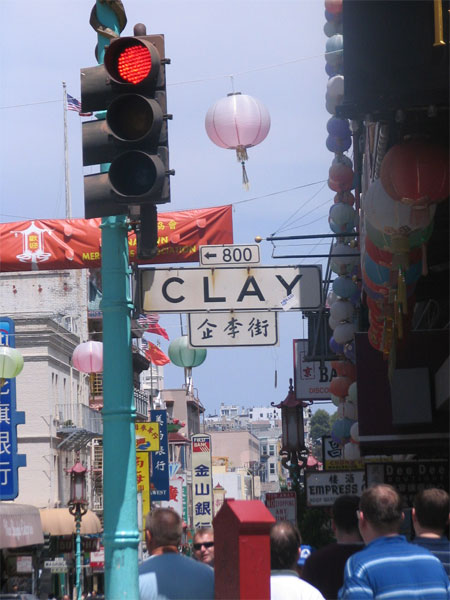
Clay: 企李街 (Mandarin: Qǐlǐ Jiē; Cantonese: keih/ leih/)
Commercial: 襟美慎街 (Mandarin: Jīnměishèn Jiē; Cantonese: kam\ meih/ sahn-)
I would have expected a semantic translation for this street name. But Kam-meih-sahn appears to be another phonetic approximation.

Grant: 都板街 (Mandarin: Dōubǎn Jiē; Cantonese: dou\ baan/ gaai\)
This is another interesting one. Note that Doubaan and Grant sound nothing like each other. And this isn’t a semantic translation of Grant either. So why is this street labelled 都板街? The answer is that the Sinitic name preserves an old name of the street: Dupont.

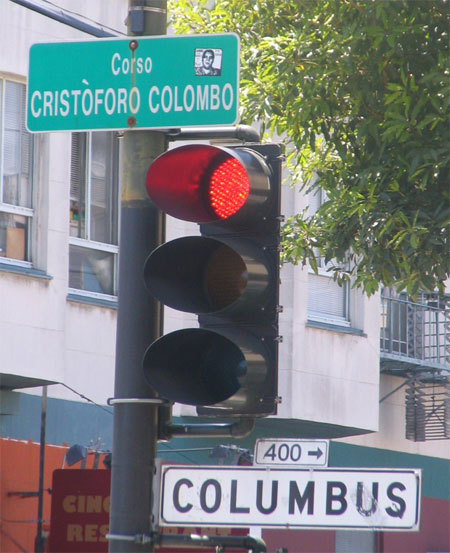
And for lagniappe, here’s a photo taken in the nearby Italian district, where Columbus Street is also identified in Italian as Corso Cristòforo Colombo.
further reading:
- Chinatown Devises Its Own Street Names, by William J. Hoy, California Folklore Quarterly, Vol. 2, No. 2 (Apr., 1943), pp. 71-75
- Early San Francisco History from Street Names, by Henry C. Carlisle, August 1954
- Chinatown streets
- Chinatown alleys
- Chinatown: San Francisco, Part 3, Panda Gator, September 4, 2007
What about Polk Street? heheh …
? for the first syllable of “Jackson” is actually not surprising for a Cantonese transliteration. ? zak1, while rare in Mandarin (in linguistics it’s used to refer to tones, meaning ‘not ?’, i.e., ?, ?, and ?), is a very common word in Cantonese meaning ‘misaligned, oblique’. I think most Cantonese readers would be able to read this character. In fact, I’ve seen the character ? used to transliterate “check” (as in, I’ve sent you a check, did you cash it yet?).
In the case of Jackson, you just take this not-uncommon character and add a radical to it to make it look more name-like.
Another note, this time about Beckett Street. The article you referred to by William J. Hoy actually has the answer to this one: it has nothing to do with “Beckett”, but instead means “Plain Language John”, named after some interpreter dude named “John”. In Toisanese, ? is read “tson??”.
Lots of companies don’t plan ahead, not surveying the phonology of all Chinese character using regions and countries, when choosing their transliterations.
Case in point: the retailer Watson’s: ???. Matches great in Cantonese [Wat-sahn-sih], but many kilometers away from the intended sound when read in Mandarin [Q?chénshì].
P> Jackson: ??? (Mandarin: Zèchén Ji?; Cantonese: jak\ sahn\)
P> The first Chinese character, ?, is a surprising choice since it is
P> quite rare and would not be known by most people.
P> Some far more common characters that perhaps could have
P> been used instead include ? (Cantonese: jak\), ?(Cantonese:
P> jaak-), ? (Cantonese: jaahk-), and ? (Cantonese: jaahk-) —
P> all of which are pronounced zé in Mandarin.
Being the owner of the same syllable, the Jac- of my name, Dan Jacobson, Back in 1982 I wisely surveyed all the aforementioned Chinese character areas and countries, and picked a name that is the best compromise phonetic match for them all, whilst not possessing any inauspicious properties.
Furthermore I did not just pick some used surname out of a dumpster. No, I took the once in a dynasty opportunity to establish a brand new surname, ??
Which is now proudly emblazoned on all my savings bonds, stock certificates, and credit cards, not to mention my VIP platinum class
national ID card. Only one in the phone book too.
However, every time I hitch a ride in my neighbor’s truck, for the
whole ride he just can’t get over it, “Hey, Mr. Chicken, haw haw haw!”
I live close to San Francisco, so I go there often especially to visit Chinatown and at first when I only knew Mandarin, I could figure out neither head nor tail of any of the street signs. However, after I learned a bit of Cantonese, I realized that the rest of the names all made sense in Cantonese, such as ??? but I could just never figure ??? out. The mystery is now finally solved. :-)
By the way there is a conference on Taiwan place names, to be held 2009.1.15 at Academia Sinica:
????????????????????
http://gissrv3.sinica.edu.tw/conference08/
??????2009?1?15?????? ????????????
???????????????????????
?????
?????
1.?????????? / ???
2.??????????????????–
???????????????? / ???
3.?????????????????? / ???
???????????
1.??????????????? / ???????????
2.????????????????????? / ???
3.?????????? / ???
????????????????
1.???????????? / ???????
2.?Flickr????????? / ???
3.??????????GIS????????~?1909-1945???????? /
???
??????????
??????????????????????????????????
????????
It makes sense that English street names were translated into Cantonese in older Chinatowns. However, back in mid-1990’s, when the newer Houston Chinatown received Chinese street names, those too were translated into Cantonese instead of Mandarin. At that time, the majority of the Chinese population in Houston’s Chinatown were actually from Taiwan.
I think for ???, the alternate reading ‘du’ is more accurate. (Dupont Street).
????????????????????????????????? Jackson Road????????? (???????) ???
?? Commercial Street ?????????????????????????????????????????????????????????????????????????????????????????????????????????????????????????????????????????????????????????????????
????????????????????????????????????????????????????????????????????????????????????????????????????????????????????????????????
@Prince Roy:
But does the “du” reading exist in Cantonese? It very well could, just not sure if you were referring to the Mandarin (wasn’t used) or the Cantonese.
Fantastic post! A lot of amazing history left in these names.
Pingback: How do Chinese characters represent sounds? « The News From Wabu-eup
Pingback: Best Chinese Learning Blogs | Dip To Go
But does the “du” reading exist in Cantonese? It very well could, just not sure if you were referring to the Mandarin (wasn’t used) or the Cantonese.
It does exist, but only in very vernacular style. The textbooks of Cantonese don’t mention such a sound. Traditional phonology would not allow such sounds but in people’s speech they are heard.
??? is exactly [ du1 du1 seng1 ] (beeping sound when the door of MTR is closing)
??? [feih4 dyut1 dyut1 ] This is even strange, but still a frequently used sound symbol, to describe chubbiness of body shape.