This seems as good an announcement as any to end my hiatus from posting. Sino-Platonic Papers has just rereleased a popular issue of likely interest to many readers of Pinyin News: Writing Taiwanese: The Development of Modern Written Taiwanese (2.2 MB PDF), by Alvin Lin.
The table of contents gives a pretty good picture of what’s inside:
Preface
Introduction
The Status Quo: Characters and Taiwanese writing
- The Roots of Writing in Taiwanese: Wenyan, baihua and academic Taiwanese
- The Missing 15 Percent: Developing a written vernacular
- One Attempt at Finding the Missing 15 Percent: Yang Qingchu’s Mandarin-Taiwanese Dictionary
Writing Romanized Taiwanese
- The Roots of Romanized Taiwanese: Church Romanization
- Church Romanization Today: The Taigu listserver
- An Indigenous System: Liim Keahioong and Modern Literal Taiwanese
Linguistic and Social Considerations
- Some Linguistic Classifications
- Dealing with Homonyms: Morphophonemic spelling
- Tones in Taiwanese: Surface vs. Lexical tones
- Representing Dialects: Picking a standard written form or representing all dialects
- Summary of Linguistic Concerns: Deciding the degree of coding
- Writing, Reading, Printing, Computing, Indexing and other Practical Concerns
- Social Concerns: Tradition and Political Meaning
- Conclusion: Future Orthography Policy on Taiwan
Bibliography
Appendices:
- Email Survey
- Pronunciation guide to church romanization
List of Tables and Illustrations:
- Table 1: Suggested Characters for Taiwanese Morphemes from Three Sources
- Figure 1: Yang Qingchu’s Taiwanese-Mandarin Dictionary
- Figure 2: Church romanization
- Figure 3: Modern Literal Taiwanese
- Figure 4: Sample e-mail from Taigu listserver
This was first published in 1999 as issue number 89 of Sino-Platonic Papers.


 The latest excerpt from Yin Binyong’s book on Pinyin orthography covers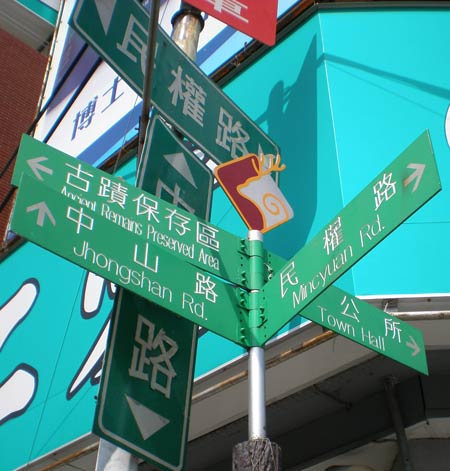
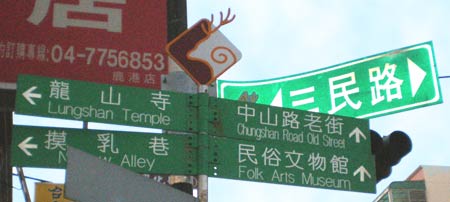
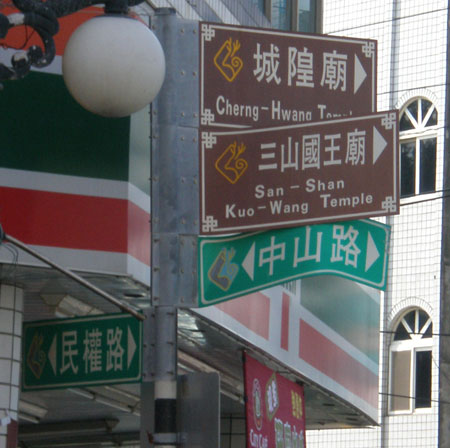

 About 150 years ago “bilingual” signage meant something very different in Taiwan than it does today. Back then it was Literary Sinitic and Manchu, as seen on this stela outside a temple in Lugang.